BLOG

Beginner Guide
PMU Voltage Settings Guide for Every Technique
PMU voltage controls how fast the machine motor spins, which determines how many times the needle hits the skin per second. Lower voltage (5–6V) is used for nano hair strokes, eyeliner, and sensiti...

Beginner Guide
Why Low Vibration Matters in Permanent Makeup
Low vibration in a PMU machine means the motor runs smoothly and consistently, with minimal unwanted oscillation transferred to the artist's hand. High vibration causes blurred lines, inconsistent ...

Beginner Guide
2.5mm vs 3.5mm PMU Stroke: What's the Difference?
A 2.5mm stroke creates a softer, lighter needle hit — less skin trauma, more control, ideal for nano hair strokes, eyeliner, sensitive skin, and delicate layering. A 3.5mm stroke creates a stronger...

Beginner Guide
What Stroke Length Is Best for Lip Blush?
The best stroke length for lip blush is 2.5–3.0mm for most clients and techniques. A 2.5mm stroke delivers softer implantation with less trauma — ideal for sensitive lips, first-pass color layering...
Lip Blush
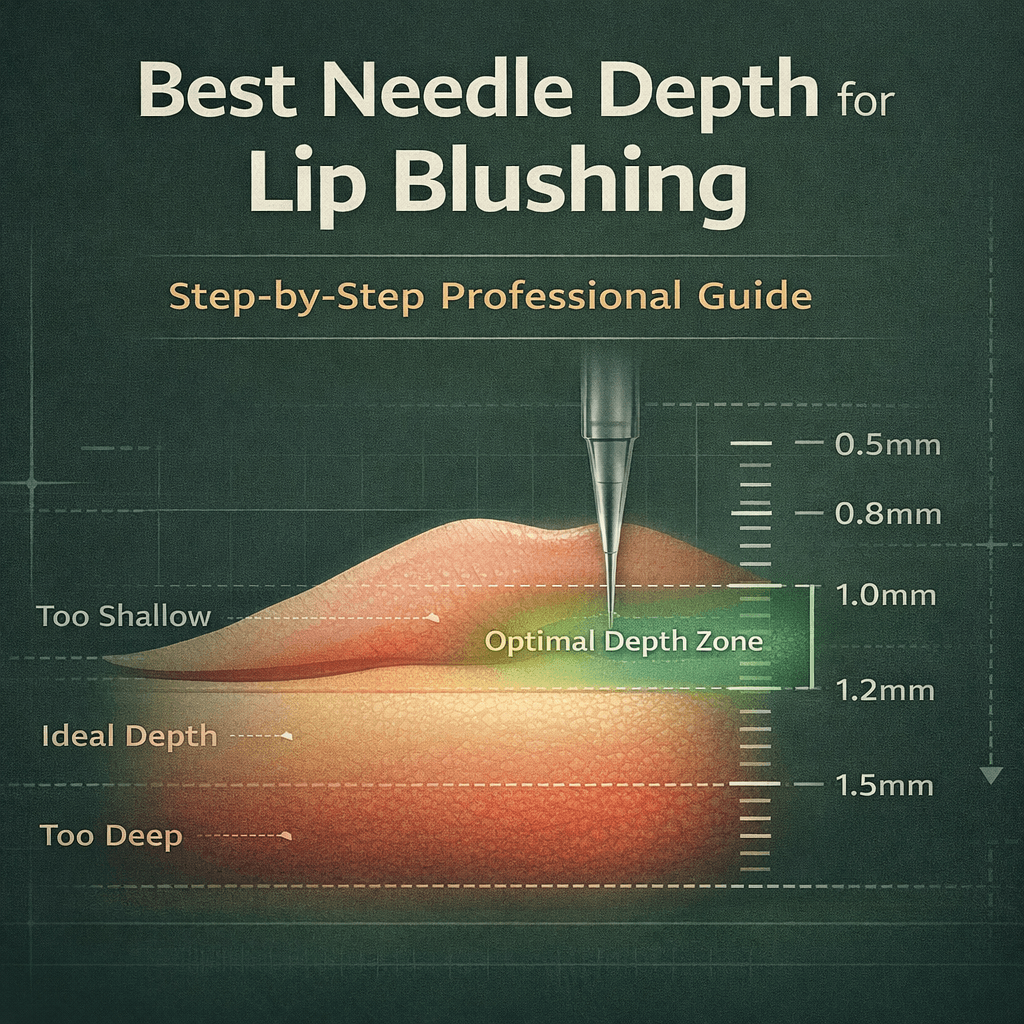
Best Needle Depth for Lip Blushing (Step-by-Step Guide)
Master needle depth for lip blushing with this step-by-step guide. Learn the ideal depth range, machine settings, needle configurations, and how to adjust for different lip types for perfect PMU re...
Color Theory
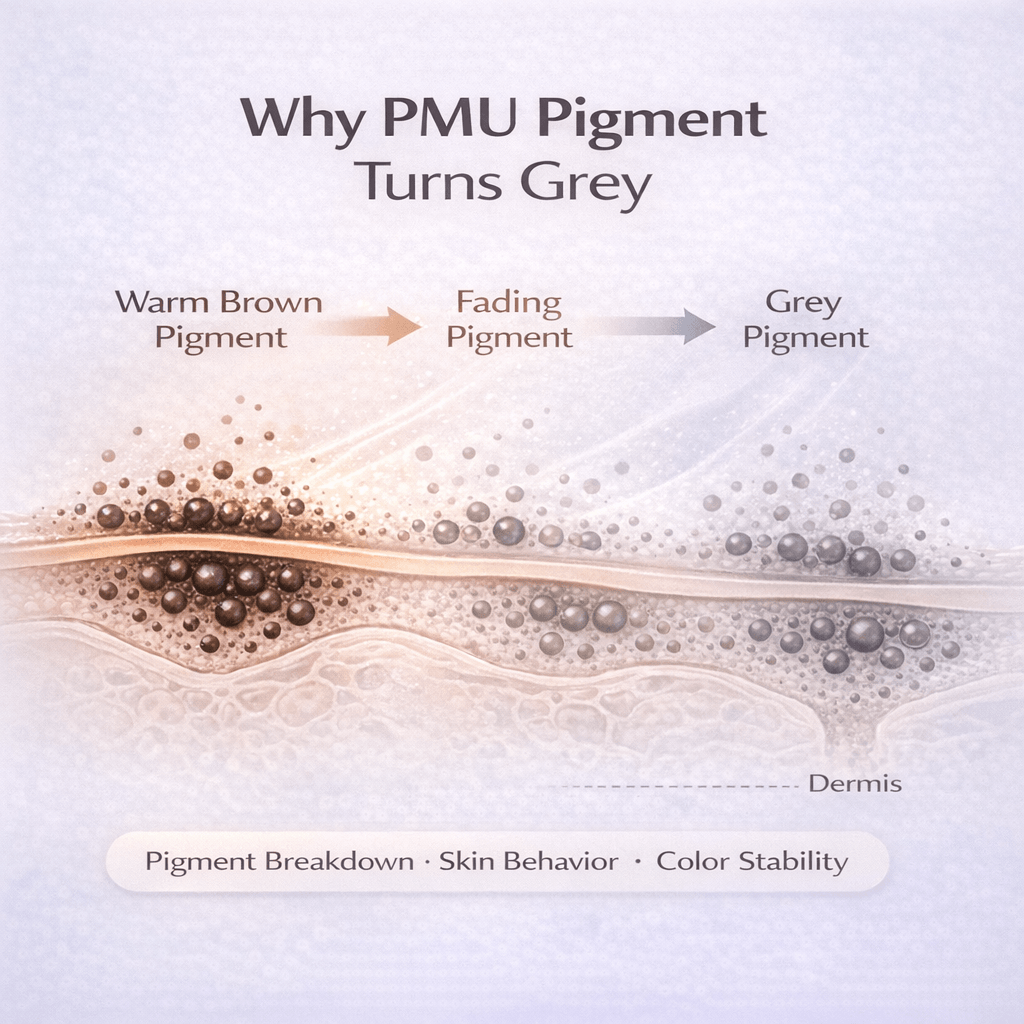
Why Does Permanent Makeup Pigment Turn Grey Over Time?
Permanent makeup pigment can turn grey over time due to pigment composition, implantation depth, skin type, and natural fading. Learn why this happens and how professional artists prevent unwanted ...
Guide
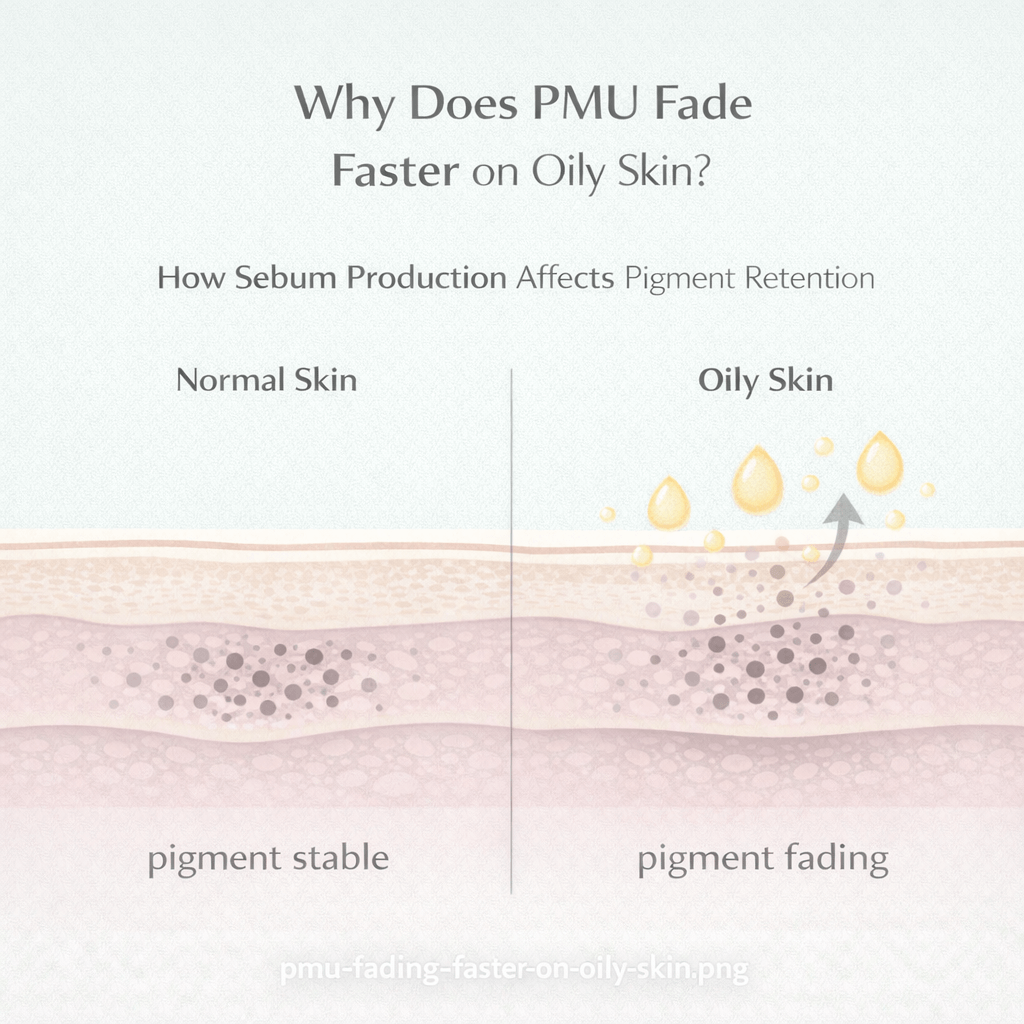
Why Does Permanent Makeup Fade Faster on Oily Skin?
Permanent makeup fades faster on oily skin due to excess sebum production, larger pores, and faster skin cell turnover. Learn how artists adjust technique and pigment selection to improve retention...
Color Theory
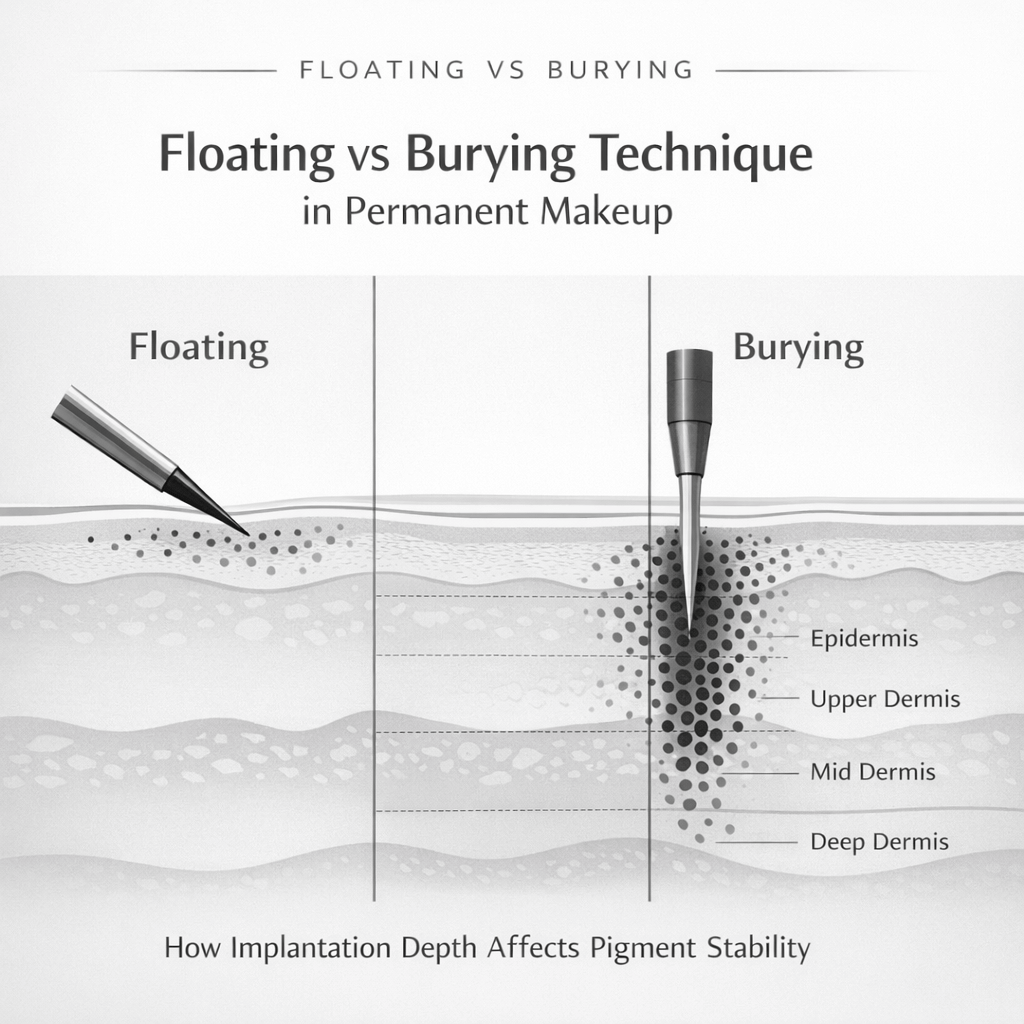
Floating vs Burying Technique in Permanent Makeup: How It Affects Pigment Stability
Floating and burying are two core implantation techniques in permanent makeup. Learn how each affects pigment depth, trauma level, and long-term retention — and when to use each for optimal results.
Color Theory
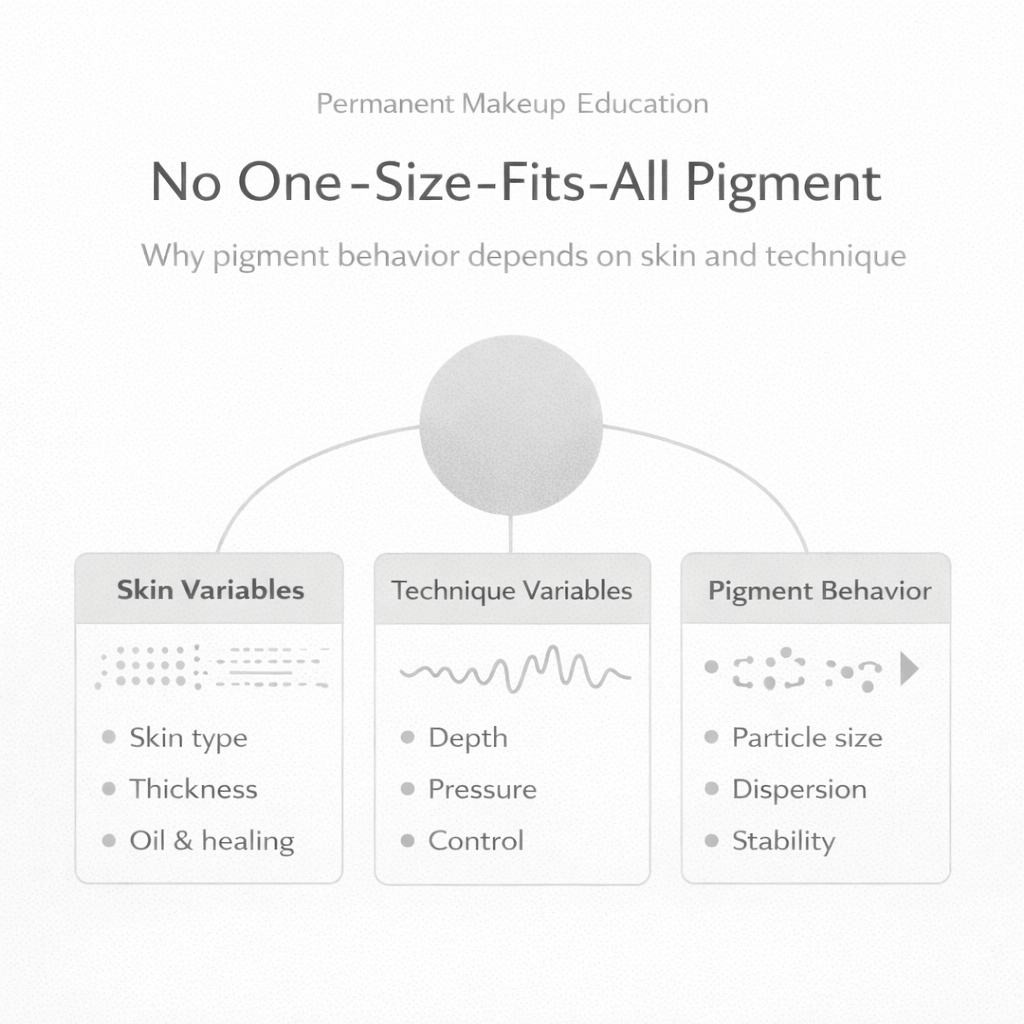
Why There Is No One-Size-Fits-All Pigment in Permanent Makeup
There is no universal pigment in permanent makeup because skin biology, implantation technique, and pigment behaviour all interact differently for every client. Learn why professional pigment selec...