BLOG
Burying Technique
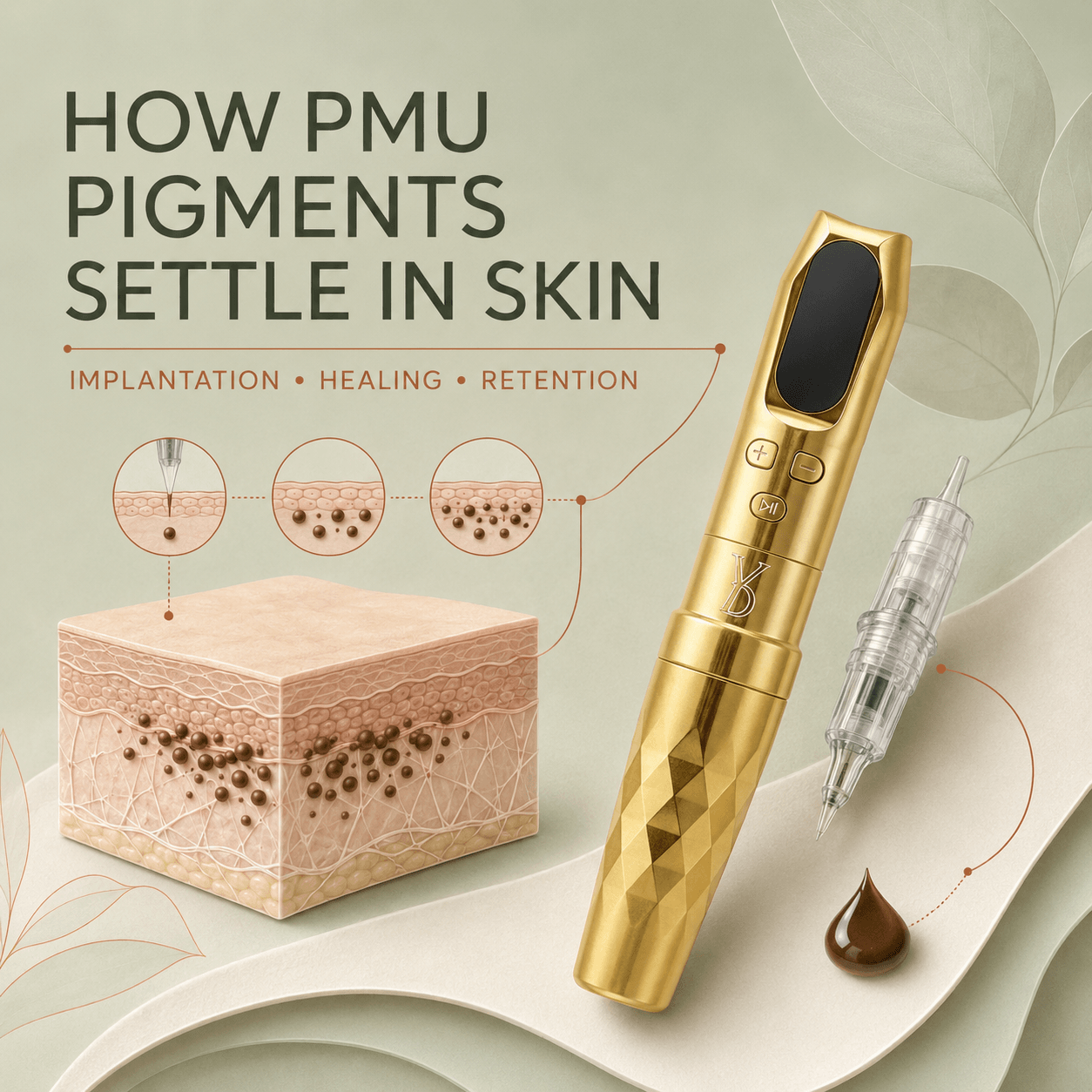
How PMU Pigments Settle in the Skin: Implantation, Healing, Retention & the “Floating vs Burying” Myth
PMU pigment does not simply stay wherever it appears during treatment. This guide explains how implantation pattern, skin structure, inflammation, healing, pigment properties and aftercare influenc...
Implantation Technique
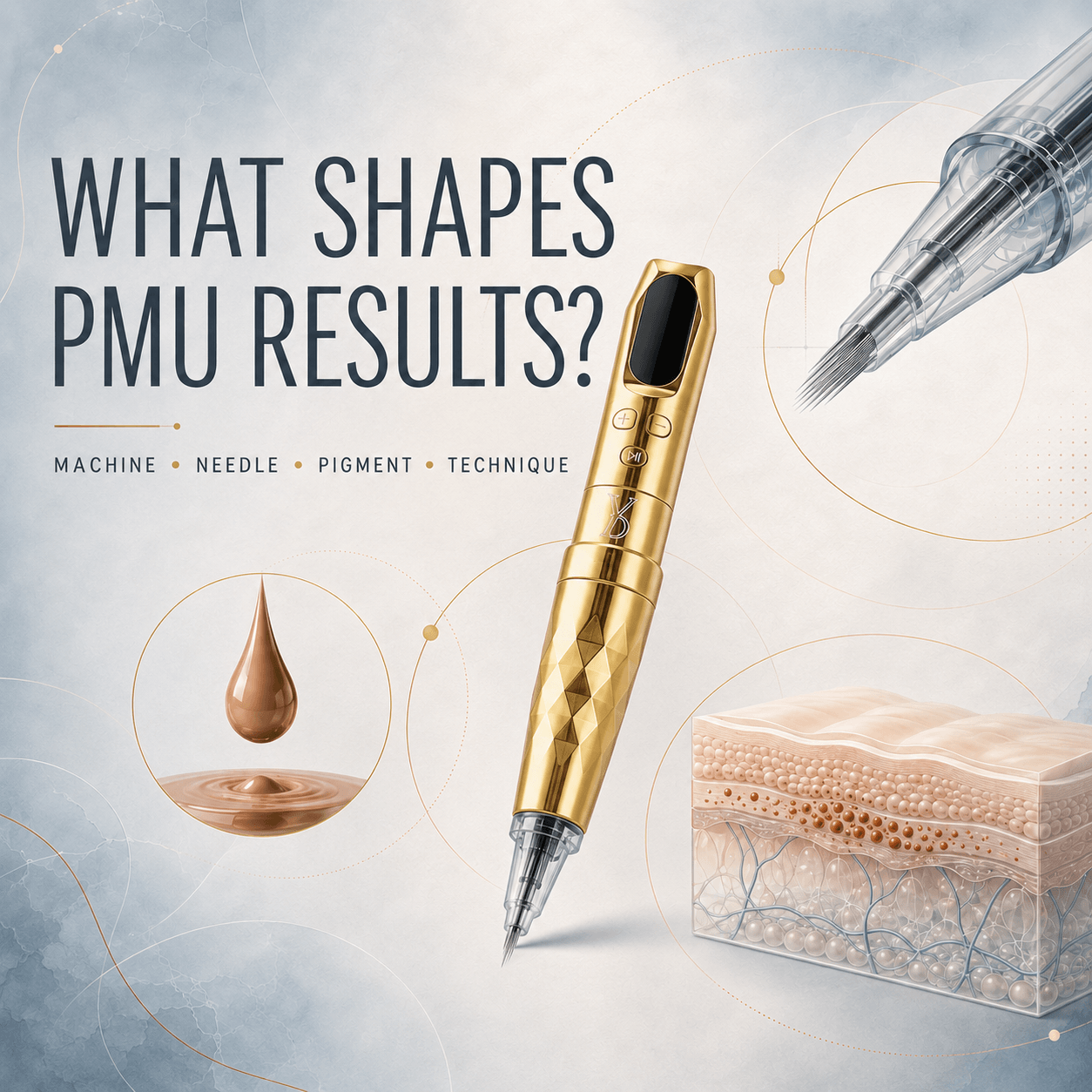
Machine, Needle, Pigment or Technique: What Truly Shapes Permanent Makeup Results?
Permanent makeup results are not controlled by one machine, needle, pigment or setting. This professional guide explains how equipment, cartridge configuration, pigment properties, artist technique...
Brow PMU
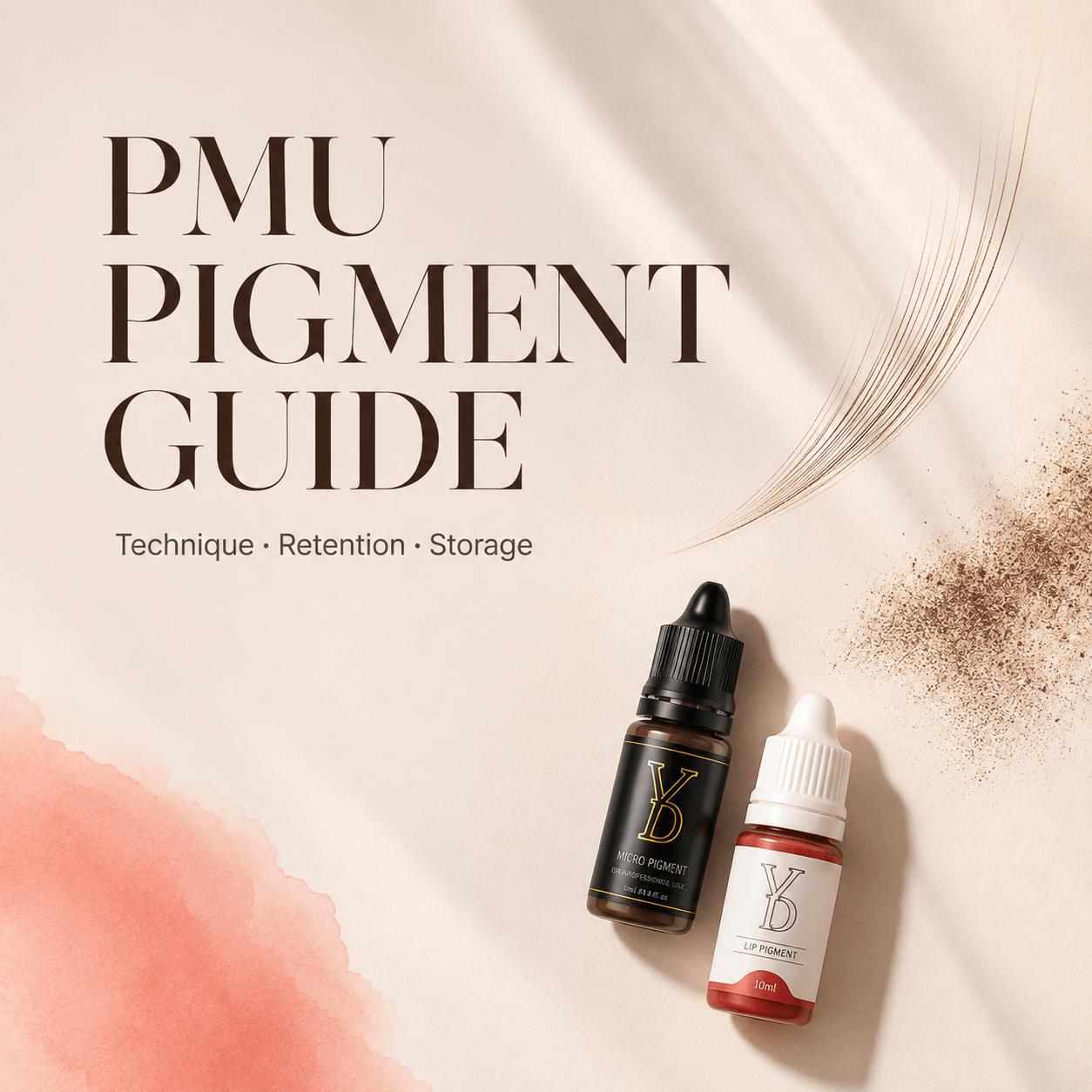
How to Match PMU Pigments to Techniques: Saturation, Retention & Storage Guide
Choosing a PMU pigment requires more than matching bottle color or selecting organic, inorganic or hybrid. This professional guide explains how treatment area, technique, pigment handling, saturati...

Brow PMU
Why Do PMU Brows Fade, Blur or Heal Unevenly? Causes & Prevention
PMU brows can fade, blur, heal unevenly or change color for different reasons. This professional guide explains how skin condition, technique selection, implantation, machine control, pigment plann...
Color Correction
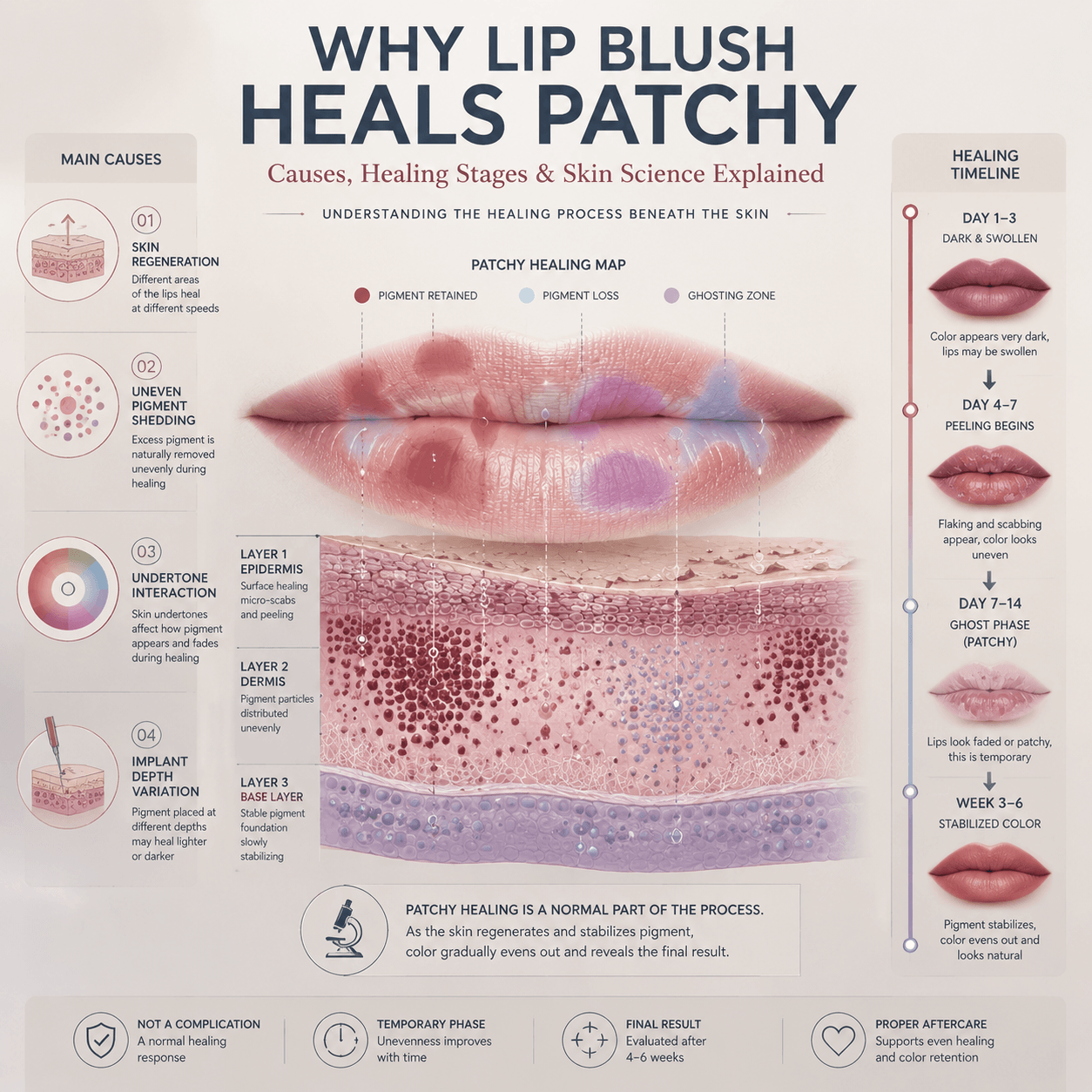
Why Does Lip Blush Heal Patchy? Causes, Timeline, Prevention & Correction
Patchy lip blush can reflect temporary surface healing, uneven starting lip color, aftercare, technique or true differences in healed retention. This guide explains the healing timeline, normal ver...

Brow PMU
How Long Does Permanent Makeup Last? Brows, Lips, Eyeliner and Maintenance
Permanent makeup does not fade on one fixed schedule. This guide compares the broad maintenance timelines for brows, lip blush and eyeliner, explains what affects fading, and shows how to decide wh...
aftercare
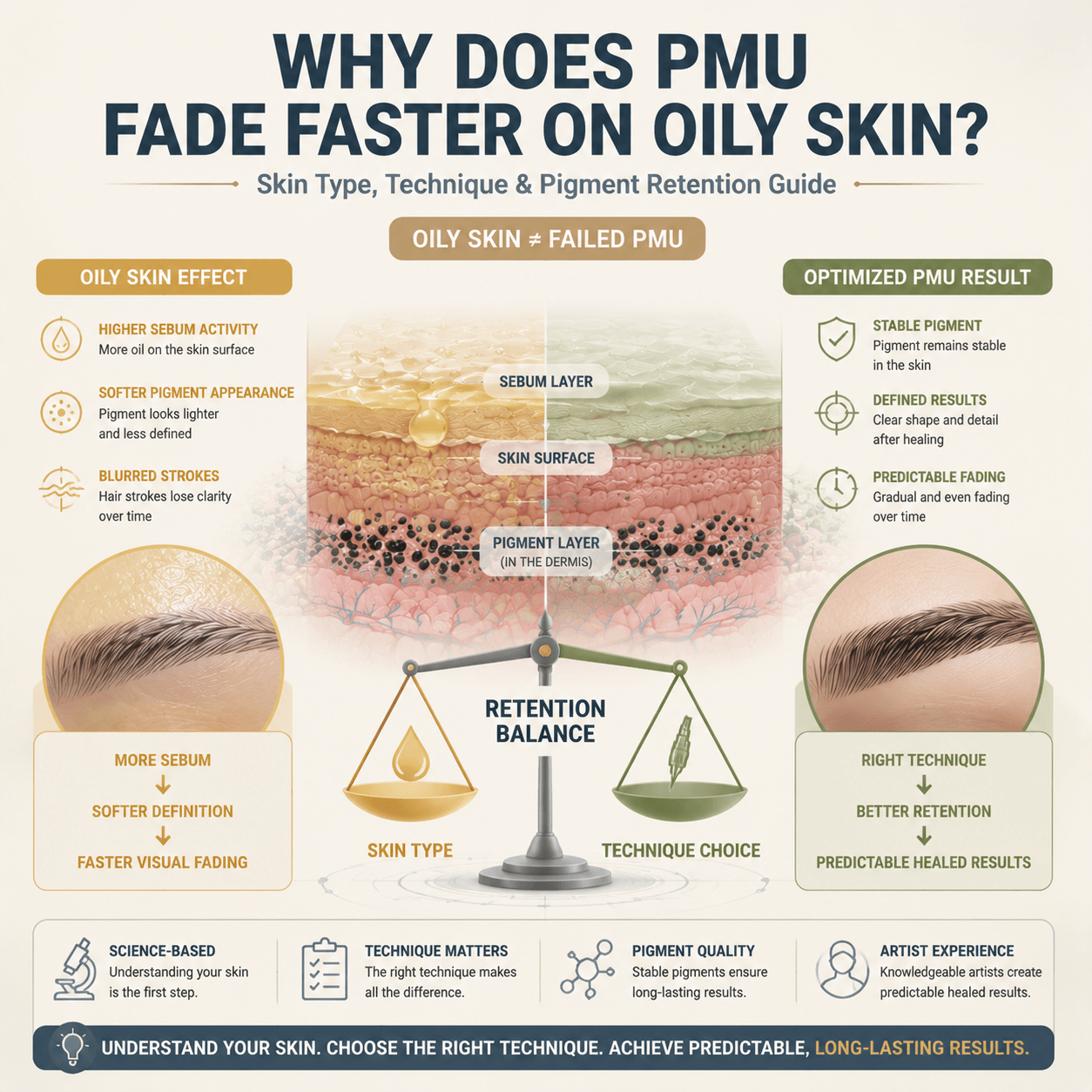
Why Does Permanent Makeup Fade Faster on Oily Skin? Causes, Best Techniques & Pigment Retention Guide
Oily skin can cause permanent makeup to fade faster — but it doesn’t have to. Learn why PMU fades on oily skin, which techniques work best, and how to improve long-term pigment retention.