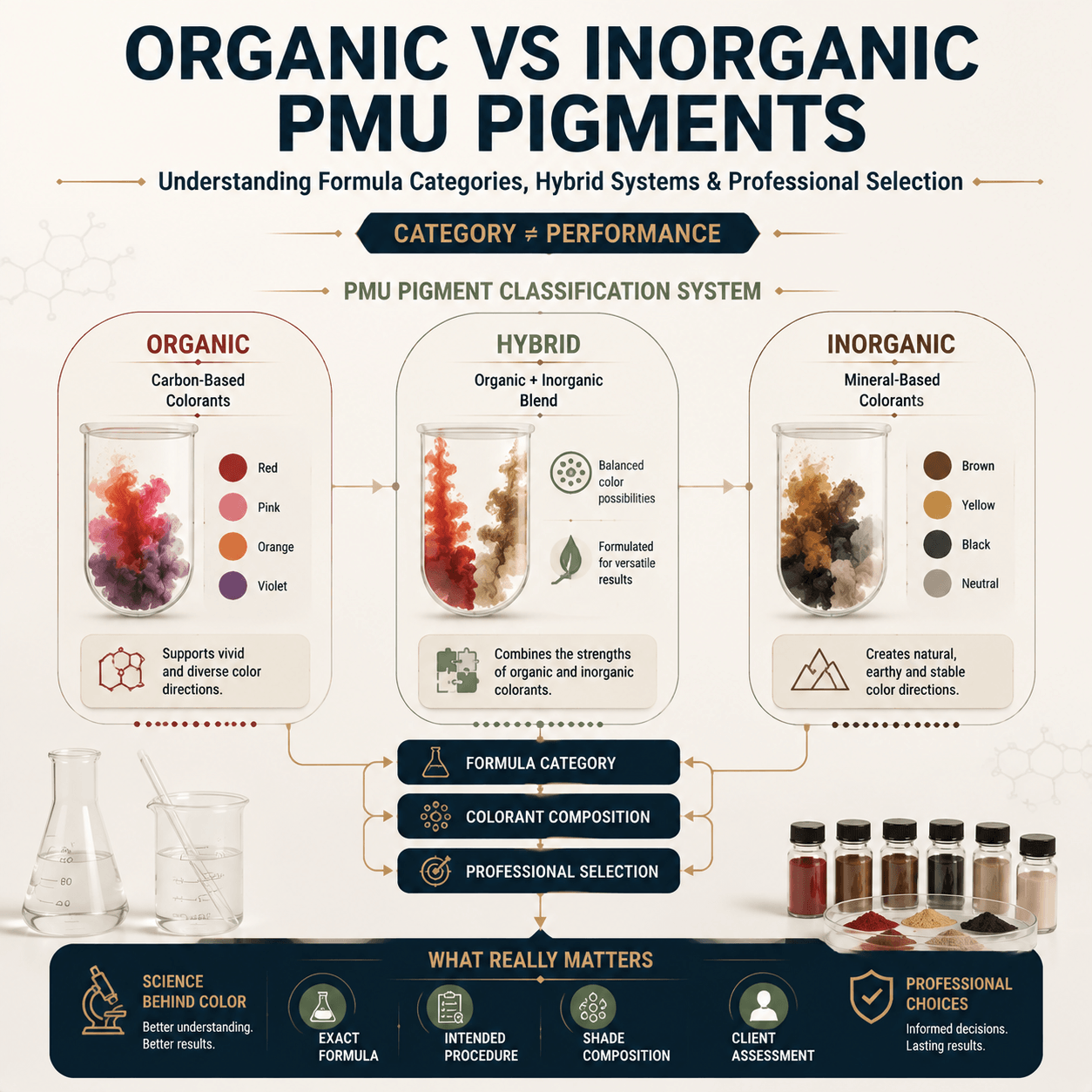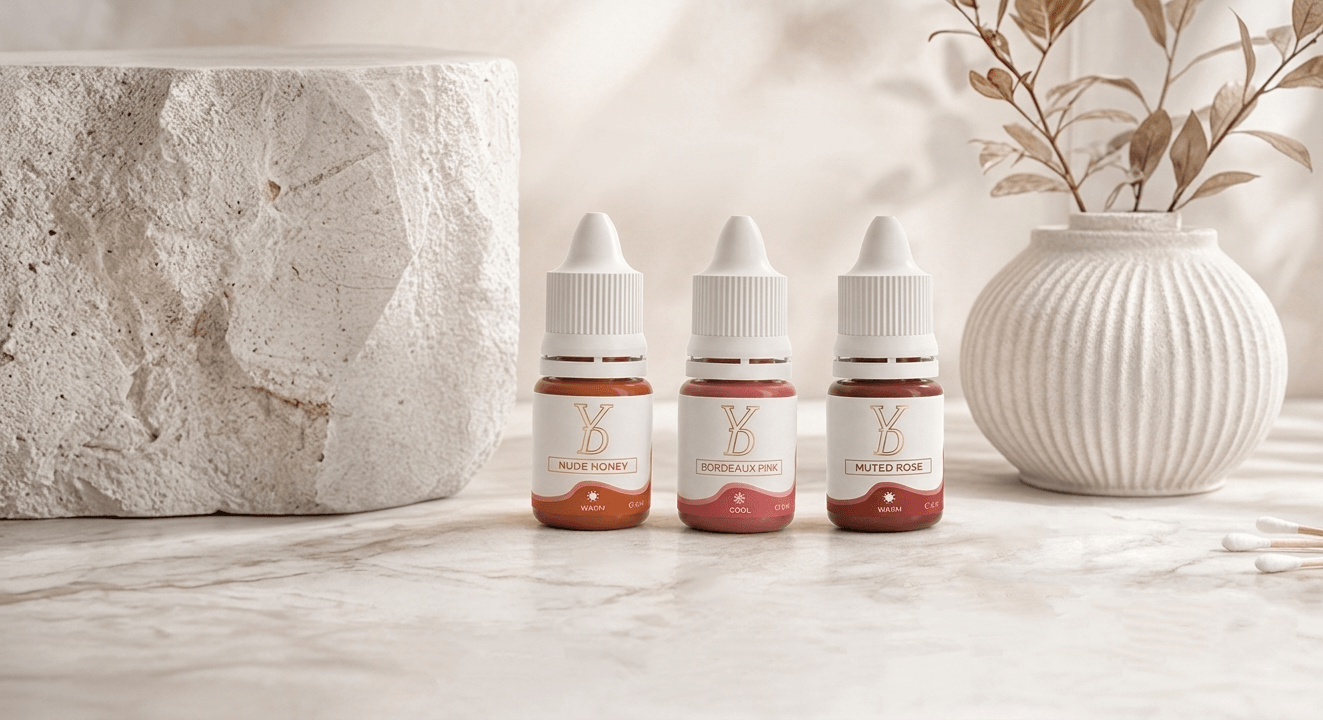
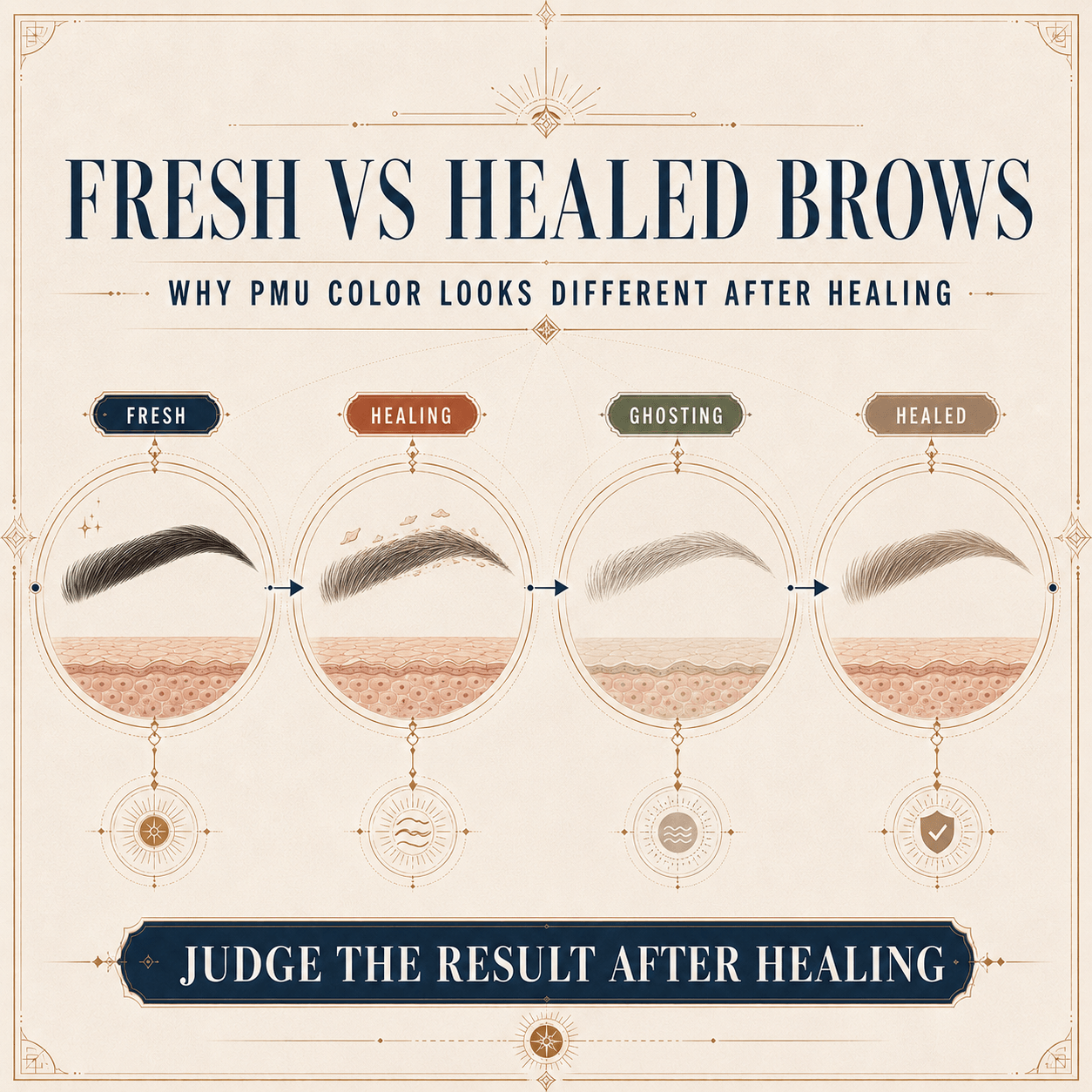
Luxury scientific illustration showing how PMU pigment oxidation gradually changes warm pigment molecules into cooler and muted healed tones over time.
Beginner Guide

What Is Oxidation in PMU? How It Affects Your Pigment Over Time

Oxidation in PMU is a chemical reaction between pigment molecules and oxygen in the skin environment, causing the pigment to change color over time. Organic pigment components are most vulnerable —...
What Is the Tyndall Effect? Why PMU Can Turn Blue or Grey
Brow PMU

What Is the Tyndall Effect? Why PMU Can Turn Blue or Grey

The Tyndall effect is an optical phenomenon where light scatters off small particles suspended in a medium, making them appear blue or grey when viewed from the side. In PMU, it occurs when pigment...
Illustration comparing lip and brow permanent makeup, showing why lips tend to display uneven color more easily than brows
Color Retention

Why Lip Permanent Makeup Shows Uneven Color More Easily Than Brows

Uneven color in lip permanent makeup is more common than in brows due to thinner skin, constant movement, and more sensitive pigment behavior. Learn the three key reasons and how to manage client e...
Diagram showing how machine, needle, and pigment each influence permanent makeup results
Color Retention

Machine, Needle, or Pigment: What Truly Shapes Permanent Makeup Results?

Permanent makeup results are shaped by how machines, needles, and pigments work together with skin biology — not by any single tool. Learn why technique and judgment matter most.
Editorial diagram illustrating which permanent makeup problems are irreversible based on long-term skin impact rather than appearance
Color Correction

Which Permanent Makeup Issues Are Truly Irreversible?

Not all permanent makeup problems are irreversible. Learn which issues — like skin scarring and chronic trauma — truly limit future options, and which ones like color shifts can still be corrected.
Risk spectrum illustration showing how a permanent makeup choice that appears safe can carry higher long-term risks over time
Color Retention

When the “Safest” Permanent Makeup Choice Becomes the Riskiest One

What looks safe in permanent makeup isn’t always low risk. Learn why strong-hold pigments, high intensity, and overconfidence in permanence can create the highest long-term correction challenges.
Illustration explaining why beginner permanent makeup artists rely on many pigments
Color Retention

Why Experienced Permanent Makeup Artists Rely on Fewer Pigments

Experienced PMU artists achieve better results with fewer pigments — not more. Learn how pigment predictability, skin response, and color control matter more than large pigment collections.
Infographic showing why visible pigment color differs from healed skin color, illustrating skin diffusion, light scattering, and healed pigment balance
Color Retention

Why Permanent Makeup Pigment Looks Different After Healing - Understanding Skin Optics, Healing Response, and Pigment Behavior

Fresh PMU pigment often looks darker, warmer, and more saturated than healed results. Learn why skin inflammation, optical depth, and pigment structure — not pigment failure — cause this difference.
Educational cover explaining common myths and realities about how brown PMU pigments heal differently
Brow PMU

Why Brown Permanent Makeup Pigments Heal Differently Than Expected

Brown PMU pigments often heal cooler, lighter, or more muted than expected. Learn how pigment composition, skin optics, and implantation depth — not technique failure — explain this difference.