BLOG

Beginner Guide
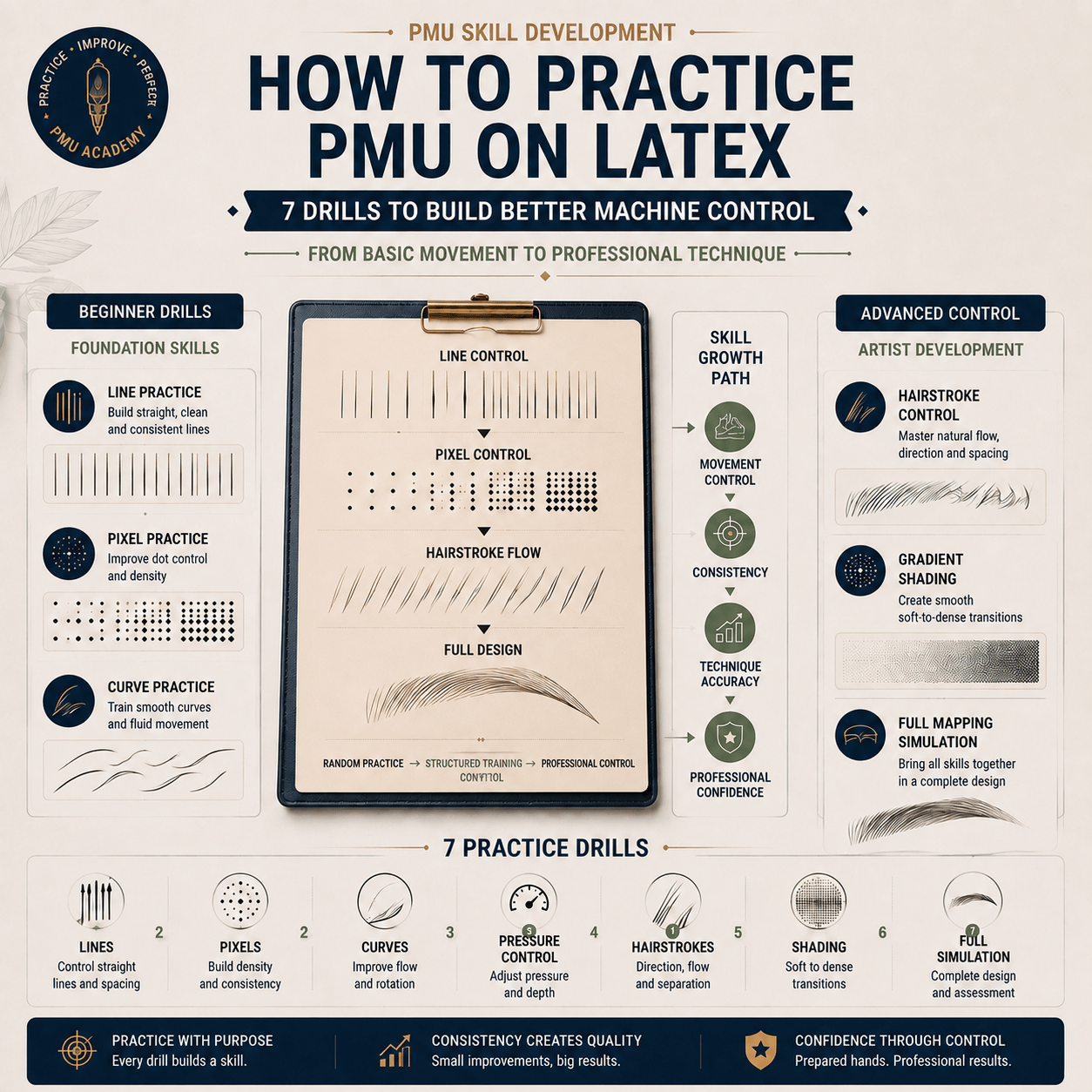
How to Practice PMU on Latex: 7 Drills to Build Better Control
Random marks do not create reliable PMU technique. This structured practice-skin routine helps students develop line control, spacing, pixel consistency, hairstroke flow and shading transitions—whi...
Beginner Guide
What Is Oxidation in PMU? How It Affects Your Pigment Over Time
Oxidation in PMU is a chemical reaction between pigment molecules and oxygen in the skin environment, causing the pigment to change color over time. Organic pigment components are most vulnerable —...

Beginner Guide
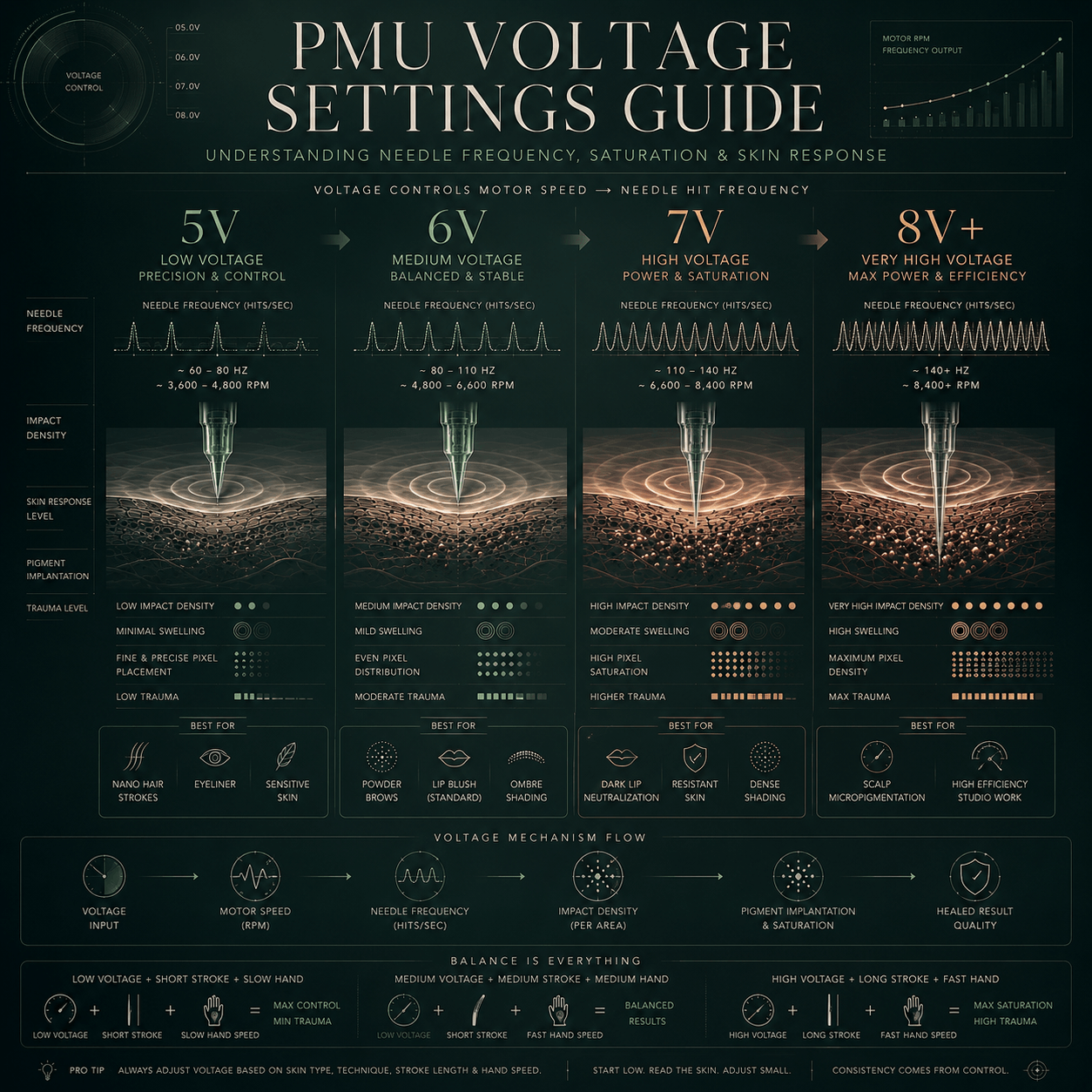
PMU Voltage Settings Guide for Every Technique
PMU voltage controls how fast the machine motor spins, which determines how many times the needle hits the skin per second. Lower voltage (5–6V) is used for nano hair strokes, eyeliner, and sensiti...

Beginner Guide
Why Low Vibration Matters in Permanent Makeup
Low vibration in a PMU machine means the motor runs smoothly and consistently, with minimal unwanted oscillation transferred to the artist's hand. High vibration causes blurred lines, inconsistent ...

Beginner Guide
2.5mm vs 3.5mm PMU Stroke: What's the Difference?
A 2.5mm stroke creates a softer, lighter needle hit — less skin trauma, more control, ideal for nano hair strokes, eyeliner, sensitive skin, and delicate layering. A 3.5mm stroke creates a stronger...

Beginner Guide
What Stroke Length Is Best for Lip Blush?
The best stroke length for lip blush is 2.5–3.0mm for most clients and techniques. A 2.5mm stroke delivers softer implantation with less trauma — ideal for sensitive lips, first-pass color layering...

Beginner Guide
What Are PMU Cartridge Needles? A Complete Guide to Sizes and Configurations
PMU cartridge needles are single-use, sterile needle modules that attach to rotary PMU machines. Needle configuration determines the technique: 1R (single round) for hair strokes and fine lines, 3R...