
Why Does Permanent Makeup Fade Faster on Oily Skin?
Permanent makeup fades faster on oily skin because excess sebum production pushes pigment toward the skin surface during healing, larger pores create less stable implantation, and faster skin cell turnover causes pigment to be shed more quickly. Clients with oily skin typically require more frequent touch-ups — every 12 months rather than every 18–24 months — to maintain consistent results.
Permanent makeup results can vary significantly depending on skin type. One of the most common challenges artists encounter is reduced pigment retention on oily skin. While the procedure itself may be performed correctly, excess oil production can influence how pigment settles and heals in the dermis.
Understanding the relationship between skin behaviour and pigment stability helps both artists and clients achieve better long-term results. For a broader overview of what affects PMU longevity, read: How Long Does Permanent Makeup Last? (Brows, Lips, Eyeliner Guide).
Summary
Permanent makeup tends to fade faster on oily skin due to several biological factors: increased sebum production, larger pores, and faster skin cell turnover can all reduce pigment stability during the healing process. Although oily skin does not prevent successful permanent makeup procedures, it requires careful technique, proper aftercare, and realistic expectations regarding touch-up frequency.
1. Higher Sebum Production Affects Pigment Retention
Oily skin produces more sebum — the natural oil secreted by sebaceous glands. Excess oil can interfere with pigment stability during the healing phase by creating a barrier that prevents the pigment from fully bonding with the dermis.
When the skin produces large amounts of oil:
- Pigment may be pushed closer to the surface during healing
- The healing process becomes less predictable and more variable
- Some pigment may be expelled along with sebum during skin regeneration
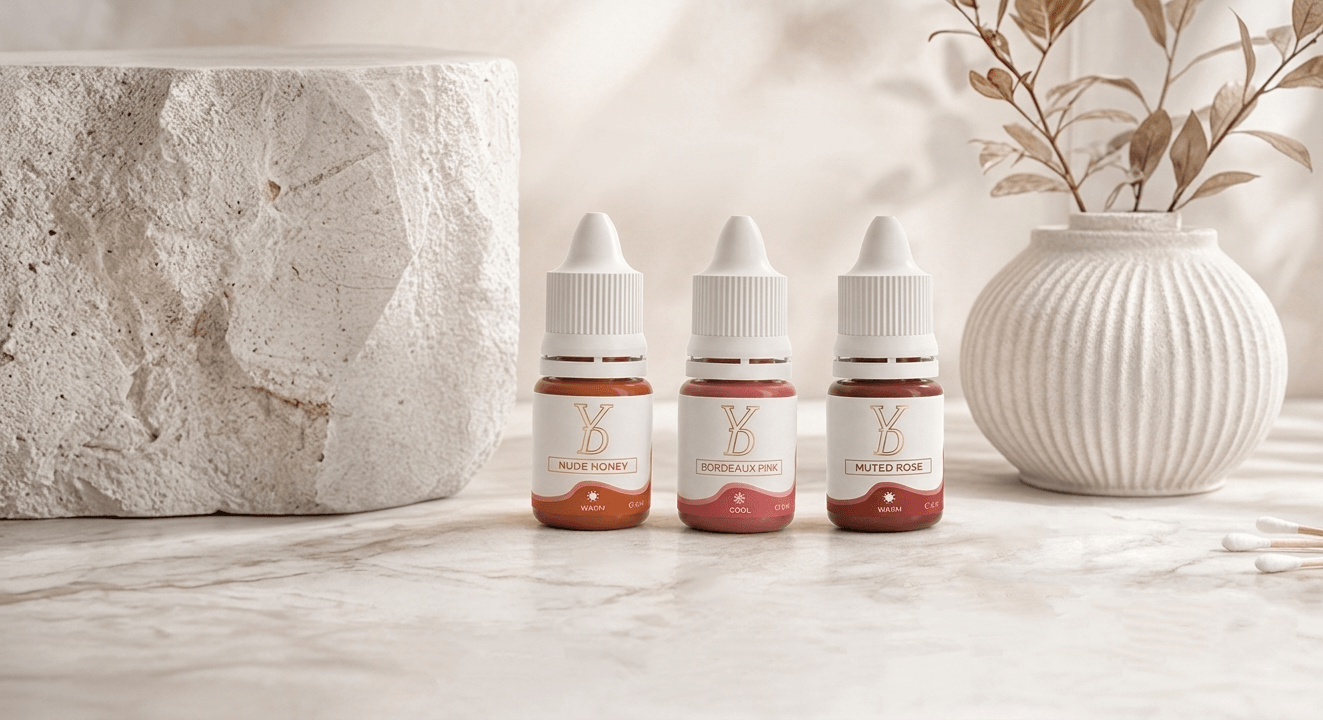
This is one reason artists often notice lighter healed results on oily skin compared to normal or dry skin. Choosing a pigment with optimal viscosity — like the YDPMU NEO Organic Lip Blushing Pigment Set — helps ensure the pigment flows and bonds correctly even in higher-sebum environments.

2. Larger Pores Create Less Stable Implantation
Oily skin often has larger pores, which can make pigment implantation less stable and more prone to uneven distribution.
When pigment is implanted into skin with larger pores:
- The pigment distribution may appear less uniform across the treated area
- Retention may vary between different zones of the same treatment area
- Some regions may fade faster than others, creating a patchy healed result
Because of this, artists working on oily skin often adjust their technique — using slightly deeper implantation and additional passes — to improve pigment density and consistency. For a detailed look at how technique affects pigment stability, read: Floating vs Burying Technique: How It Affects Pigment Stability.

3. Faster Skin Turnover Causes Faster Fading
Oily skin types often experience faster cellular turnover, which means the skin renews itself more quickly than dry or normal skin types.
During the healing process:
- Dead skin cells are shed more rapidly, taking surface pigment with them
- Pigment particles closer to the surface may be lost before fully bonding
- The final healed colour may appear lighter than expected
This biological process explains why clients with oily skin typically require more frequent touch-ups to maintain consistent results. Understanding how pigment behaves differently after healing is essential for managing client expectations. Read: Why Permanent Makeup Pigment Looks Different After Healing.

4. How Pigment Retention Varies Across Skin Types
Skin type is one of the most important variables in permanent makeup outcomes. Here is how the three main skin types compare for PMU retention:
| Skin Type | Pigment Retention | Typical Touch-Up Frequency | Key Challenge |
|---|---|---|---|
| Dry skin | Best retention | Every 18–24 months | May need extra hydration during healing |
| Normal skin | Good retention | Every 12–18 months | Most predictable healing |
| Oily skin | Lower retention | Every 10–12 months | Sebum interference, faster fading |
Experienced artists adjust implantation depth, needle configuration, and layering technique to improve pigment retention on oily skin. The YDPMU DEMO Pro Wireless Permanent Makeup Machine — with its 2.5–3.5mm adjustable stroke — gives artists the precision to work at the optimal depth for each skin type, maximising retention even on challenging oily skin.

5. Aftercare Tips for Oily Skin Clients
Proper aftercare is especially important for oily skin clients to maximise pigment retention:
- Keep the treated area clean and dry for the first 7–10 days — excess oil on the surface can interfere with healing
- Avoid oil-based skincare products near the treated area during healing
- Apply SPF daily once healed — UV exposure accelerates fading on all skin types. Read: How UV Exposure and Skincare Impact PMU Pigment Longevity
- Avoid retinol and AHAs/BHAs near treated areas — these accelerate skin turnover and pigment fading
- Book touch-ups proactively — don't wait until the colour has faded significantly. Read: How Long Should You Wait Before a Permanent Makeup Touch-Up?
Conclusion
Permanent makeup fades faster on oily skin due to increased sebum production, larger pores, and faster skin cell turnover — all of which reduce how effectively pigment bonds and retains in the dermis. However, with proper technique, the right pigment selection, and proactive aftercare, artists can still achieve beautiful, long-lasting results on oily skin.
Using professionally formulated pigments like the YDPMU NEO Organic Dark Lip ALL-IN-ONE Pigment Set and the YDPMU NEO Organic Liquid Pigment Mixture Set — engineered for optimal viscosity and skin bonding — gives artists the best foundation for stable results on every skin type. For more on why pigment colour can shift over time, read: Why Does Permanent Makeup Pigment Turn Grey Over Time?
Frequently Asked Questions
Why does permanent makeup fade faster on oily skin?
Permanent makeup fades faster on oily skin because excess sebum production pushes pigment toward the skin surface during healing, larger pores create less stable pigment implantation, and faster skin cell turnover causes pigment to be shed more quickly. These three biological factors combine to reduce how effectively pigment bonds and retains in the dermis of oily skin.
Can permanent makeup work on oily skin?
Yes. Permanent makeup can work successfully on oily skin, but it requires adjusted technique — including slightly deeper implantation, additional passes, and careful pigment selection. Clients with oily skin should also expect more frequent touch-ups (every 10–12 months) compared to clients with dry or normal skin.
How can I make permanent makeup last longer on oily skin?
To maximise PMU longevity on oily skin: keep the treated area clean and dry during healing; avoid oil-based skincare products near the treated area; apply SPF daily once healed; avoid retinol and AHAs/BHAs near treated areas; and book touch-ups proactively before the colour fades significantly.
How often do oily skin clients need PMU touch-ups?
Clients with oily skin typically need touch-ups every 10–12 months, compared to every 18–24 months for dry skin clients. The exact frequency depends on the individual's sebum production level, lifestyle, sun exposure, and the treatment area.
Does skin type affect which PMU pigment to use?
Yes. Skin type influences how pigment flows, bonds, and retains in the skin. For oily skin clients, pigments with optimal viscosity — not too thin, not too thick — perform best. YDPMU's professionally formulated pigment range is engineered for consistent performance across all skin types, including oily skin.