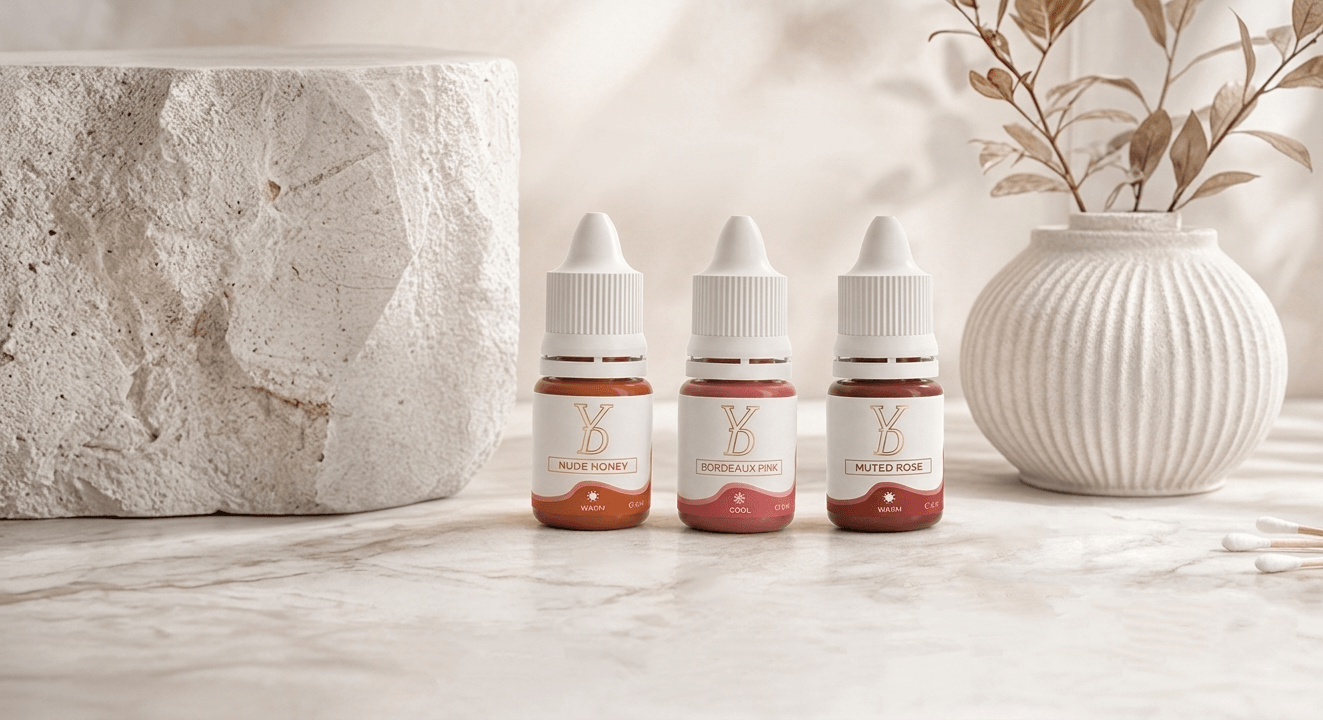
YDPMU PMU pigment bottles showcasing a full range of professional permanent makeup colors for microblading, lip blush, and eyeliner
Microblading

Why YDPMU Is the Best Permanent Makeup Pigment: The Ultimate Guide for Permanent Makeup Artists

Discover why YDPMU is the top choice for permanent makeup artists worldwide. From exceptional color performance to skin-safe formulas, learn what makes YDPMU the best PMU pigment on the market.
Guide explaining why permanent makeup pigment turns grey over time due to pigment composition, implantation depth, and natural fading
Color Theory

Why Does Permanent Makeup Pigment Turn Grey Over Time?

Permanent makeup pigment can turn grey over time due to pigment composition, implantation depth, skin type, and natural fading. Learn why this happens and how professional artists prevent unwanted ...
pmu-touch-up-timing-pigment-stability
Healing Process

How Long Should You Wait Before Permanent Makeup Touch-Up?

The ideal waiting period before a permanent makeup touch-up is 6–8 weeks after the initial procedure. Learn how healing, skin type, and treatment area affect touch-up timing for the best long-term ...
Abstract color science illustration comparing warm and cool pigments in permanent makeup and their stability and diffusion behavior
Color Science

Why Warm Pigments Appear More Vibrant While Cool Pigments Stay More Stable in Permanent Makeup

Warm pigments appear more vibrant in permanent makeup due to light reflection and skin undertones, while cool pigments offer greater long-term stability. Learn how skin biology and pigment formulat...
Diagram-style cover showing differences between medium and highly saturated PMU pigments for beginner artists
Beginner PMU

Why Highly Saturated Permanent Makeup Pigments Are Risky for Beginners

Highly saturated PMU pigments are advanced tools — not beginner-friendly ones. Learn why high color load increases overworking risk, amplifies depth errors, and causes uneven healing for new artists.
Educational guide explaining whether permanent makeup pigments oxidize over time and what truly causes color changes in healed brows
Color Retention

Do Permanent Makeup Pigments Oxidize Over Time? - What Really Causes Color Changes in Healed Brows

PMU pigments rarely oxidize inside the skin. Most color changes in healed brows are caused by implantation depth, skin type, and selective fading of warm particles — not chemical oxidation.
Educational illustration showing how PMU pigments settle into different skin layers during healing
Color Retention

How Permanent Makeup Pigments Settle in the Skin - Understanding Implantation Depth, Healing, and Color Stability

PMU pigment settlement depends on implantation depth, skin type, healing response, and aftercare. Pigment placed too shallow fades quickly, too deep heals grey or blurry, and correct depth produces...
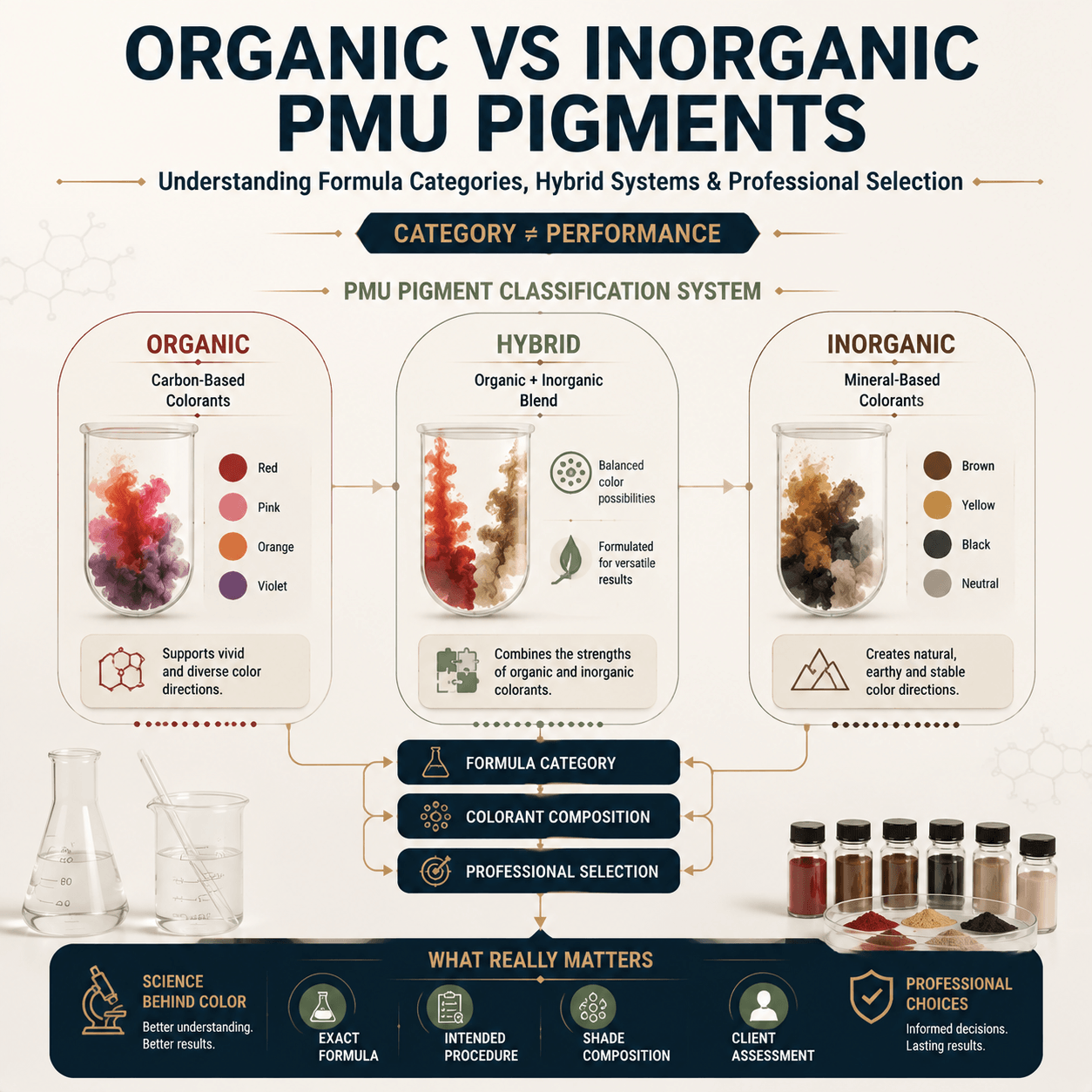
Organic vs lnorganic PMU Pigments Cover
Brow PMU

Organic vs. Inorganic Permanent Makeup Pigments: Choosing the Best Pigments for Long-Lasting Permanent Makeup

Organic pigments deliver vivid, bright color ideal for lips and eyeliner. Inorganic pigments provide soft, stable, natural results ideal for brows. Hybrid formulas balance both. Learn how to choose...

Allergic Reactions to Permanent Makeup Pigments
Aftercare

Allergic Reactions to Permanent Makeup Pigments: How to Spot Them and What to Do Next

True allergic reactions to PMU pigments are uncommon but recognizable. Key signs include persistent itching, raised bumps, worsening swelling, and delayed hypersensitivity. Learn how to distinguish...