Brow color correction guide showing how to neutralize red, violet, grey, green, and blue permanent makeup brows using complementary pigments
Brow PMU

Why Do PMU Brows Turn Red, Blue, Green or Violet? The Science Behind Color Shifts

PMU brows turn red when warm iron oxide particles dominate after cool particles fade. They turn blue or grey due to deep implantation and the Tyndall effect. Green shifts occur when yellow and blue...
Diagram showing why permanent makeup appears darker immediately after treatment and becomes lighter during the healing process
Color Theory

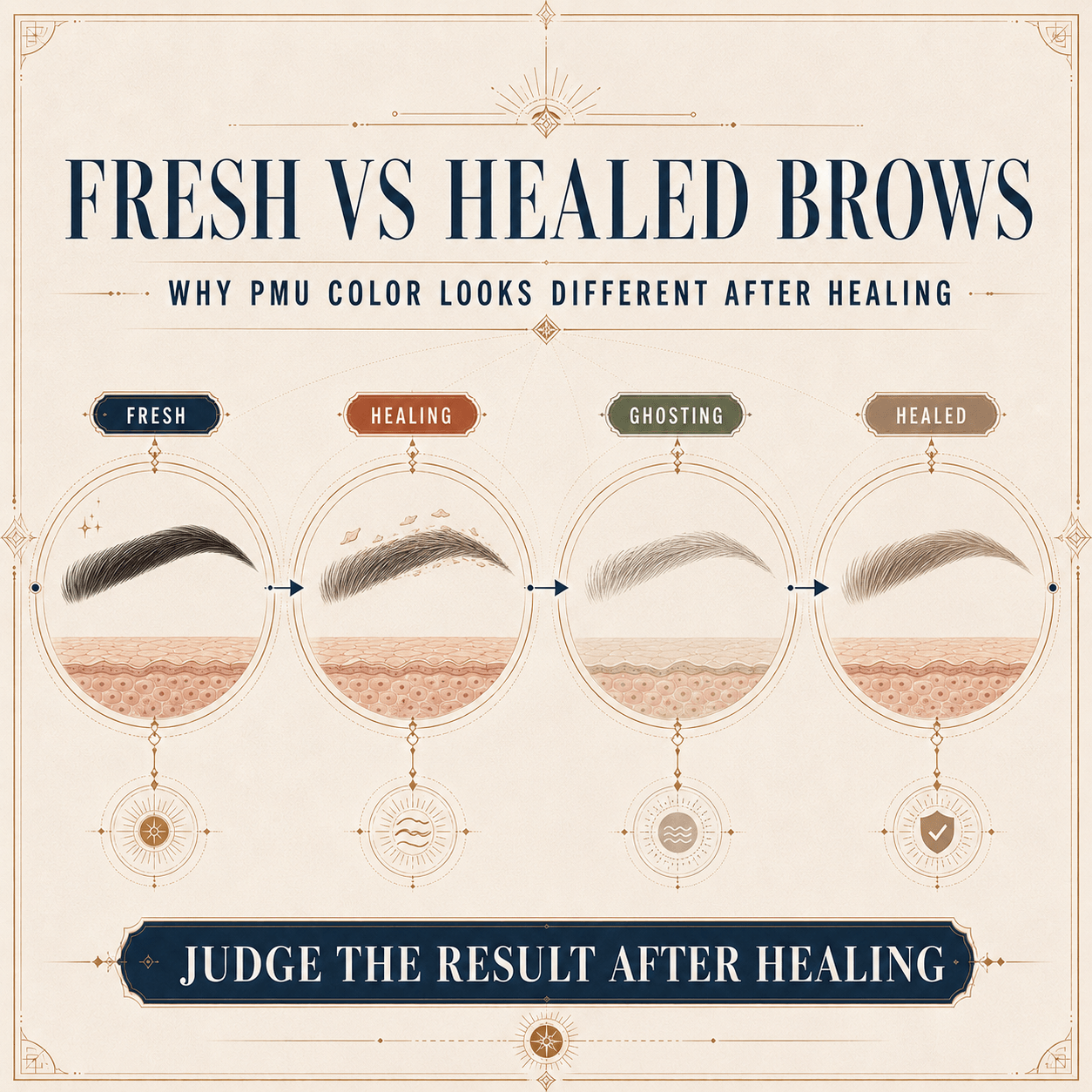
Why Does Permanent Makeup Look Too Dark Immediately After Treatment?

Permanent makeup looks darker immediately after treatment due to concentrated pigment, skin inflammation, and the healing layer. Learn why this is normal and when the final colour stabilises.
Diagram illustrating how permanent makeup pigment retention varies between dry, normal, and oily skin types
Guide

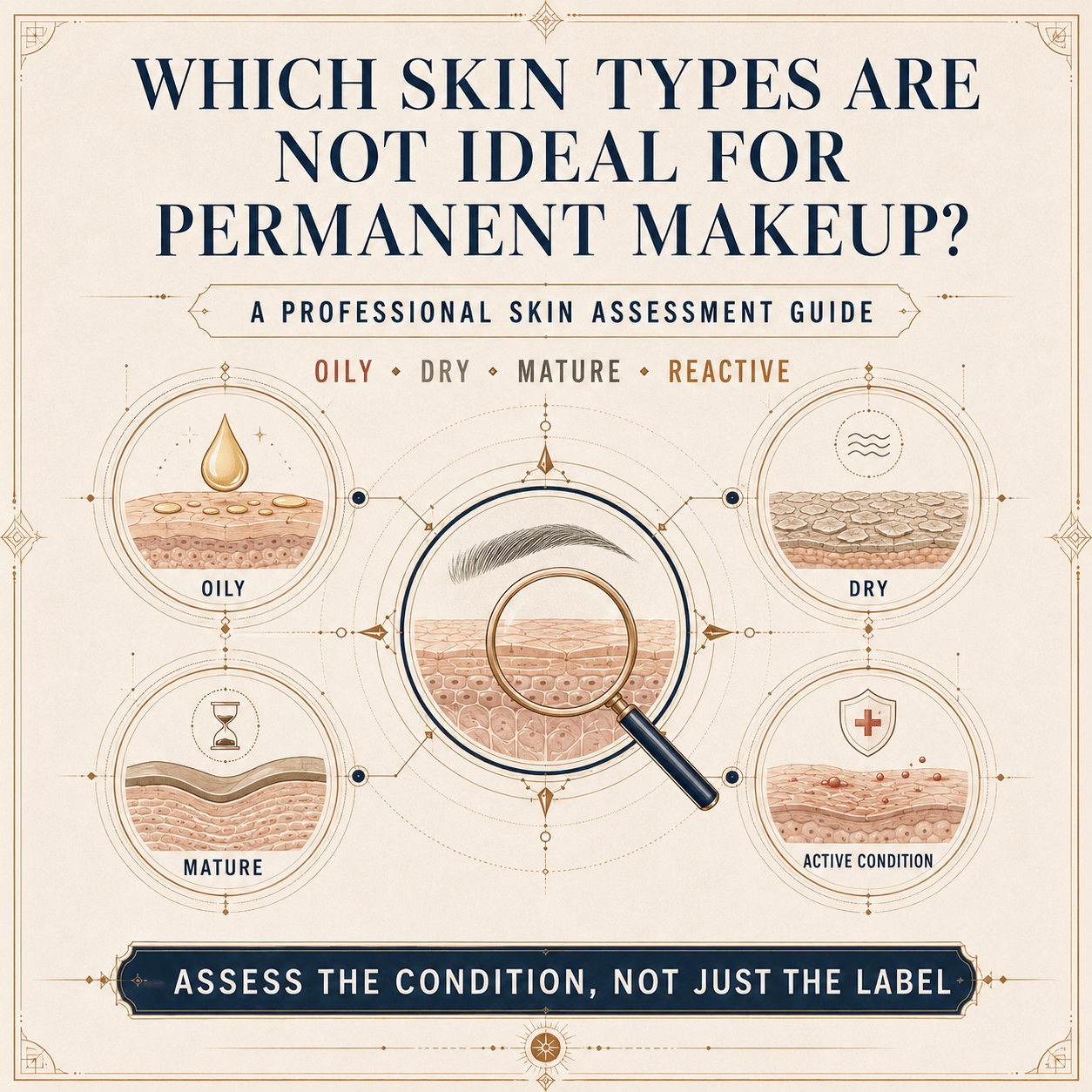
Why Does Permanent Makeup Fade Faster on Oily Skin?

Permanent makeup fades faster on oily skin due to excess sebum production, larger pores, and faster skin cell turnover. Learn how artists adjust technique and pigment selection to improve retention...
pmu-touch-up-timing-pigment-stability
Healing Process

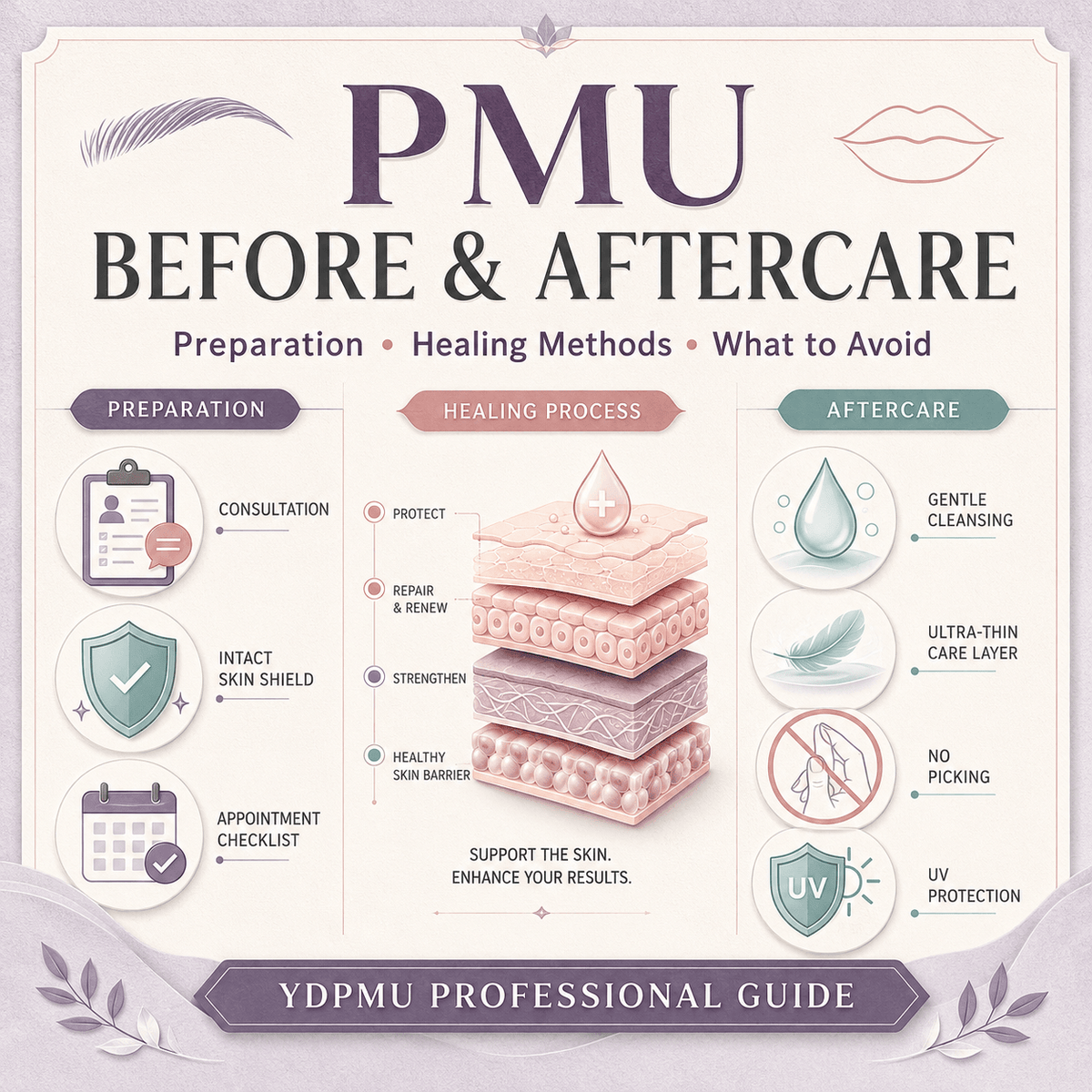
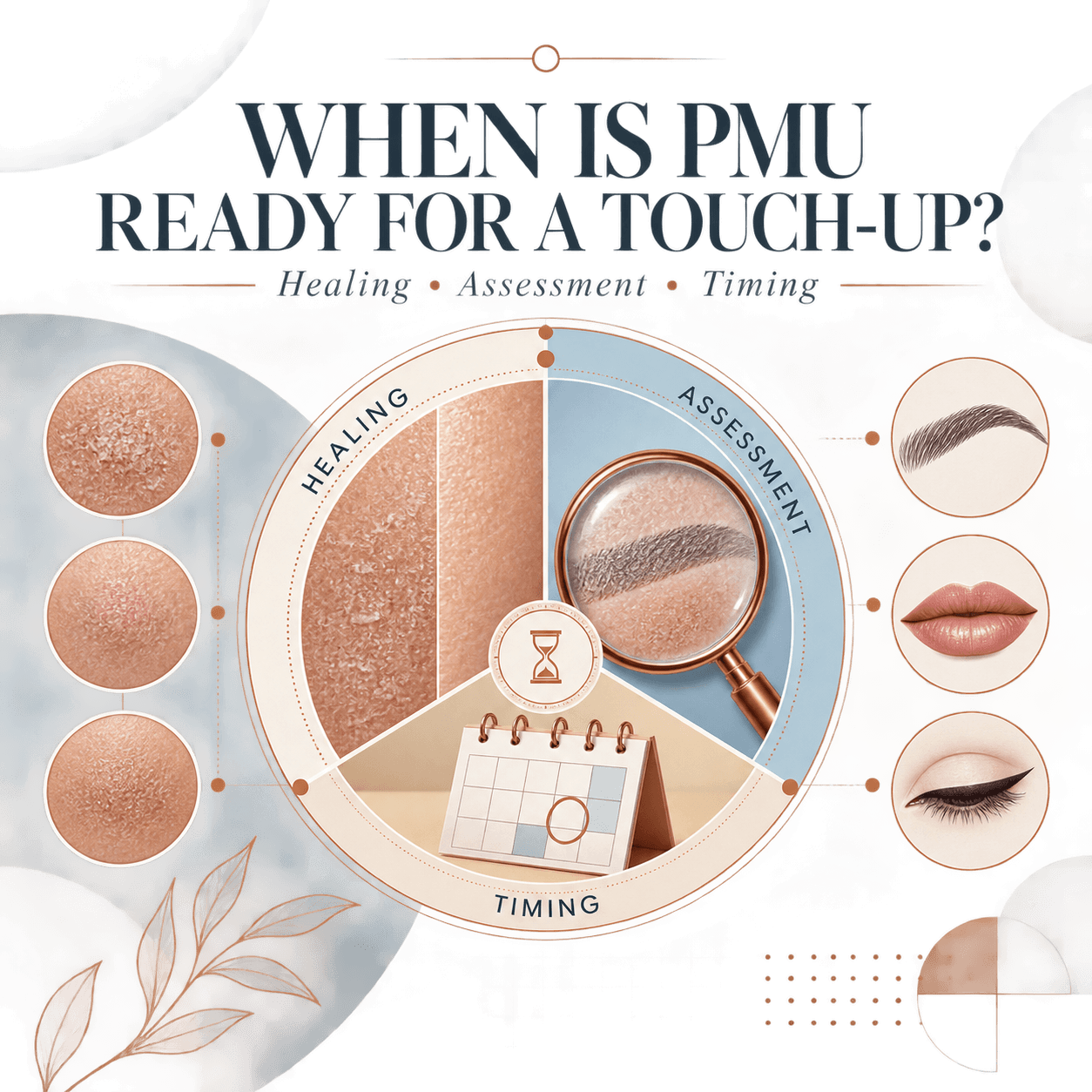
How Long Should You Wait Before Permanent Makeup Touch-Up?

The ideal waiting period before a permanent makeup touch-up is 6–8 weeks after the initial procedure. Learn how healing, skin type, and treatment area affect touch-up timing for the best long-term ...
Medical illustration showing how the stratum corneum and skin layers affect brow clarity in permanent makeup procedures
Brow PMU

How the Stratum Corneum Influences Brow Clarity in Permanent Makeup

The stratum corneum — the outermost skin layer — plays a decisive role in brow clarity, pigment retention, and line sharpness in permanent makeup. Learn how skin structure affects your PMU results.
Illustration comparing lip and brow permanent makeup, showing why lips tend to display uneven color more easily than brows
Color Retention

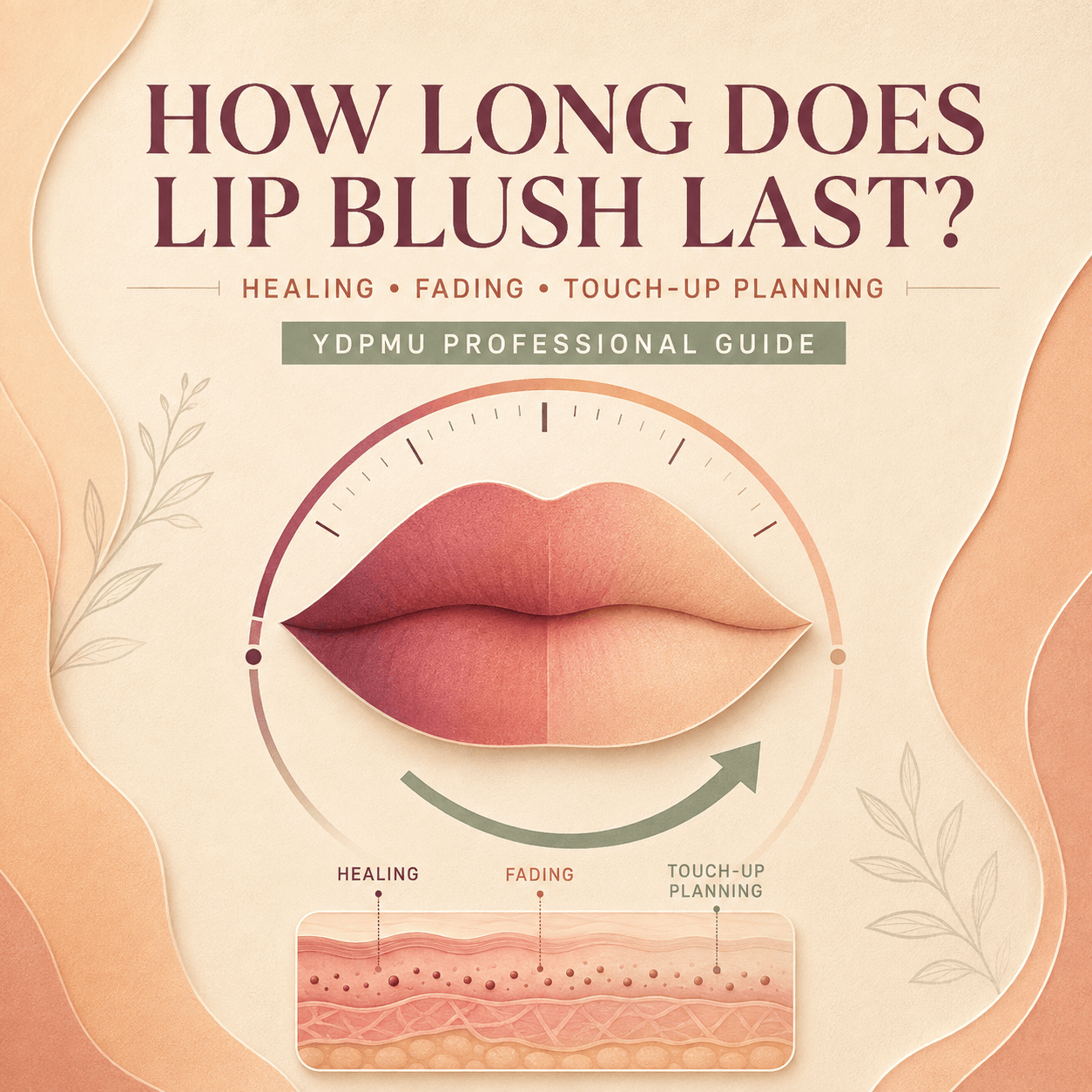
Why Lip Permanent Makeup Shows Uneven Color More Easily Than Brows

Uneven color in lip permanent makeup is more common than in brows due to thinner skin, constant movement, and more sensitive pigment behavior. Learn the three key reasons and how to manage client e...
Illustration showing layered skin structure explaining why touch-ups cannot fix every permanent makeup issue
Guide

Why Touch-Ups Can’t Fix Every Permanent Makeup Issue — And What Truly Matters Instead

Touch-ups are a refinement tool, not a repair tool. Learn which permanent makeup issues can be adjusted over time — and which ones involving skin integrity cannot be reversed.
Infographic showing why visible pigment color differs from healed skin color, illustrating skin diffusion, light scattering, and healed pigment balance
Color Retention

Why Permanent Makeup Pigment Looks Different After Healing - Understanding Skin Optics, Healing Response, and Pigment Behavior

Fresh PMU pigment often looks darker, warmer, and more saturated than healed results. Learn why skin inflammation, optical depth, and pigment structure — not pigment failure — cause this difference.
Educational cover explaining common myths and realities about how brown PMU pigments heal differently
Brow PMU

Why Brown Permanent Makeup Pigments Heal Differently Than Expected

Brown PMU pigments often heal cooler, lighter, or more muted than expected. Learn how pigment composition, skin optics, and implantation depth — not technique failure — explain this difference.