BLOG
Bloodborne Pathogens
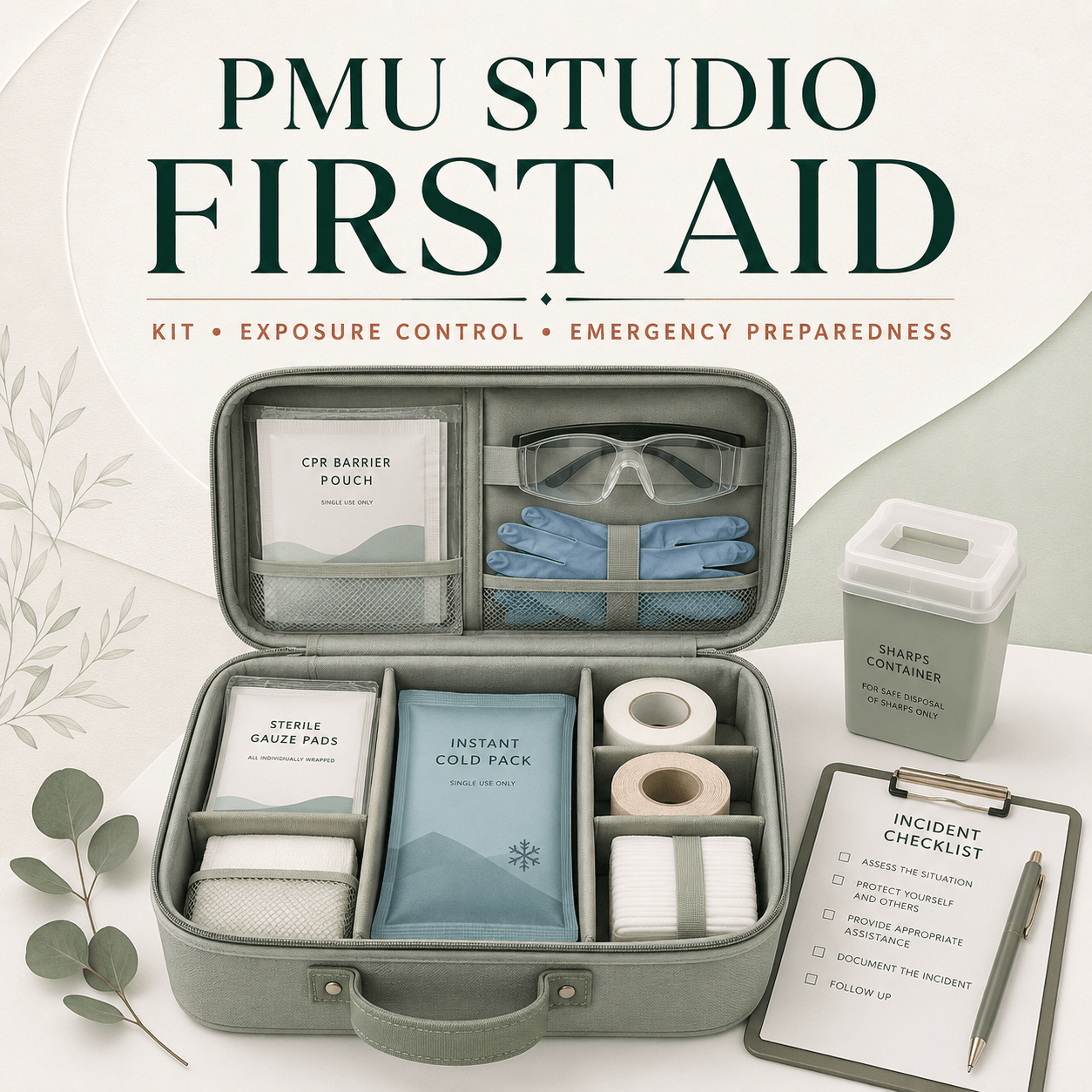
PMU Studio First Aid Kit & Emergency Preparedness Guide for Artists
A PMU studio needs more than a box of bandages. This professional guide explains how to organize first aid supplies, blood-exposure materials, emergency procedures, training and documentation witho...
Brow PMU
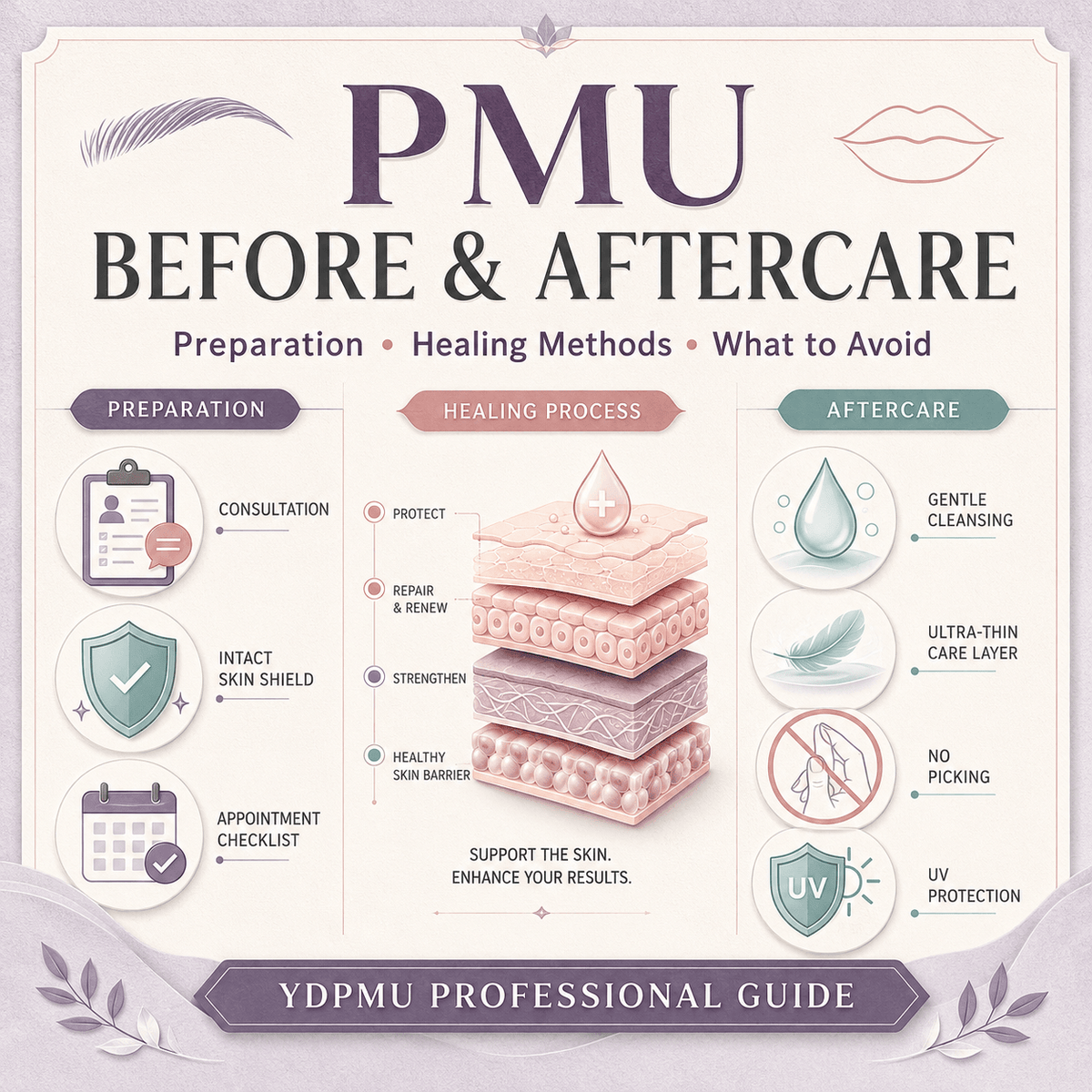
PMU Before & Aftercare Guide: Preparation, Dry vs Wet Healing & What to Avoid
A complete PMU preparation and aftercare guide for lip blush, microblading and brow tattoo clients. Learn how to prepare, how dry and managed-moisture healing differ, what to avoid, which changes m...
Brow PMU
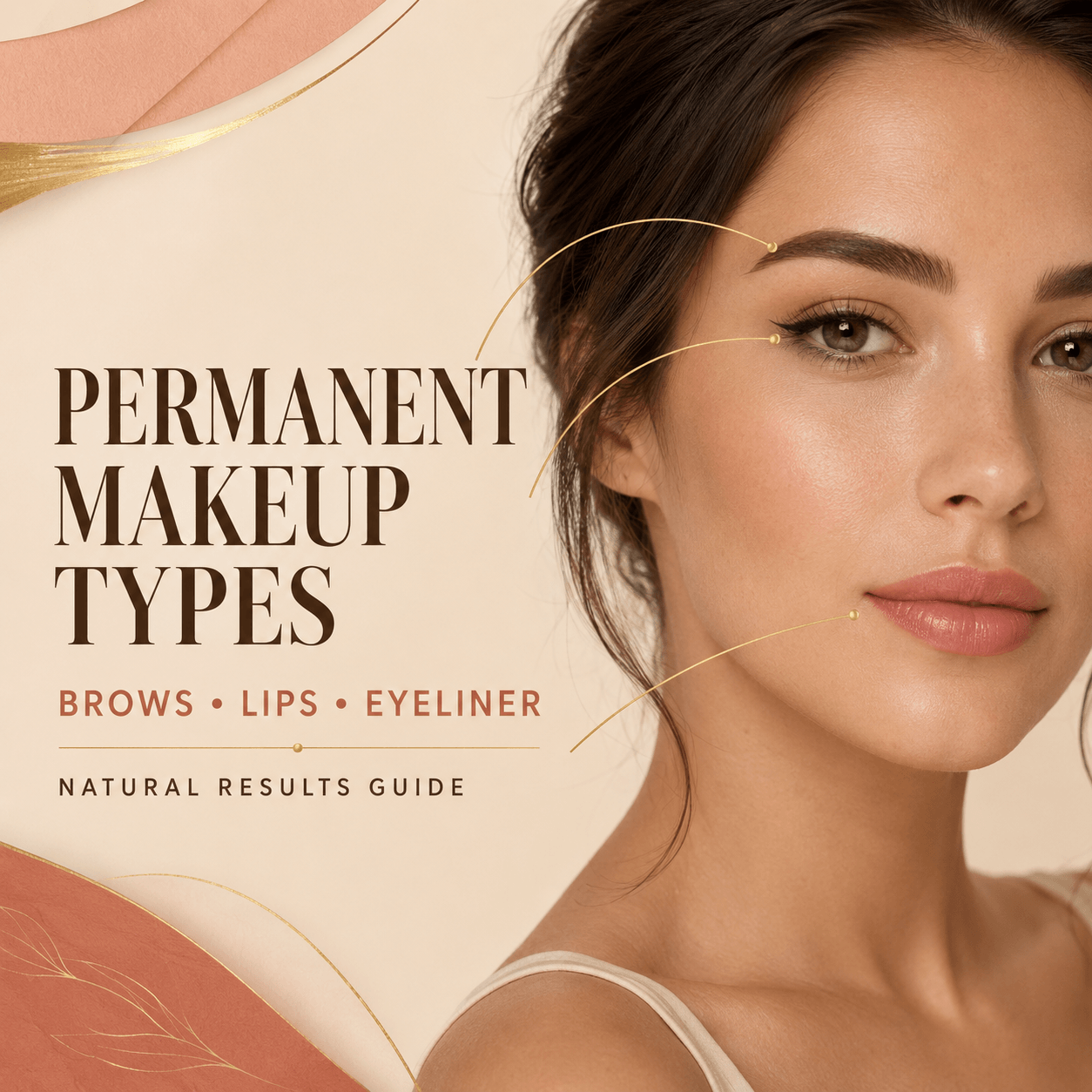
Permanent Makeup Types: Brows, Lips, Eyeliner & How to Achieve Natural Results
Permanent makeup includes multiple techniques for enhancing eyebrows, lips, eyeliner and other specialized areas. This guide compares how each procedure looks, how artists adapt the design to skin ...
Brow PMU
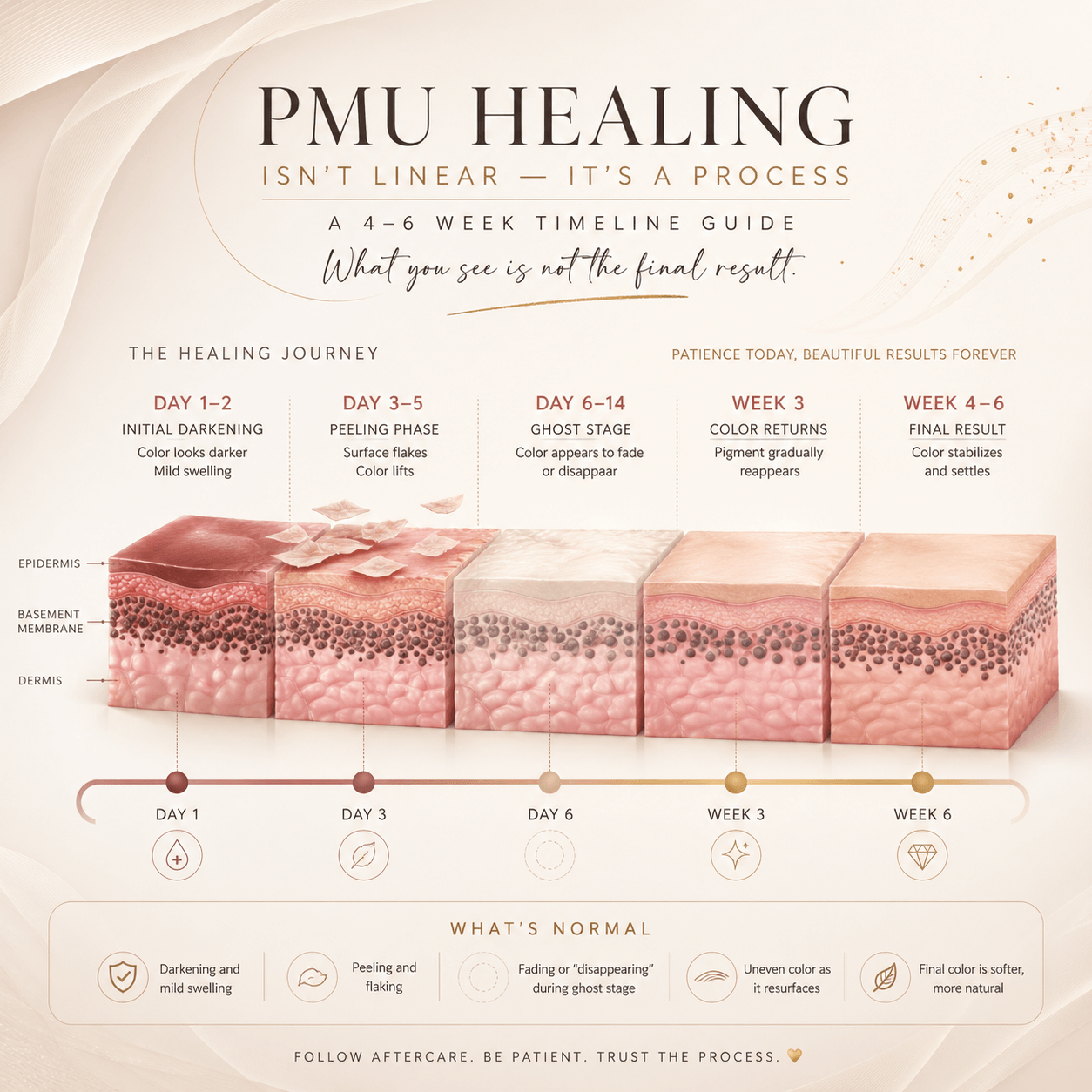
PMU Healing Stages Day by Day: What’s Normal and What’s Not
Permanent makeup commonly looks darker or brighter immediately after treatment, then may become dry, flaky, patchy or temporarily faint. This guide explains the main PMU healing stages for brows, l...
Color Correction
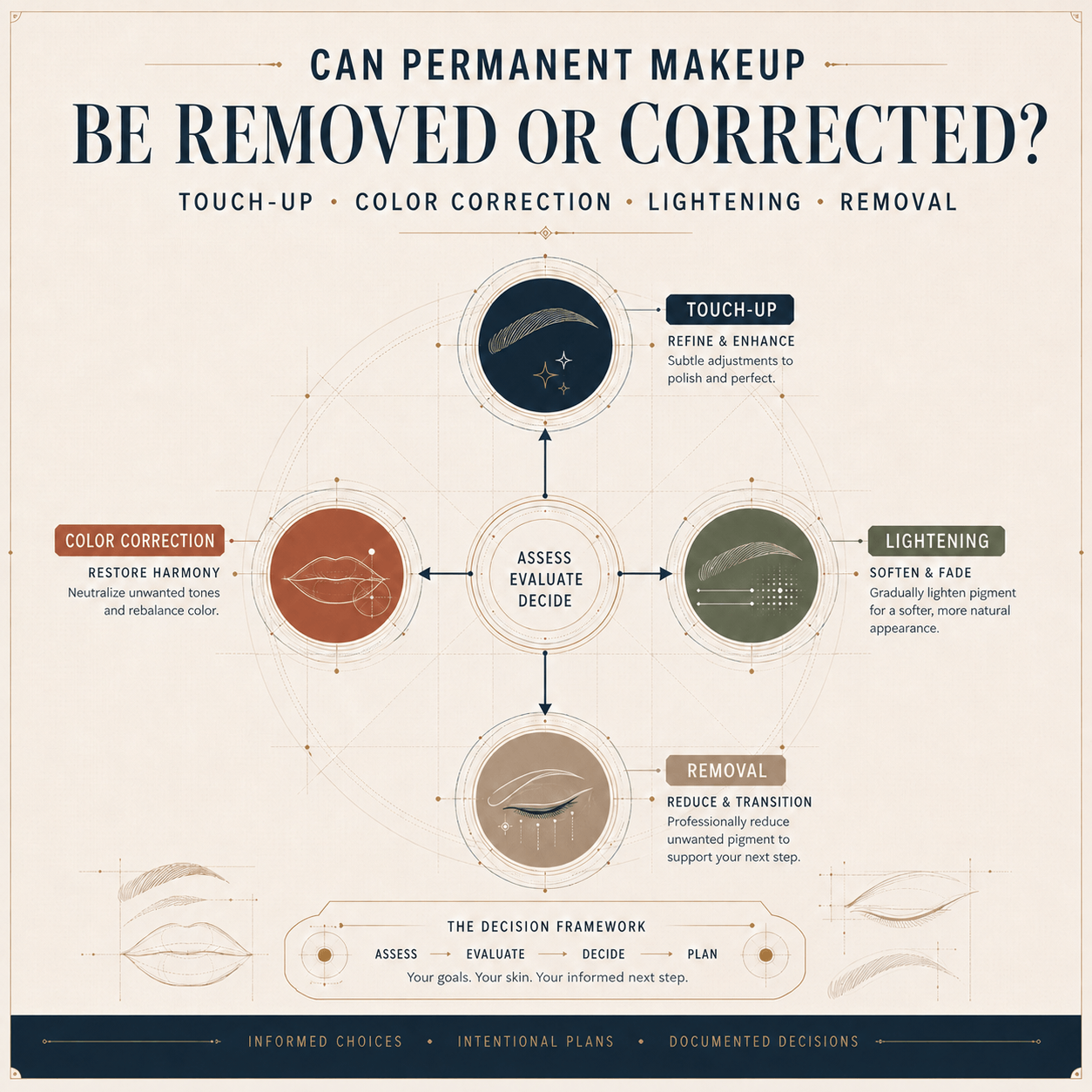
Can Permanent Makeup Be Removed or Corrected? Touch-Up, Color Correction, Eyeliner Repair & Removal Guide
Permanent makeup concerns should be classified before more pigment is added. This guide explains when a touch-up, color correction, professional lightening or removal assessment may be appropriate ...
Client Consultation
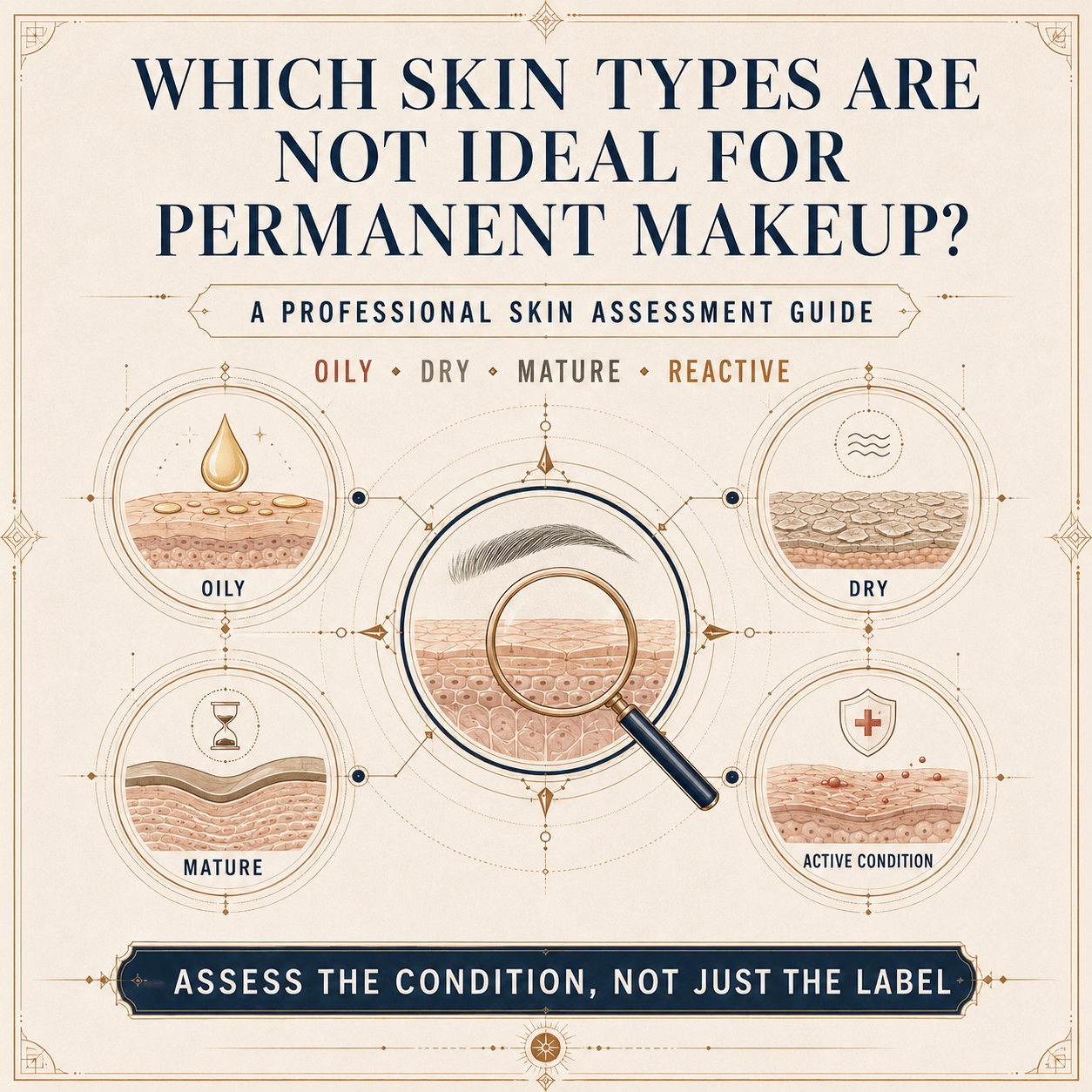
Which Skin Types Are Not Ideal for Permanent Makeup? A Professional Skin Assessment Guide
Oily, dry, mature, sensitive and acne-prone skin are not automatically unsuitable for permanent makeup. The real decision depends on the skin’s current condition, treatment area, healing history an...
Allergic Reaction
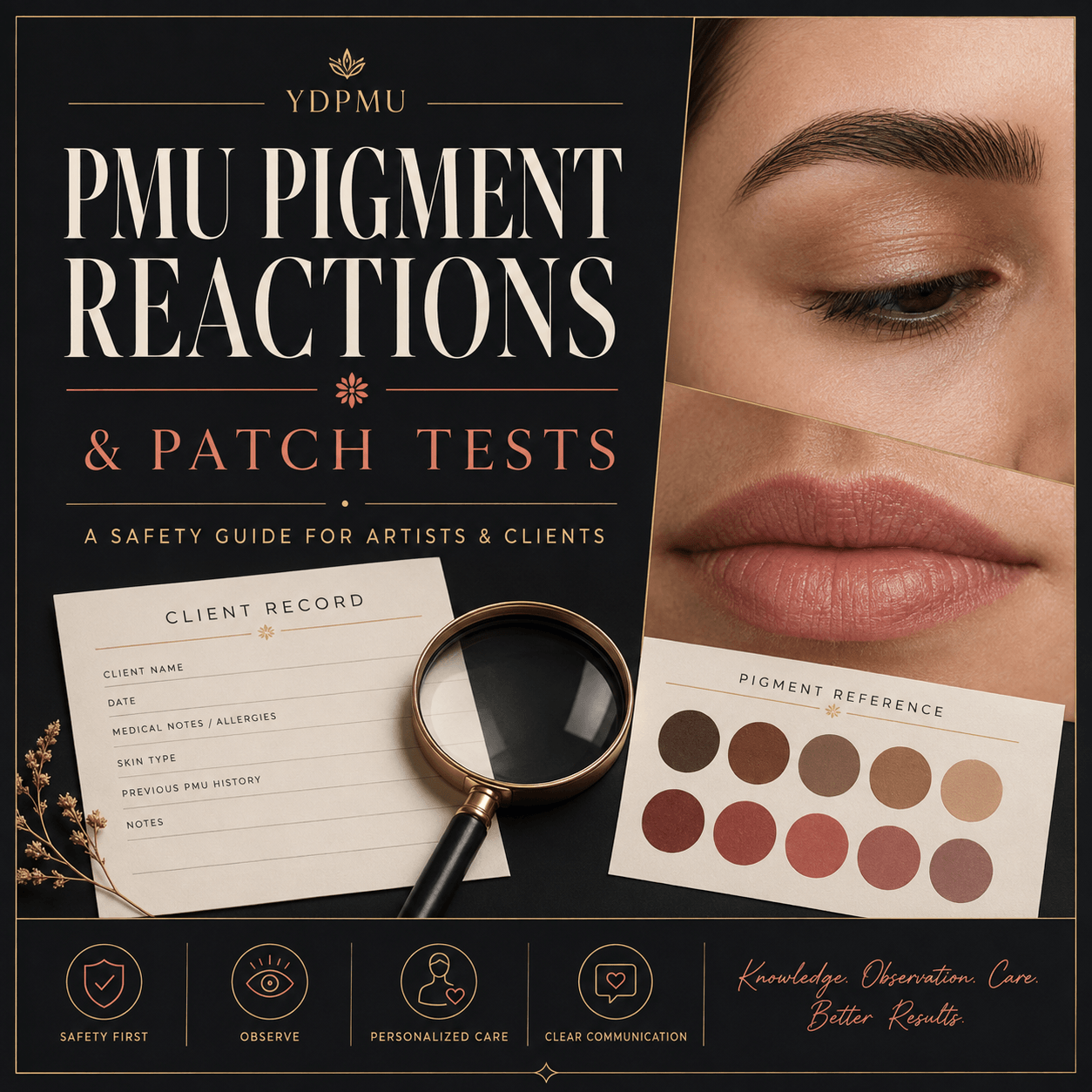
What Is a PMU Patch Test and Do You Really Need One?
A PMU patch test involves applying a small amount of pigment to the skin and monitoring for an allergic reaction over 24–48 hours before a full procedure. Patch tests are not universally required f...
Aftercare
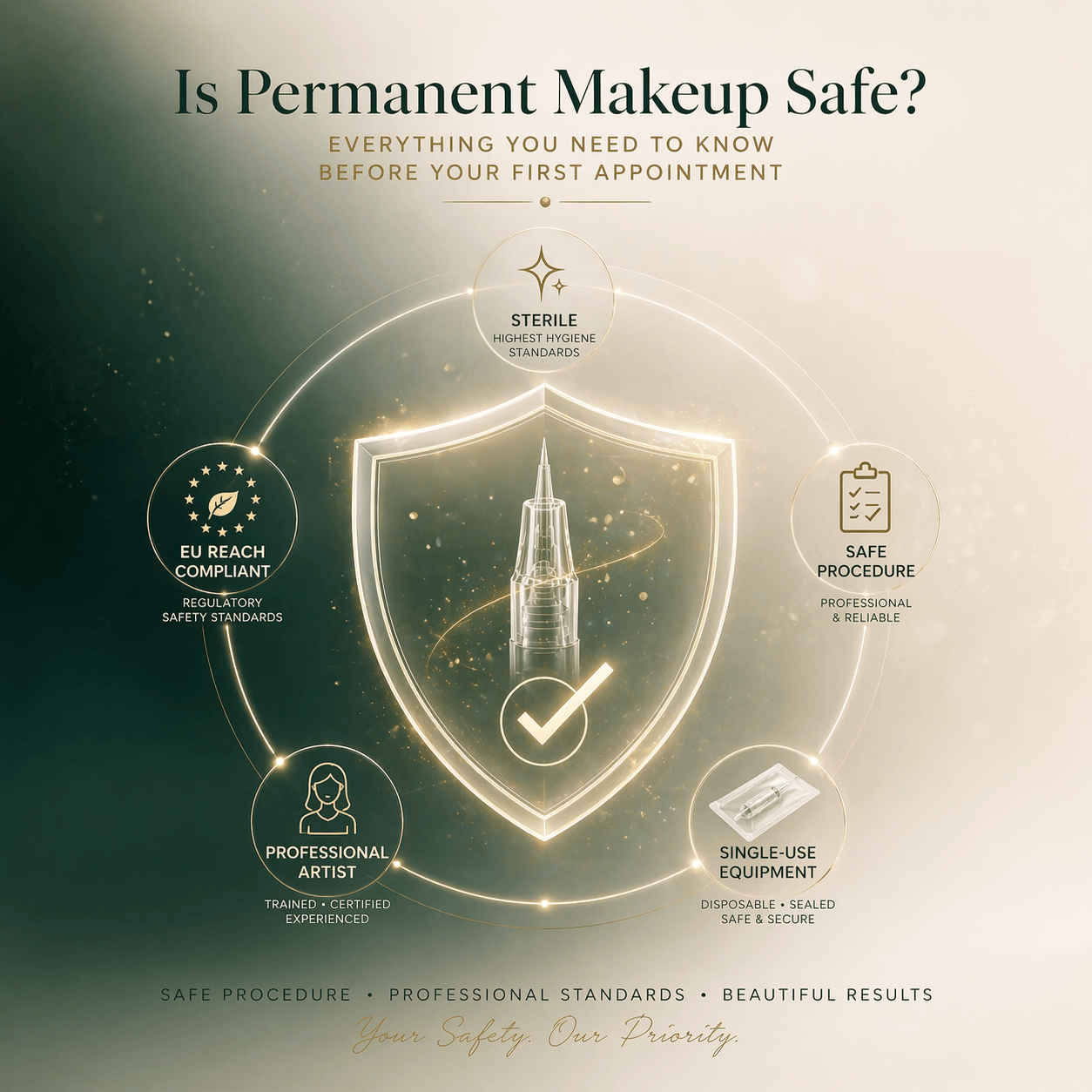
Is Permanent Makeup Safe? Everything You Need to Know Before Your First Appointment
Permanent makeup is safe when performed by a qualified artist using sterile, single-use equipment and professional-grade pigments that meet regulatory standards such as EU REACH. The most common ri...