
Why Does Permanent Makeup Pigment Turn Grey Over Time?
Permanent makeup pigment turns grey over time primarily because warm colour molecules fade faster than cool ones — leaving behind the cooler, greyer undertones of the original pigment mixture. This process is accelerated by incorrect implantation depth, oily skin, UV exposure, and low-quality pigment formulations.
Permanent makeup is designed to provide long-lasting cosmetic enhancement, but over time some pigments may gradually shift in colour. One of the most common concerns clients notice is when previously dark or warm-toned pigment begins to appear grey or ashy.
Understanding why this happens helps artists prevent unwanted colour changes and maintain more stable permanent makeup results. To understand the broader picture of how pigment behaves in skin, read: Why Permanent Makeup Pigment Looks Different After Healing.
Summary
Permanent makeup pigment can turn grey over time due to several factors, including pigment composition, skin behaviour, and implantation depth. As the skin naturally renews itself and pigment particles gradually break down, the remaining colour may shift in tone.
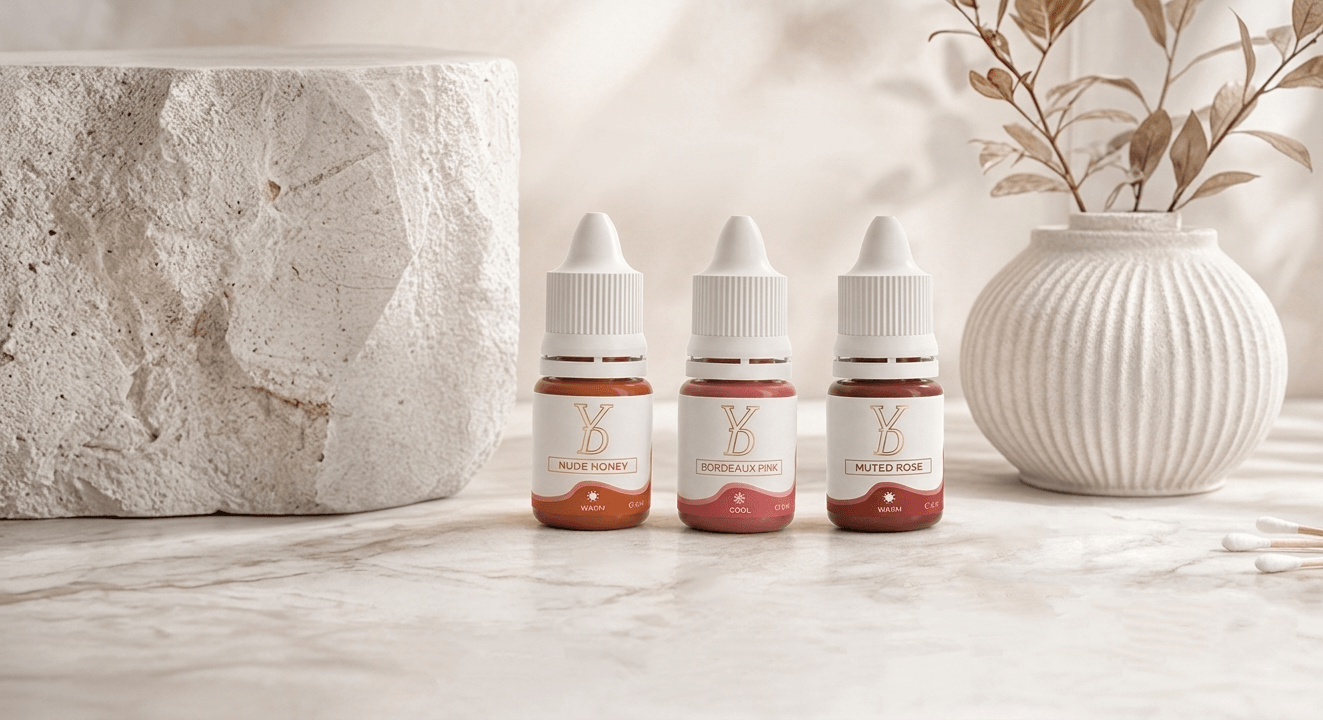
Although some fading is expected with any permanent makeup procedure, proper technique and high-quality pigments can significantly reduce unwanted colour changes. The YDPMU NEO Organic Lip Blushing Pigment Set and the full YDPMU pigment range are specifically formulated for colour stability and minimal undertone shift after healing.
1. Pigment Composition Influences Long-Term Colour
Different pigments are composed of various colour bases. When permanent makeup pigment begins to break down over time, certain colour molecules fade faster than others.
- Warm tones (red, orange, yellow) fade first
- Cooler tones (blue, violet) remain longer in the skin
- The remaining cool undertone can appear grey or ashy
This is why pigment selection plays an important role in achieving stable healed results. Choosing a pigment with a well-balanced warm-cool ratio — like those in the YDPMU NEO Organic range — helps ensure the colour ages gracefully rather than shifting to an unwanted grey. To understand how warm and cool pigments behave differently, read: Why Warm Pigments Appear More Vibrant While Cool Pigments Stay More Stable.

2. Implantation Depth Can Affect Colour Stability
The depth at which pigment is implanted can also influence long-term colour changes. If pigment is placed too deeply into the dermis, it may appear cooler or slightly grey as light passes through the skin layers above it.
- Too deep: Pigment appears grey or blurry — light scattering through extra skin layers shifts the perceived colour toward cool/grey
- Too shallow: Pigment fades quickly and unevenly, causing patchy colour shifts
- Correct depth: Pigment remains visible with its intended tone for longer
Experienced artists carefully control needle movement and pressure to achieve consistent pigment placement. For a detailed guide on correct depth for lip procedures, read: Best Needle Depth for Lip Blushing (Step-by-Step Guide). For how technique affects pigment stability overall, see: Floating vs Burying Technique: How It Affects Pigment Stability.

3. Skin Type Can Influence Pigment Changes
Different skin types respond to pigment differently. Factors such as oil production, pore size, and skin regeneration rate can affect how pigment fades over time.
- Oily skin may experience faster fading and more pronounced colour shifts
- Some pigments may appear cooler as they fade on certain skin types
- Uneven fading can alter the perceived colour tone, making it appear greyer
Understanding skin behaviour helps artists choose appropriate pigment shades and implantation techniques. Read more: Why Does Permanent Makeup Fade Faster on Oily Skin?

4. UV Exposure Accelerates Colour Shifting
Sun exposure is one of the most underestimated causes of PMU pigment turning grey. UV rays break down pigment molecules in the skin — and because warm colour molecules are more UV-sensitive than cool ones, UV exposure accelerates the process of warm tones fading first, leaving the cooler, greyer undertones behind.
Advising clients to apply SPF to treated areas daily — especially in the first year after their procedure — is one of the most effective ways to slow colour shifting. Learn more: How UV Exposure and Skincare Impact Permanent Makeup Pigment Longevity.
5. Natural Fading and Skin Renewal
Permanent makeup pigments do not remain unchanged forever. Over time, the body gradually breaks down pigment particles through natural immune processes.
- The pigment slowly fades as the body metabolises pigment particles
- Undertones may become more visible as the dominant colour fades
- Colour shifts can appear if the original pigment mixture was unbalanced
Regular maintenance and touch-ups can help maintain the desired colour and prevent unwanted tone changes. For guidance on when to schedule a touch-up, read: How Long Should You Wait Before a Permanent Makeup Touch-Up?

How to Prevent PMU Pigment from Turning Grey
Professional PMU artists use the following strategies to minimise unwanted grey shifts:
- Choose pigments with stable colour formulas — The YDPMU NEO Organic Dark Lip ALL-IN-ONE Pigment Set and the YDPMU NEO Organic Liquid Pigment Mixture Set are engineered for long-term colour stability
- Work at the correct implantation depth — avoid going too deep into the dermis
- Advise clients to use SPF daily on all treated areas
- Avoid harsh skincare ingredients (retinol, AHAs/BHAs) near treated areas
- Schedule regular touch-ups before colour shifts become pronounced
For a complete guide to what affects PMU longevity, read: How Long Does Permanent Makeup Last? (Brows, Lips, Eyeliner Guide).
Conclusion
Permanent makeup pigment turns grey over time due to pigment composition, implantation depth, skin type, UV exposure, and natural fading processes. As the skin renews itself and pigment particles gradually break down, warm colour molecules fade first — leaving behind the cooler, greyer undertones.
By selecting stable, professionally formulated pigments, using correct implantation technique, and scheduling timely touch-ups, artists can significantly reduce the risk of unwanted colour changes and maintain beautiful, long-lasting permanent makeup results.
Frequently Asked Questions
Why does my permanent makeup look grey after healing?
Permanent makeup can appear grey after healing because the warm colour molecules in the pigment fade faster than the cool ones during the healing process. The remaining cool undertones create a grey or ashy appearance. This is more common with low-quality pigments that lack a stable warm-cool balance, or when pigment is implanted too deeply into the dermis.
Can grey permanent makeup be corrected?
Yes. Grey or ashy permanent makeup can be corrected through a colour correction session, where a warm-toned pigment is applied over the existing grey to neutralise the cool undertone and restore the desired colour. The correction process depends on how much pigment remains in the skin and how grey the shift has become.
How do I stop my PMU from turning grey?
To prevent PMU from turning grey: choose pigments with a stable, balanced formula; work at the correct implantation depth (not too deep); advise clients to apply SPF daily to treated areas; avoid harsh skincare ingredients near the treated area; and schedule regular touch-ups before colour shifts become pronounced.
Does all permanent makeup turn grey eventually?
Not necessarily. High-quality pigments formulated for colour stability — such as the YDPMU NEO Organic range — are specifically designed to minimise unwanted colour shifts over time. With correct technique, proper aftercare, and regular maintenance, permanent makeup can fade gracefully without turning grey.
How long does it take for permanent makeup to turn grey?
The timeline varies depending on skin type, UV exposure, pigment quality, and implantation depth. In some cases, colour shifting can begin within the first year if the pigment quality is poor or the technique was incorrect. With high-quality pigments and proper aftercare, most clients can expect stable colour for 1–3 years before a touch-up is needed.