
Summary: Not Every Permanent Makeup Problem Is Permanent
True irreversibility in permanent makeup comes from structural skin damage — not color mistakes. Scarring, chronic trauma, and keloid formation limit future options permanently. Color shifts, uneven density, and fading are almost always correctable with proper technique and pigment choice.
In professional permanent makeup practice, the word irreversible is often overused — and misunderstood.
While some permanent makeup issues can be adjusted, corrected, or softened over time, a small category of problems truly limits future options. Understanding the difference is essential for artists, educators, and clients alike.
This article explains which permanent makeup issues are genuinely irreversible, which ones are commonly mistaken as permanent, and how responsible pigment behavior plays a critical role in long-term safety.

1. True Irreversibility Comes from Structural Damage, Not Color Choice
One of the most misunderstood aspects of permanent makeup risk is the assumption that color mistakes are the most dangerous.
In reality, the most irreversible problems are structural, not visual.
| Issue | Reversible? | Why |
|---|---|---|
| Severe skin trauma / over-implantation | ❌ No | Skin structure permanently altered |
| Excessive scar tissue formation | ❌ No | Texture change cannot be undone |
| Chronic inflammation | ❌ No | Reduces skin's ability to retain pigment evenly |
| Color appearing too warm or cool | ✅ Yes | Correctable with neutralization technique |
| Uneven saturation during healing | ✅ Yes | Often resolves or can be touched up |
| Density imbalance | ✅ Yes | Adjustable with conservative passes |
Once the skin structure itself is compromised, even the best pigment correction techniques have limited effect.
Key insight: Color can often be adjusted. Skin integrity cannot always be restored.
Why Touch-Ups Can’t Fix Every Permanent Makeup Issue
Technique or Pigment: What Truly Causes PMU Problems

2. Aggressive Permanence Is Riskier Than Incorrect Shade Selection
Another common misconception is that long-lasting pigment equals professional quality.
In practice, overly aggressive permanence can create irreversible limitations, especially when pigments are designed to resist fading at all costs.
Why aggressive permanence increases long-term risk:
- Dense particle accumulation limits future correction options
- Lack of gradual diffusion prevents natural softening
- Removal becomes more invasive and unpredictable
This is why experienced permanent makeup artists increasingly prioritize predictable pigment behavior over maximum staying power.
Permanence without adjustability is not stability — it is restriction.
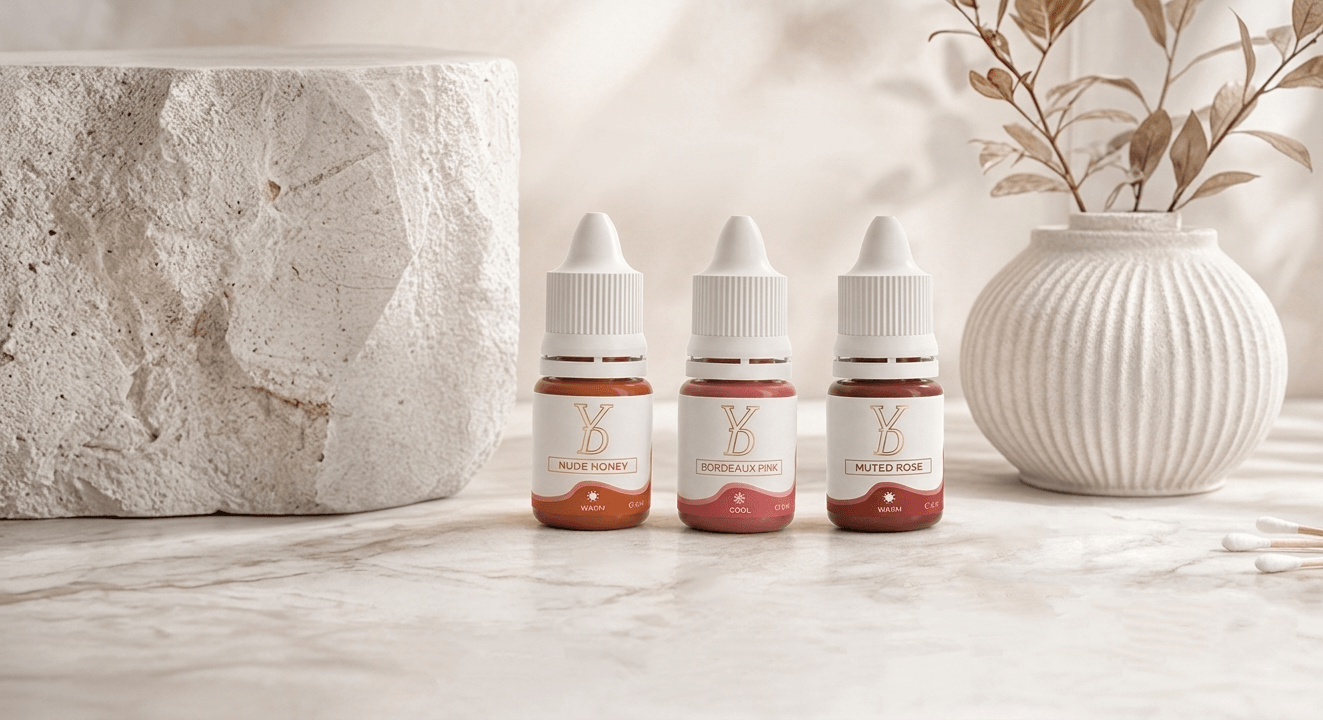
YDPMU NANO Organic Liquid Pigments — Predictable fading, designed for long-term adjustability
Machine, Needle, or Pigment: What Truly Shapes Permanent Makeup Results

3. Many “Irreversible” Permanent Makeup Problems Are Actually Correctable
It is important to clarify what does NOT qualify as irreversible, despite common belief.
Often mistaken as irreversible — but usually correctable:
- Color appearing too warm or too cool after healing
- Uneven saturation during early healing stages
- Density imbalance caused by skin variability
With appropriate techniques and responsibly designed pigments, these issues can often be softened, neutralized, or gradually adjusted.
This distinction is crucial for both artist confidence and client education.
Professional permanent makeup is not about avoiding change — it is about planning for it.
Why Removability Matters in Permanent Makeup
How Long Does Permanent Makeup Last?

Final Thoughts: Irreversibility Is About Lost Options, Not Mistakes
In professional permanent makeup, true risk is not imperfection — it is limitation.
Problems become irreversible only when future choices are removed:
- When the skin can no longer respond
- When pigment behavior cannot be adjusted
- When correction pathways are closed
The most responsible permanent makeup decisions are not those that aim to last forever — but those that preserve flexibility, predictability, and skin health over time.
How UV Exposure and Skincare Impact PMU Longevity
How the Stratum Corneum Influences Brow Clarity in Permanent Makeup
FAQ
What permanent makeup problems are truly irreversible?
Truly irreversible problems involve skin structure damage — severe scarring from over-implantation, chronic inflammation, and keloid formation. These affect the skin's ability to heal and retain pigment evenly, and cannot be fully corrected through additional PMU sessions.
Is wrong pigment color a permanent problem?
No. Color issues — such as pigment appearing too warm, too cool, or uneven — are almost always correctable through neutralization techniques, color correction, or gradual fading over time. Color mistakes are rarely irreversible.
Can aggressive pigment formulas cause permanent damage?
Yes. Pigments designed for maximum staying power can accumulate densely in the skin, making future correction or removal more invasive and unpredictable. Predictable, adjustable pigment formulas reduce this long-term risk significantly.
How can artists avoid creating irreversible PMU problems?
By prioritizing conservative implantation depth, avoiding overworking the skin, using pigments with predictable fading behavior, and treating each session as one step in a long-term plan rather than a single definitive result.
What should clients know about permanent makeup reversibility?
Clients should understand that most color and density issues can be adjusted over time, but skin damage from aggressive procedures may not be fully reversible. Choosing an experienced artist who prioritizes skin health over immediate intensity is the most important protective factor.