
Introduction: The “Safest” Choice Isn’t Always the Smartest One
In permanent makeup, the options that look most reliable at the start — strong color payoff, high retention, maximum permanence — often create the highest correction risk over time. True safety is not about how hard a pigment holds, but how well it responds to change.
In permanent makeup, what appears safe at first glance often feels reassuring — strong color payoff, long-lasting results, or pigments labeled as “high retention.” But experienced permanent makeup professionals know that visual safety and long-term safety are not the same thing.
In many cases, the options that look the most reliable at the beginning can create the highest correction risk over time.
This article explains why.

Point 1: When “Strong Hold” Creates Weak Control
One of the most common assumptions in permanent makeup is: if a pigment stays longer, it must be safer.
In reality, extreme permanence reduces flexibility.
Highly aggressive pigments may look stable on day one, but once implanted, they leave little room for adjustment. Skin changes, undertones shift, and client preferences evolve — yet the pigment remains stubbornly fixed.
| Pigment Type | Short-Term Appearance | Long-Term Risk |
|---|---|---|
| High-retention / aggressive | Bold, saturated, impressive | Limited correction, invasive removal |
| Predictable / adjustable | Natural, controlled | Easy to refine, low correction stress |
| Overly dense implantation | Full coverage immediately | Color shift, migration, unpredictable aging |
What feels “safe” initially often becomes risky because correction options are limited, removal becomes more invasive, and color adaptation is unpredictable.
Safety in permanent makeup is not about how hard a pigment holds, but how well it responds over time.
Why Removability Matters in Permanent Makeup
Which Permanent Makeup Issues Are Truly Irreversible?

Point 2: Predictability Matters More Than Intensity
Another “safe-looking” choice is selecting pigments that appear rich, bold, and instantly visible.
However, visible strength does not equal healed predictability.
Permanent makeup pigments interact with skin thickness, oil production, immune response, and light scattering within the dermis. When pigments are overly dense or unevenly distributed, healing can reveal unexpected shifts — grayness, muddiness, or uneven fading.
Experienced artists prioritize pigments that behave consistently, not pigments that look impressive immediately.
Predictable pigments reduce risk — not because they are weaker, but because their behavior is easier to manage.
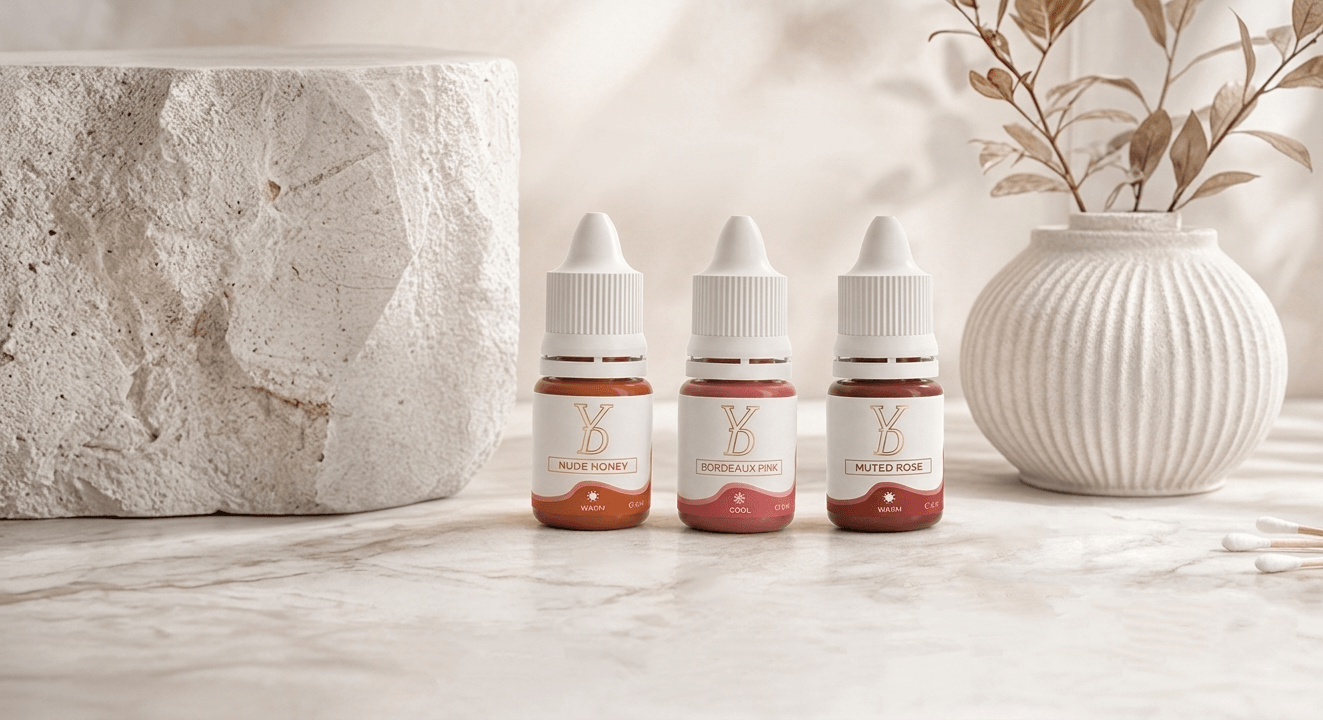
YDPMU NANO Organic Liquid Pigments — Consistent behavior, designed for predictable healing
Machine, Needle, or Pigment: What Truly Shapes Permanent Makeup Results
Point 3: The Illusion of “Beginner Safety”
For many less-experienced artists, the safest-looking choice often means fewer passes, stronger pigments, and minimal touch-up expectations.
But permanent makeup is not a one-step process — it is a long-term skin relationship.
Overly aggressive choices can lead to:
- Higher correction stress
- More removal cases
- Reduced confidence when results age differently
True safety in permanent makeup comes from understanding behavior, not avoiding complexity.
YDPMU Powder Hybrid Liquid Pigments — Balanced retention for predictable long-term results
Technique or Pigment: What Truly Causes PMU Problems

Final Summary: Real Safety in Permanent Makeup Is Quiet and Flexible
The riskiest permanent makeup decisions are often the ones that feel safest at first.
- Stronger does not mean safer
- Longer-lasting does not mean better
- Immediate results do not guarantee long-term harmony
Professional permanent makeup is about controlled outcomes, not locked-in results.
The safest choice is the one that allows room — for skin changes, corrections, and refinement over time.
Why Touch-Ups Can’t Fix Every Permanent Makeup Issue
How UV Exposure and Skincare Impact PMU Longevity

FAQ
Why do high-retention pigments carry more long-term risk?
High-retention pigments are designed to resist fading, which limits future correction options. If the color shifts, ages poorly, or the client’s preferences change, removal becomes more invasive and unpredictable. Adjustable pigments with predictable fading behavior are safer long-term.
What does “predictable pigment behavior” mean in PMU?
Predictable pigment behavior means the color fades evenly, shifts minimally, and responds consistently to touch-up corrections. Artists can plan future sessions with confidence because the pigment’s aging pattern is known and manageable.
Is it safer to use fewer passes with stronger pigment?
No. Fewer passes with stronger pigment often leads to uneven distribution and dense particle accumulation, which increases correction difficulty. Conservative passes with predictable pigment produce more consistent, manageable results.
How can clients identify a truly safe PMU approach?
A safe PMU approach prioritizes skin health over immediate intensity, uses pigments with known fading behavior, and plans for future adjustments from the start. Artists who discuss long-term maintenance and correction options are demonstrating responsible practice.
What is the difference between visual safety and long-term safety in PMU?
Visual safety refers to how a result looks immediately — bold, saturated, and impressive. Long-term safety refers to how the result ages, corrects, and responds to skin changes over time. The two are often in conflict, and experienced artists prioritize long-term safety over immediate visual impact.