
Introduction
Permanent makeup pigments do not typically oxidize inside the skin. Most color changes in healed brows — turning gray, ashy, or cooler over time — are caused by implantation depth errors, skin type behavior, and selective fading of warm pigment particles, not chemical oxidation. Understanding the real causes leads to more predictable, stable long-term results.
Many permanent makeup artists and clients believe that brow pigments “oxidize” over time — turning gray, red, or ashy months or years after treatment. But is oxidation really the cause?
In this article, we’ll clarify what oxidation actually means, what truly causes color shifts in healed permanent makeup brows, and how proper technique and pigment selection play a far bigger role than most people realize.
Understanding this concept is essential for artists who want predictable, long-term healed results — and for clients who want realistic expectations.
| Perceived “Oxidation” Symptom | Real Cause | Solution |
|---|---|---|
| Brows turn gray or ashy | Pigment placed too deep | Correct implantation depth |
| Brows turn cooler over time | Warm particles fade faster | Warm-balanced pigment selection |
| Uneven color after healing | Skin type / oily skin | Skin-appropriate technique |
| Rapid fading | Pigment placed too shallow | Depth control improvement |
| Color shift before procedure | Improper pigment storage | Proper sealing and rotation |
Section 1: What Does “Oxidation” Really Mean?
In chemistry, oxidation refers to a reaction between a substance and oxygen that causes a structural change — often resulting in darkening or rust-like effects.
However, true oxidation of permanent makeup pigments inside the skin is extremely rare.
Why? Permanent makeup pigments are implanted into the dermis, not exposed to open air. High-quality pigments are chemically stabilized. Once healed, oxygen exposure inside the skin is minimal.
So if pigments don’t oxidize like metal or surface makeup, what causes color changes?

Section 2: Why Permanent Makeup Brows Appear to Change Color Over Time
Most perceived “oxidation” is actually caused by biological and optical factors, not chemical reactions.
Common reasons include pigment particles breaking down during healing, skin filtering color differently as inflammation subsides, incorrect implantation depth, skin type affecting pigment retention, and loss of warm modifiers over time.
These factors change how color is seen, not the pigment’s chemical structure itself.
Why Permanent Makeup Pigment Looks Different After Healing

Section 3: The Role of Implantation Depth
Implantation depth is one of the most critical factors in long-term color appearance.
- Too shallow → pigment sheds quickly, leaving patchy or uneven color
- Too deep → pigment appears gray or blurred due to light diffusion in the dermis
- Correct depth → stable, even healed color
When pigment sits too deep, cooler undertones may become more visible over time — often mistaken as oxidation.
This is a technique issue, not a pigment defect.
Floating vs Burying Technique: How Implantation Depth Affects PMU Results
How the Stratum Corneum Influences Brow Clarity in Permanent Makeup

Section 4: Skin Type Filters Color — It Doesn’t Oxidize It
Different skin types interact with pigment differently. Oily skin may push pigment out faster, leading to lighter or cooler results. Thin skin allows more light reflection, making colors appear softer. Mature skin heals faster but often lighter.
The pigment hasn’t changed — the skin’s behavior has.
This is why the same pigment can heal differently on different clients.
How Oily Skin Affects PMU Pigment Retention
Section 5: Why Warm Tones Fade First
Another major reason permanent makeup brows appear cooler over time is selective fading.
Warm modifiers (yellow, orange, red) are often smaller particles that are more easily metabolized by the skin. As warm tones fade, cooler base tones become more visible.
This gradual shift is often mislabeled as oxidation, but it’s actually normal pigment aging + skin biology.
Why Brown Permanent Makeup Pigments Heal Differently

Section 6: Can Permanent Makeup Pigments Oxidize Before Implantation?
Yes — outside the skin, oxidation can occur if pigments are improperly stored, exposed to excessive light or air, or past their expiration date.
This is why professional storage, sealing, and rotation matter.
Once implanted correctly and healed, oxidation is no longer the primary concern.
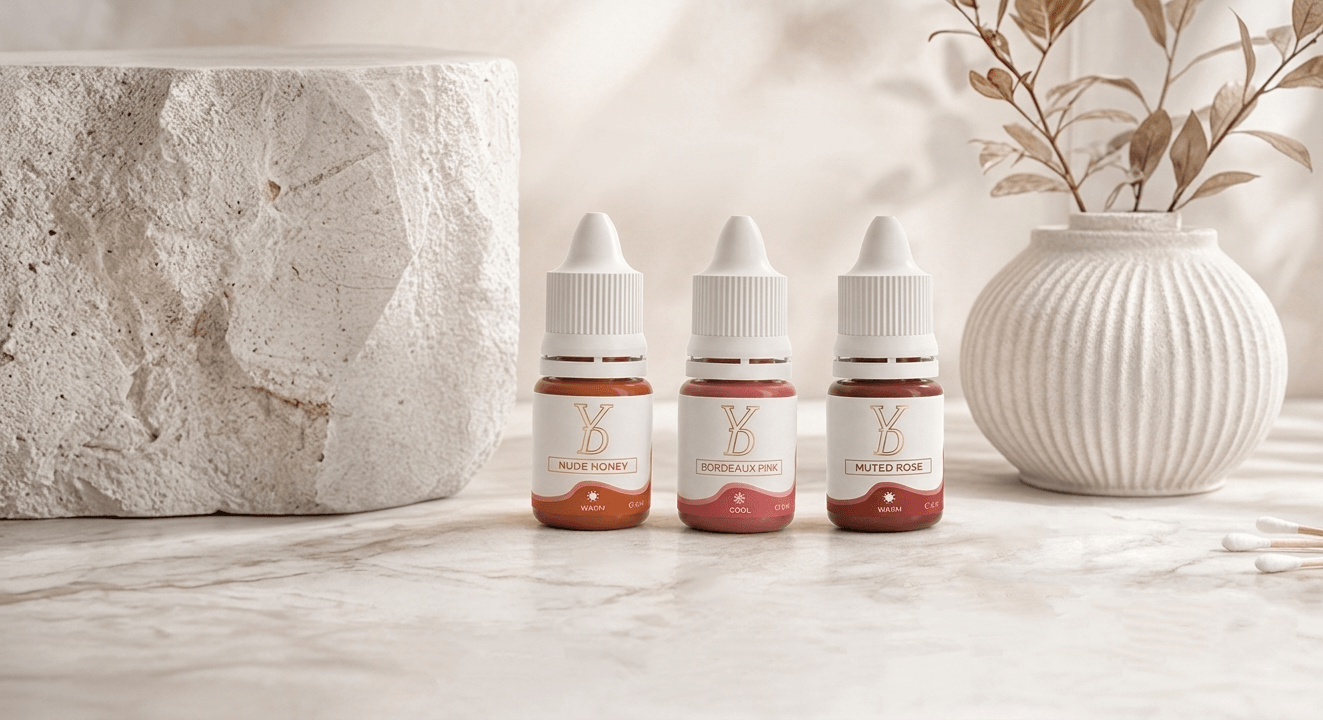
YDPMU NANO Organic Liquid Pigments — Chemically stabilized formulas for consistent long-term color

Section 7: How Artists Can Prevent Unwanted Color Shifts
To minimize long-term color issues:
- Choose pigments designed for your client’s skin type
- Implant at the correct depth
- Avoid overworking the skin
- Use warm modifiers strategically, not excessively
- Educate clients about healing and touch-ups
Color stability is achieved through technique + understanding, not fear of oxidation.
7 Reasons Permanent Makeup Brows Fail — Common Mistakes That Affect Healed Results
Technique or Pigment: What Truly Causes PMU Problems
Conclusion: Oxidation Is Not the Real Enemy
Permanent makeup pigments do not typically oxidize inside the skin.
What artists often call oxidation is usually the result of skin behavior, implantation depth, pigment particle loss, and natural healing processes.
When artists understand how pigments settle, fade, and interact with skin, long-term results become far more predictable.
Education — not myths — creates better permanent makeup outcomes.
How Long Does Permanent Makeup Last?
FAQ
Do PMU pigments really oxidize inside the skin?
True oxidation of permanent makeup pigments inside the skin is extremely rare. Pigments are implanted into the dermis where oxygen exposure is minimal, and high-quality pigments are chemically stabilized. Most color changes attributed to oxidation are actually caused by depth errors, skin biology, or selective fading of warm particles.
Why do my PMU brows turn gray or ashy over time?
Grayness in healed brows is most commonly caused by pigment placed too deep, where light diffusion through the dermis amplifies cool undertones. It can also result from warm modifier particles fading faster than the cool base, leaving a cooler overall tone. This is a technique and pigment selection issue, not oxidation.
Why do PMU brows turn cooler after healing?
Warm pigment particles (yellow, orange, red modifiers) are typically smaller and more easily metabolized by the skin. As they fade first, the cooler base tones become more dominant. Choosing pigments with a warm-dominant base and balanced particle composition helps maintain warmth longer.
Can pigments oxidize before they are used?
Yes. Outside the skin, pigments can degrade if improperly stored, exposed to excessive light or air, or used past their expiration date. Proper sealing, storage away from direct light, and regular stock rotation prevent pre-implantation degradation.
How can artists prevent unwanted color shifts in healed PMU?
The most effective prevention strategies are correct implantation depth, skin-appropriate technique, conservative passes to avoid overworking, and pigment selection based on the client’s skin undertone and type. Touch-up sessions at 6–8 weeks allow color balance to be refined after the initial healing reveals the true result.