
Why Do Permanent Makeup Brows Turn Blue or Grey Over Time?
Permanent makeup brows turn blue or grey due to three main causes: pigment composition imbalance (warm particles fade faster, leaving cool residues), implantation depth errors (the Tyndall effect makes deep pigment appear blue-grey), and skin type behavior that accelerates warm tone loss. All three are preventable with correct pigment selection and technique.
Permanent makeup is designed to enhance facial features with long-lasting results. However, one common concern among both artists and clients is eyebrow pigment shifting to blue or grey tones over time. This color change is not random — it is the result of pigment composition, implantation depth, and skin behavior during healing and aging.
Understanding the science behind pigment color shifts helps permanent makeup artists prevent unwanted outcomes and achieve more stable, natural-looking results.
| Cause | What Happens | Prevention |
|---|---|---|
| Pigment composition imbalance | Warm particles fade first, cool carbon remains | Choose balanced undertone pigments |
| Implantation too deep | Tyndall effect makes pigment appear blue-grey | Correct depth at epidermal–dermal junction |
| Oily or reactive skin | Warm tones pushed out faster | Skin-appropriate technique and pigment |
| Sun exposure / poor aftercare | Warm modifier breakdown accelerated | SPF daily, avoid harsh exfoliants |

1. Pigment Composition: Not All Colors Age the Same
One of the primary reasons brows turn blue or grey lies in the pigment formula itself.
Many older or low-quality pigments rely heavily on black or cool-toned components. Over time, warmer pigments (such as red and yellow molecules) break down faster within the skin, while cooler components — especially carbon black — remain. This imbalance causes brows to appear ashy, bluish, or grey as they fade.
High-quality permanent makeup pigments are designed with balanced undertones and controlled carbon content to ensure predictable fading rather than dramatic color shifts.
Why Brown Permanent Makeup Pigments Heal Differently
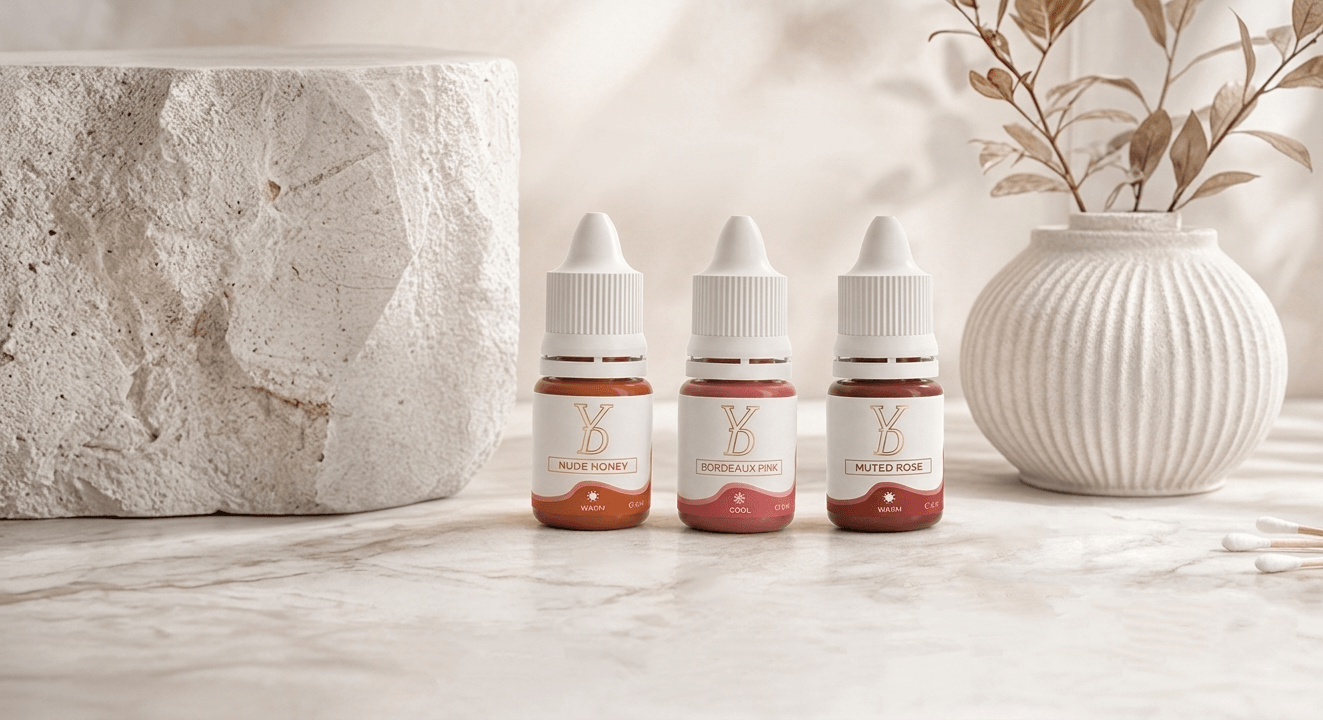
YDPMU NANO Organic Liquid Pigments — Balanced undertone formulas for predictable, stable color aging

2. Implantation Depth: Going Deeper Is Not Better
Another major factor is pigment placement depth.
When pigment is implanted too deeply into the dermis, the skin's natural light diffusion causes darker colors to appear cooler — a phenomenon known as the Tyndall effect. This optical effect can make black or dark brown pigments look blue-grey beneath the skin.
Permanent makeup is intended to sit at the epidermal–dermal junction. Proper depth ensures better color retention, smoother fading, and minimizes the risk of long-term discoloration.
Floating vs Burying Technique: How Implantation Depth Affects PMU Results
How the Stratum Corneum Influences Brow Clarity in Permanent Makeup

3. Skin Type & Healing Behavior Affect Color Outcome
Skin characteristics play a critical role in how pigments heal and age.
Oily skin types tend to push pigment outward faster, leading to premature fading and color distortion. Sun exposure, aggressive exfoliation, and inadequate aftercare can further accelerate pigment breakdown — especially of warmer tones.
Additionally, improper aftercare during healing may cause uneven pigment retention, increasing the likelihood of cool-toned residues becoming dominant.
Do Permanent Makeup Pigments Oxidize Over Time?
How UV Exposure and Skincare Impact PMU Longevity

Final Thoughts: Blue or Grey Brows Are Preventable
Brows turning blue or grey are not an inevitable outcome of permanent makeup. In most cases, they result from outdated pigment choices, incorrect implantation depth, or lack of color theory understanding.
By selecting well-formulated pigments, maintaining correct skin depth, and tailoring techniques to each client's skin type, permanent makeup artists can achieve long-lasting, natural brow results that age beautifully over time.
Educated pigment selection and professional technique remain the foundation of stable, high-quality permanent makeup outcomes.
7 Reasons Permanent Makeup Brows Fail — Common Mistakes That Affect Healed Results
FAQ
Why do permanent makeup brows turn blue or grey?
The most common causes are pigment composition imbalance (warm particles fade faster, leaving cool carbon residues), implantation depth errors (the Tyndall effect makes deep pigment appear blue-grey through the skin), and skin type behavior that accelerates warm tone loss. All three causes are preventable with correct pigment selection and technique.
What is the Tyndall effect in permanent makeup?
The Tyndall effect is an optical phenomenon where light scatters differently through skin layers depending on depth. When pigment is implanted too deep into the dermis, shorter blue wavelengths scatter more than longer red wavelengths, making dark pigments appear blue or grey beneath the skin surface. Correct implantation depth at the epidermal–dermal junction prevents this effect.
Can blue or grey PMU brows be corrected?
Yes, in many cases. Color correction using warm-toned pigments (orange, peach, or warm brown) can neutralize cool residues. However, correction is more complex than the original procedure and may require multiple sessions. Severely deep or dense pigment may require saline or laser removal before correction is possible.
How do I choose a pigment that won't turn grey?
Choose pigments with balanced warm and cool components, controlled carbon content, and a formulation designed for predictable fading. Avoid pigments with excessive black or cool-dominant bases. Testing healed results on a range of skin types before committing to a pigment system helps identify stable, long-term performers.
Does skin type affect whether brows turn grey?
Yes. Oily skin accelerates the breakdown of warm pigment particles, making cool residues more dominant over time. Thin or mature skin may also show color shifts earlier due to faster cellular turnover. Adjusting pigment selection and implantation technique based on skin type significantly reduces the risk of grey or blue healed results.