
Why Does Permanent Makeup Look Too Dark Immediately After Treatment?
Permanent makeup looks darker immediately after treatment because the freshly implanted pigment is highly concentrated at the skin surface, the skin is mildly inflamed, and a thin healing layer forms over the treated area — all of which temporarily intensify the colour. The final healed result is typically 30–40% lighter than the immediate post-procedure appearance, and stabilises within 4–6 weeks.
Many clients are surprised when their permanent makeup appears significantly darker immediately after the procedure. This is a completely normal and temporary effect that occurs during the early stages of healing. Understanding why this happens helps set realistic expectations and reduces unnecessary concern.
To understand the broader picture of how pigment behaves in skin during and after healing, read: Why Permanent Makeup Pigment Looks Different After Healing.
Summary
Permanent makeup often looks darker immediately after treatment because of several temporary factors: concentrated pigment at the surface, skin inflammation, and the natural healing layer that forms over the treated area. As the skin regenerates and excess pigment is naturally removed, the colour gradually softens and stabilises — typically within 4–6 weeks.
1. Fresh Pigment Is Highly Concentrated
Immediately after a permanent makeup procedure, the pigment has just been implanted into the skin. At this stage, the colour appears more intense because the pigment particles are still concentrated near the surface and have not yet settled into their final position within the dermis.
During the healing process:
- Some pigment is naturally expelled by the body as the skin heals
- The skin begins regenerating new cells over the treated area
- The final colour gradually becomes softer and more natural
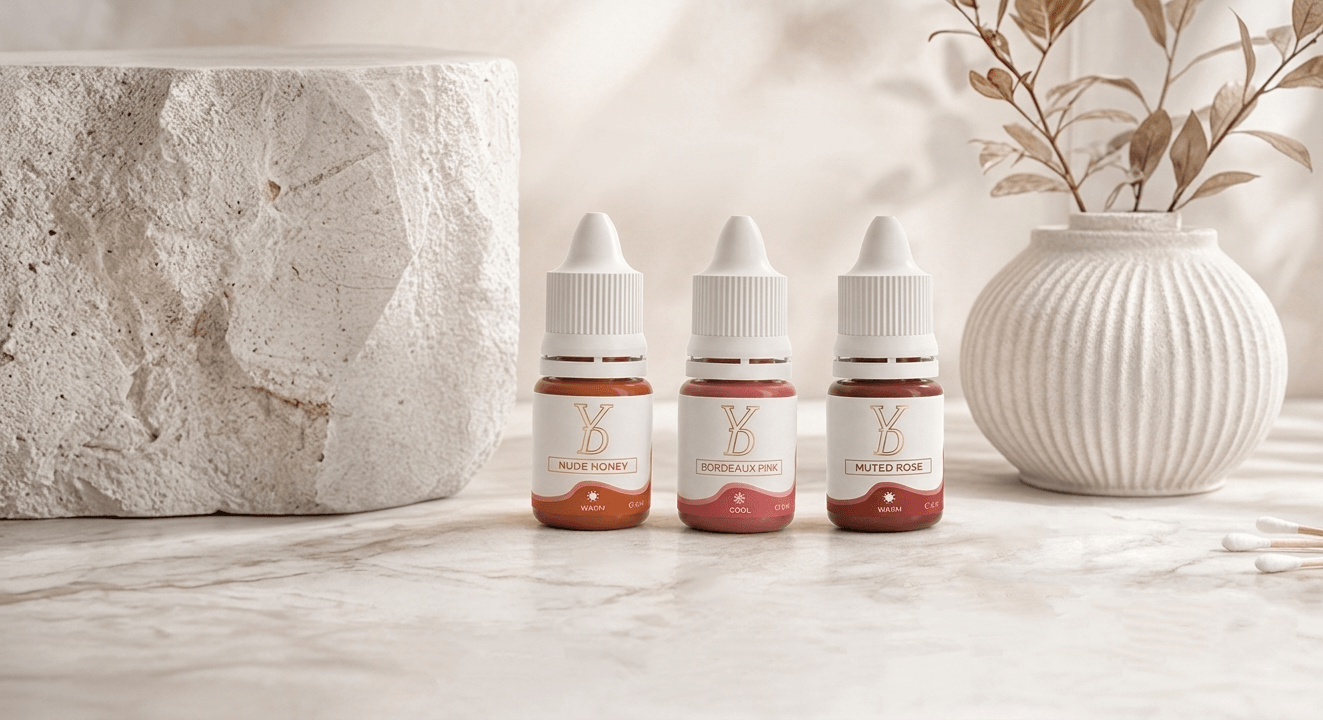
This is why professional PMU artists always explain that the healed result will appear 30–40% lighter than the initial colour immediately after the procedure. Choosing a high-quality pigment — such as the YDPMU NEO Organic Lip Blushing Pigment Set — ensures the colour that does retain heals true to tone rather than shifting to an unwanted hue.

2. Post-Procedure Inflammation Darkens the Appearance
After a permanent makeup treatment, the skin experiences mild inflammation. This is a completely normal immune response to the implantation process — the skin is protecting itself as it heals.
Inflammation can cause:
- Slight swelling around the treated area
- Temporary redness that intensifies the perceived colour
- A darker visual appearance of the pigment due to increased blood flow beneath the skin
As swelling subsides and the skin begins healing — typically within the first 3–5 days — the colour will gradually soften. How quickly inflammation resolves depends on the client's skin type and sensitivity. Read more: Why Does Permanent Makeup Fade Faster on Oily Skin?

3. The Healing Layer Temporarily Masks the Final Colour
During the healing process, a thin protective layer of skin forms over the treated area. This layer — sometimes visible as light flaking or peeling — temporarily makes the pigment appear darker or slightly dull because the light is passing through an extra layer of skin before reaching the pigment.
As the skin naturally exfoliates:
- The superficial healing layer sheds naturally (do not pick or peel)
- Excess surface pigment is removed along with the shedding skin
- The healed colour becomes more natural, softer, and true to tone
This stage usually occurs within the first 7–14 days after the procedure. Clients must be advised not to pick or peel the healing skin, as this can remove pigment unevenly and cause patchy results. For guidance on when the final result stabilises and when to book a touch-up, read: How Long Should You Wait Before a Permanent Makeup Touch-Up?

4. Technique and Implantation Depth Also Matter
The technique used during a permanent makeup procedure can also influence how dark the pigment appears immediately afterward. Artists who work with precise depth control and consistent needle movement produce results that heal more predictably — with less initial darkness and more even colour distribution.
Factors that affect initial colour intensity include:
- Implantation depth — pigment placed too deep appears darker and can cause blowouts
- Needle movement speed — slower passes deposit more pigment per area
- Pigment layering — multiple passes increase initial saturation
Experienced artists understand that the final healed result depends on controlled implantation rather than the immediate visual appearance. For a deeper look at how technique affects pigment stability, read: Floating vs Burying Technique: How It Affects Pigment Stability. For technique-specific guidance on lip procedures, see: Best Needle Depth for Lip Blushing (Step-by-Step Guide).
The YDPMU DEMO Pro Wireless Permanent Makeup Machine — with its 2.5–3.5mm adjustable stroke — gives artists the precision to control implantation depth accurately, reducing the risk of over-saturation and excessive initial darkness.

5. What to Expect Week by Week
Understanding the healing timeline helps clients stay calm and trust the process:
| Timeframe | What Happens | Colour Appearance |
|---|---|---|
| Day 1–3 | Inflammation, swelling, pigment at surface | Darkest — up to 40% darker than final result |
| Day 4–7 | Swelling subsides, healing layer forms | Still dark, may look slightly dull |
| Day 7–14 | Healing layer sheds, surface pigment removed | Colour lightens significantly |
| Week 3–4 | Skin regenerates, pigment settles in dermis | Colour softens, true tone emerges |
| Week 4–6 | Full healing complete | Final healed colour visible |
For a complete guide to PMU longevity after healing, read: How Long Does Permanent Makeup Last? (Brows, Lips, Eyeliner Guide).
Conclusion
Permanent makeup looks darker immediately after treatment because of concentrated pigment at the skin surface, mild inflammation, and the temporary healing layer — all of which are completely normal parts of the healing process. The final healed colour is typically 30–40% lighter and stabilises within 4–6 weeks.
Setting clear expectations with clients before the procedure — and using high-quality, stable pigments like the YDPMU NEO Organic Dark Lip ALL-IN-ONE Pigment Set — ensures a smooth healing experience and beautiful long-lasting results.
Frequently Asked Questions
Why does permanent makeup look so dark right after the procedure?
Permanent makeup looks dark immediately after the procedure because the pigment is freshly implanted and highly concentrated at the skin surface, the skin is mildly inflamed, and a thin healing layer forms over the treated area. All three factors temporarily intensify the colour. The final healed result is typically 30–40% lighter than the immediate post-procedure appearance.
How long does permanent makeup stay dark after treatment?
Permanent makeup typically looks its darkest in the first 1–3 days after treatment. The colour begins to soften as inflammation subsides (days 3–5) and lightens significantly when the healing layer sheds (days 7–14). The final healed colour is usually visible by weeks 4–6 after the procedure.
Is it normal for permanent makeup to look too dark?
Yes, it is completely normal. The initial darkness is a temporary effect of the healing process and does not reflect the final result. Professional PMU artists always advise clients to expect the colour to appear significantly darker for the first 1–2 weeks before it softens to the true healed shade.
Will my permanent makeup lighten on its own?
Yes. As the skin heals naturally — shedding the superficial healing layer and expelling excess surface pigment — the colour will lighten on its own. Clients should not pick or peel the healing skin, as this can cause uneven pigment removal and patchy results. The process happens naturally within 4–6 weeks.
What if my permanent makeup is still too dark after 6 weeks?
If the colour is still darker than desired after 6 weeks of full healing, a touch-up session can be used to adjust the shade. This is also the standard timing for the first mandatory touch-up, where the artist assesses pigment retention and makes any necessary colour corrections. Read: How Long Should You Wait Before a Permanent Makeup Touch-Up?