
Updated: August 24, 2026
Quick answer: There is no single “best” nude lip blush pigment for every client. Professional shade selection begins with the client’s natural lip base, visible undertone, melanin level, tissue condition, previous PMU history and desired color direction—not skin tone or bottle color alone.
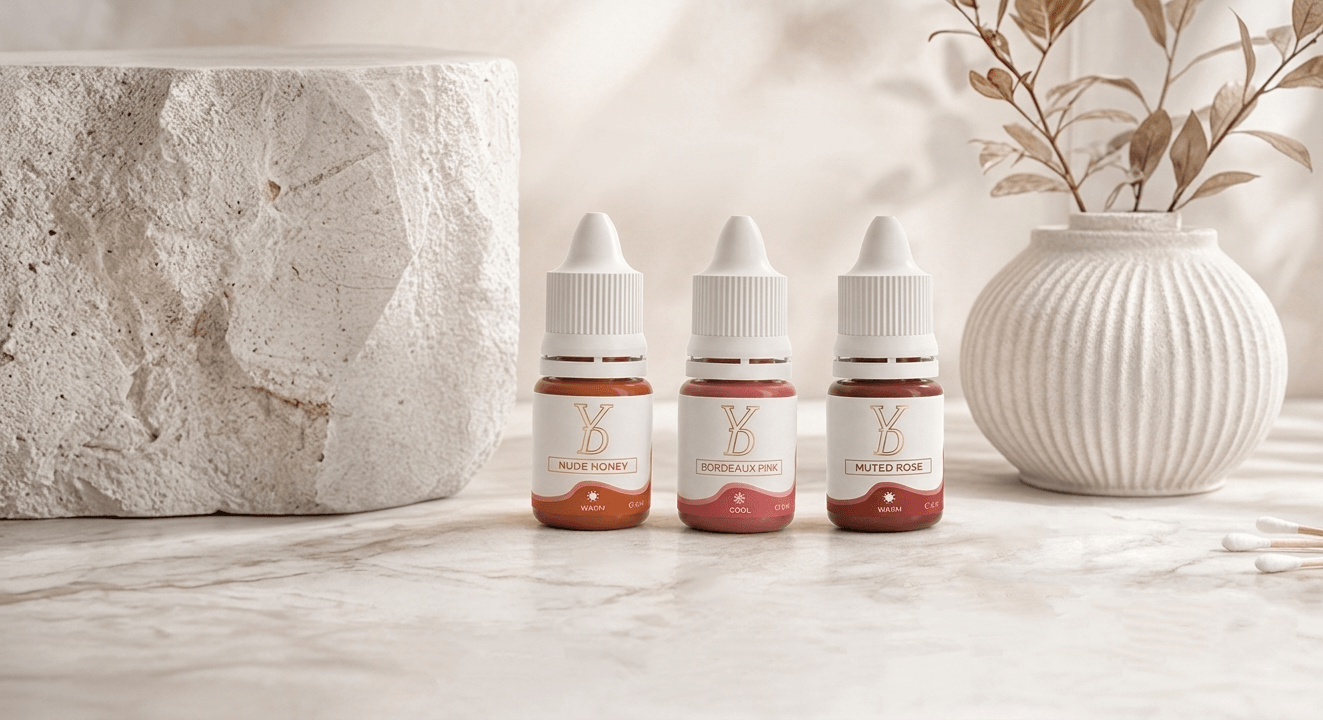
The YDPMU Powder Hybrid Lip Pigments – 10 Nude Shades (6ml) collection contains five warm and five cool color directions. Each shade may be purchased individually, or artists may select the complete 10-shade set.
Key Points for PMU Artists
- The client’s natural lip base is more important than skin undertone alone.
- Warm and cool describe the pigment’s visible color direction; they are not automatic client-matching rules.
- The current YDPMU 10-shade classification contains five warm shades and five cool shades—no separate neutral category.
- Dark, cool, blue, grey, violet or melanin-rich lips may require neutralization before a nude target shade is considered.
- Mixing is optional when an existing shade already suits the treatment plan.
- Fresh pigment, bottle color, swatches and healed color are not identical references.
- No pigment should be presented as producing one guaranteed healed color on every client.
What Is a Nude Lip Blush Pigment?
A nude lip blush pigment is a permanent makeup pigment selected to support a softer, more natural lip color direction rather than a strong lipstick-style effect.
“Nude” does not describe one universal beige or pink. Professional nude lip colors may include apricot, cinnamon, terracotta, warm rose, berry, wine, antique rose and mauve directions.
The correct nude shade is therefore not necessarily the lightest pigment or the pigment closest to the client’s facial skin tone. It is the color direction that makes sense after assessing the client’s visible lip base and intended result.
Why Nude Lip Pigment Selection Begins With the Natural Lip Base
Lips are a distinct anatomical area with their own visible tissue color. The upper and lower lips may also show different pigmentation, saturation and undertones. For a general anatomy reference, see the Cleveland Clinic Lip Anatomy guide.
Before choosing a nude lip pigment, evaluate the following factors:
1. Natural Lip Color
Determine whether the untreated lip appears pale, pink, red, peach, brown, grey, blue, violet or mixed. Do not assume the upper and lower lips have the same base color.
2. Visible Undertone
Assess the undertone visible in the lip itself. Facial skin undertone can provide context, but it should not replace direct lip assessment.
3. Melanin and Existing Saturation
A light nude pigment placed over a deeply pigmented lip will not necessarily produce the same visual direction shown in a white-background swatch. The existing lip base remains part of the final color relationship.
4. Previous Permanent Makeup
Identify any remaining pigment, uneven fading, cool color shift, scar tissue or repeated treatment history. A previously treated lip requires a different plan from untreated tissue.
5. Desired Color Direction
Clarify whether the client wants a warm apricot nude, cinnamon nude, earthy terracotta, dusty rose, berry nude, antique rose or mauve direction. Avoid relying only on vague descriptions such as “natural” or “not too pink.”
Warm vs Cool Nude Lip Pigments
A pigment’s temperature describes its visible color direction:
- Warm nude pigments contain visible apricot, amber, cinnamon, terracotta, warm brown, warm pink or warm red characteristics.
- Cool nude pigments contain visible wine, berry, cool rose, mauve, lilac, ash or cool pink characteristics.
This does not create a simple rule that every warm-skinned client must receive a warm pigment or every cool-skinned client must receive a cool pigment. The artist must consider how the selected pigment will interact with the natural lip base.
For example, a cool pigment may be appropriate when a client requests a cool berry or mauve direction and the natural lip base supports that plan. The same cool pigment may be inappropriate as a direct target shade over a strongly blue, grey or violet lip base that first requires warmth.
The Official YDPMU 10-Shade Nude Lip System
The current official classification divides the collection into five warm shades and five cool shades.
| Shade | Temperature | Color Direction | Professional Planning Notes |
|---|---|---|---|
| Nude Honey | Warm | Creamy apricot nude with soft amber undertones | Consider when a warm apricot-honey nude or softer warm gradient direction is appropriate. |
| Nude Ruby | Warm | Translucent jewel-toned pinkish red | Provides a richer warm pink-red direction within a professional nude or rosy-red plan. |
| Nude Kiss | Warm | Cinnamon nude with fleshy-pink undertones | Consider for warm cinnamon-pink nude planning or optional mixtures requiring additional warm nude depth. |
| Nude Terra | Warm | Terracotta brick red with deep earthy undertones | Provides a deeper earthy and terracotta direction for suitable warm nude treatment plans. |
| Muted Rose | Warm | Dusty earthy rose with subtle warm-brown undertones | Consider when the intended result calls for a subdued warm rose rather than a bright pink. |
| Bordeaux Pink | Cool | Wine-infused cool rose pink with berry undertones | Provides a cooler wine-rose or berry-pink direction for professionally assessed lip bases. |
| Nude Berry | Cool | Luminous berry-tinted cool nude | Adds berry and rose-brown depth to suitable cool nude or defined lip color plans. |
| Nude Velvet | Cool | Clear velvet pinkish red | Consider when a cleaner, brighter cool pink-red direction is required. |
| Antique Rose | Cool | Smoky wood-toned antique rose with ochre and cinnamon shadow notes | Provides a smoky, muted antique-rose direction for suitable professional color plans. |
| Nude Mauve | Cool | Cool mauve with lilac and ash-grey clay undertones | Consider when the intended result calls for a deliberately muted mauve-brown direction. |

Important: These descriptions identify pigment color direction. They do not guarantee the same healed appearance on every client.
How to Choose a Nude Lip Blush Pigment

Step 1: Assess the Untreated Lip in Neutral Lighting
Remove lipstick, tint and surface residue. Evaluate both lips in consistent, neutral lighting. Look for differences between the upper and lower lip and record the visible base color before treatment.
Step 2: Decide Whether the Client Needs Correction or a Target Color
A target shade is selected to support the intended final color direction. A corrector is selected to address an unwanted underlying color relationship.
These are not interchangeable roles. A warm nude target shade is not automatically strong enough or correctly formulated to neutralize every dark, blue, grey, brown or violet lip base.
Step 3: Select the Intended Color Family
Use the client’s request and the assessed lip base to select an appropriate starting direction:
- Apricot or honey nude: consider Nude Honey
- Warm pink-red nude: consider Nude Ruby
- Cinnamon or fleshy-pink nude: consider Nude Kiss
- Earthy terracotta: consider Nude Terra
- Dusty warm rose: consider Muted Rose
- Wine-infused cool rose: consider Bordeaux Pink
- Berry-tinted cool nude: consider Nude Berry
- Clear cool pink-red: consider Nude Velvet
- Smoky antique rose: consider Antique Rose
- Muted cool mauve: consider Nude Mauve
This list is a color-direction guide, not an automatic treatment prescription.
Step 4: Decide Whether Mixing Is Necessary
Mixing is optional. If an individual shade already provides the required color direction, there is no need to create a custom formula.
When mixing is appropriate, compatible shades may be combined to adjust:
- Warmth or coolness
- Depth
- Brightness
- Red, rose, berry, brown or mauve direction
Document shade names and mixing ratios in the client’s treatment record to improve consistency at future sessions.
Step 5: Set Realistic Expectations
A bottle color or paper swatch shows pigment appearance outside the body. It cannot reproduce the interaction between pigment and the client’s natural lip tissue.
Fresh implantation usually appears different from the final settled color. Surface pigment, temporary post-procedure changes, tissue response and the existing lip base can all affect the initial appearance.
Evaluate the final color only after the lips have completed the appropriate healing period under the artist’s professional protocol.
Choosing Nude Pigments for Dark or Melanin-Rich Lips
Dark or melanin-rich lips should not automatically be treated with the lightest nude pigment. A pale nude shade placed directly over a dark, blue, grey or violet base may not create the intended result.
Professional assessment should determine:
- The dominant visible undertone
- The depth and saturation of the natural lip color
- Whether pigmentation is even or concentrated in specific areas
- Whether previous PMU pigment remains
- Whether a staged neutralization plan is appropriate
Some suitable clients may require warm neutralization before a nude target shade is considered. Other clients may not be suitable for a direct nude-lip plan at the current stage.
Learn more in the professional guide to dark lip neutralization, or explore the YDPMU Dark Lip Neutralization Set – 10 Colors (6ml).
Planning Warm and Cool Ombré Lip Palettes
Ombré lip planning uses differences in depth, saturation or color direction to create a controlled transition. Staying within a related temperature family can make palette planning easier, but combining warm and cool pigments is not automatically wrong.
Cross-temperature adjustment requires color-theory knowledge, compatible formulas and careful ratio control. It should not be described as always creating a muddy or grey result.
Possible palette directions include:

- Warm apricot-earth palette: Nude Terra, Nude Kiss and Nude Honey
- Warm rose palette: Nude Ruby, Nude Kiss and Muted Rose
- Cool wine-berry palette: Bordeaux Pink and Nude Berry
- Cool antique-mauve palette: Antique Rose and Nude Mauve
- Cool pink-red palette: Nude Velvet with a professionally selected supporting shade
These are palette candidates rather than fixed formulas. Swatch compatible colors, consider their relative depth and document the selected ratios before treatment.
What Is the YDPMU Powder Hybrid Formula?
The pigments are supplied in liquid form. “Powder Hybrid” refers to the YDPMU formula system, which combines organic and inorganic colorants in a liquid carrier.
The confirmed base ingredients include Aqua, Glycerin and Propylene Glycol. Each shade contains its own combination of CI colorants, so artists should consult the selected bottle label and corresponding documentation.
Collection Specifications
- Volume: 6ml per bottle
- Options: One individual shade or complete 10-shade set
- Shade system: Five warm and five cool nude directions
- Primary application: Professional machine lip shading
- Mixability: Compatible shades may be mixed when required
- Compliance: EU REACH compliant
- Product values: Vegan and cruelty-free
- Sterilization: Gamma-ray sterilized
- Documentation: Available upon request
- User level: Trained permanent makeup professionals
For more information about formula categories, read Organic vs Inorganic vs Hybrid PMU Pigments.
10 Nude Shades in 6ml vs 15 Lip Shades in 12ml
| Product Range | Primary Focus | Purchase Format | Consider When |
|---|---|---|---|
| 10 Nude Shades, 6ml | Focused warm and cool nude lip color system | One selected 6ml shade or complete 10-shade set | You want smaller bottles, a nude-focused palette or the complete coordinated collection. |
| 15 Lip Shades, 12ml | Broader lip palette including nude, pink, red, orange and adjustment shades | One 12ml bottle in the selected shade | You require larger individual bottles or a wider lip color range beyond nude shades. |
Professional Safety and Documentation
Permanent makeup is a form of tattooing in which pigment is introduced using needles. The U.S. Food and Drug Administration’s permanent makeup fact sheet explains its regulatory position and identifies potential concerns involving reactions, infection and contaminated inks.
In the European Union, restrictions under REACH apply to specified substances in tattoo inks and permanent makeup. See the European Commission overview of tattoo and permanent makeup ink restrictions.
Product compliance information does not replace professional responsibilities. Artists must follow:
- Applicable national and local regulations
- Training, licensing and insurance requirements
- Client consultation and screening procedures
- Manufacturer instructions and product labeling
- Suitable hygiene and cross-contamination controls
- Single-use dispensing and needle procedures
- Appropriate aftercare guidance
What Shapes the Healed Nude Lip Appearance?
The healed appearance of a nude lip blush treatment is shaped by more than the selected pigment shade. The final visible color develops through the interaction between the client’s natural lip base, pigment direction, treatment technique and individual healing response.
- Natural lip base: The client’s untreated lip color and visible undertones remain part of the final color relationship.
- Pigment direction: Warm, cool, muted, earthy, rose, berry and mauve pigments create different starting directions.
- Saturation level: The amount and distribution of implanted pigment influence the visible intensity of the settled result.
- Application technique: Needle configuration, hand speed, machine control, layering and implantation consistency affect pigment distribution.
- Individual healing response: Tissue condition, treatment history and individual healing can influence how the color settles.
- Aftercare and professional review: Appropriate aftercare and healed-result assessment help the artist evaluate whether further adjustment is needed.

Frequently Asked Questions
What is the best nude lip blush pigment?
There is no universal best shade. The appropriate pigment depends on the natural lip base, visible undertone, melanin level, previous PMU, intended result and professional treatment plan.
Does the YDPMU 10-shade collection contain neutral shades?
The current official classification contains five warm shades and five cool shades. It does not use a separate neutral category for these 10 colors.
Which five shades are warm?
Nude Honey, Nude Ruby, Nude Kiss, Nude Terra and Muted Rose are classified as warm.
Which five shades are cool?
Bordeaux Pink, Nude Berry, Nude Velvet, Antique Rose and Nude Mauve are classified as cool.
Can a warm pigment be used on a cool-toned client?
Possibly, depending on the natural lip base and intended color direction. Pigment temperature and skin undertone should not be treated as a simple one-to-one matching rule.
Can a cool nude pigment be used directly on dark or purple lips?
Not automatically. Dark, blue, grey, violet or melanin-rich lips require professional undertone assessment. Some suitable clients may need warm neutralization before a cool nude target shade is considered.
Do the 10 shades have to be mixed?
No. Mixing is optional. An individual shade may be selected when it already provides the required color direction.
Can warm and cool pigments be mixed?
Compatible warm and cool pigments may be mixed by trained artists when a deliberate color adjustment is required. Ratios should be controlled and documented. Combining different temperatures does not automatically create a muddy result.
Is this a powder or liquid pigment?
The product is supplied in liquid form. Powder Hybrid refers to the formula system and its organic and inorganic colorant combination.
Can I purchase one shade instead of the complete set?
Yes. Each 6ml shade is available individually, and the complete option includes all 10 shades in 6ml bottles.
Will the healed color look exactly like the bottle or swatch?
No exact match can be guaranteed. The natural lip base, undertone, technique, treatment history, aftercare and individual healing response influence the final appearance.
How long does nude lip blush pigment remain visible?
There is no universal retention period. Retention varies according to the client, technique, implantation, pigment selection, treatment history, lifestyle and aftercare.
Are these pigments intended for home use?
No. They are intended for trained permanent makeup professionals following applicable regulations, hygiene protocols and manufacturer instructions.
Conclusion
The best nude lip blush pigment is not selected by popularity, facial skin tone or bottle color alone. Professional selection begins with the untreated lip base and distinguishes between a corrector and a target shade.
The YDPMU 10-shade system provides five warm and five cool color directions across apricot, cinnamon, terracotta, rose, wine, berry, antique rose and mauve families. Each shade can be selected individually, while the complete set gives artists access to the full coordinated nude range.
Explore YDPMU Powder Hybrid Lip Pigments – 10 Nude Shades (6ml).
Related Resources
- Color Theory for PMU Artists: Warm, Cool, Undertone and Correction Guide
- What Is Lip Neutralization? A Professional Guide
- Organic vs Inorganic vs Hybrid PMU Pigments
- Lip Blush Needle Depth: Protrusion vs Implantation
References
- Cleveland Clinic: Lip Anatomy
- U.S. Food and Drug Administration: Tattoos and Permanent Makeup Fact Sheet
- European Commission: Chemicals in Tattoo Inks and Permanent Makeup
- Current YDPMU Powder Hybrid Nude Lip Pigment product specifications and supplied shade documentation
Professional education only. This article does not replace manufacturer instructions, local regulations, client screening, medical advice or hands-on PMU training.