
Introduction
PMU pigments differ from traditional tattoo ink in particle size, color stability, fade pattern, and formulation. Premium PMU pigments use ultra-fine particles, resist unwanted color shifts, and are free from heavy metals and harmful additives. Different procedures require different pigment properties: fine liquid formulas for microblading and powder brows, vibrant true-tone formulas for lip blush, and carbon-based black for eyeliner. Proper storage in cool, dark conditions with sealed caps preserves pigment quality and shelf life.
In the world of cosmetic tattooing, permanent makeup pigments serve as the foundation for beautiful, long-lasting results. Whether you are a professional PMU artist or someone considering cosmetic tattooing, understanding the differences between tattoo pigment and PMU-specific pigments is essential for achieving optimal outcomes.
1. Tattoo Pigment vs PMU Pigments: Key Differences
Tattoo pigment forms the core of all permanent makeup applications, but not all pigments are created equal. The quality of your pigment directly impacts your results, healing process, and long-term color stability.
| Characteristic | Traditional Tattoo Ink | PMU Pigments |
|---|---|---|
| Particle size | Larger particles | Finer, more refined particles |
| Color stability | May oxidize over time | Formulated to resist color shifts |
| Fade pattern | Can turn bluish or green | Designed to fade true to original hue |
| Iron oxide content | Variable, often uncontrolled | Carefully controlled for safety |
| Viscosity | Thicker consistency | Optimized for PMU machines and techniques |
| Intended area | Body skin | Delicate facial skin |
Professional PMU pigments undergo rigorous testing to ensure they meet the highest standards for cosmetic facial applications. Unlike conventional tattoo inks that may contain heavy metals or questionable additives, PMU-specific pigments are developed for use on the delicate facial area where skin is thinner and more reactive.
Organic vs. Inorganic Permanent Makeup Pigments: Choosing the Best Pigments for Long-Lasting Results
2. What Makes a PMU Pigment Premium?
Identifying the best PMU pigments involves evaluating several critical factors that affect both immediate application results and long-term performance.
| Factor | Why It Matters | What to Look For |
|---|---|---|
| Particle size | Affects color deposit and retention | Ultra-fine micronization |
| Color stability | Prevents unwanted color shifts | Advanced stabilization technology |
| Fade pattern | Ensures graceful aging | Even, predictable fading |
| Pigment load | Determines vibrancy and coverage | High concentration for rich color |
| Carrier solution | Impacts application smoothness | Medical-grade suspension fluid |
| Safety certification | Protects client health | Free from heavy metals, dermatologist-tested |
Safety Standards for PMU Pigments
When selecting permanent cosmetic pigments, safety must be the top priority. Premium PMU pigments are free from heavy metals, non-toxic and hypoallergenic, sterilely packaged, compliant with international safety standards, and dermatologist-tested for use on all skin types including sensitive clients.
Allergic Reactions to Permanent Makeup Pigments: How to Spot Them and What to Do Next

3. Application-Specific PMU Pigment Formulations
Different PMU procedures require specially tailored pigment properties. Using the wrong formula for a technique leads to poor retention, blurring, or color shifts in the healed result.
| Procedure | Pigment Requirements | Formula Type |
|---|---|---|
| Microblading | Fine consistency for precise hair strokes | Paste or fine liquid — strong adhesion |
| Powder brows | Buildable color layers, soft gradient | Liquid — high fluidity for even shading |
| Lip blush | Vibrant yet natural tones, true-to-color healing | Organic or semi-creamy liquid |
| Eyeliner | Deepest black without blue tones | Carbon-based pure black liquid |
| Scalp (SMP) | Migration-resistant, stable neutral black | Powder-based SMP-specific formula |
Lip Pigments: Special Considerations
Lip pigments require unique formulations due to the particular characteristics of lip tissue. They must account for the natural redness of lips, require special opacity to cover natural pigment, need to heal true to color without excessive fading, and should complement various natural lip tones across different skin undertones.
Ultimate Guide to PMU Pigments: Technique Matching, Color Retention & Storage Tips

4. Choosing the Right Pigment by Skin Tone
Selecting the best permanent makeup pigments involves more than picking attractive colors. Skin undertone determines how pigment heals and how natural the result appears over time.
| Skin Undertone | Recommended Pigment Families | What to Avoid |
|---|---|---|
| Cool | Ash browns, blue-based reds | Warm golden or orange-based tones |
| Warm | Golden browns, orange-based reds | Ashy or cool-toned pigments |
| Neutral | Balanced tones with slight warmth | Extreme cool or warm shades |
| Olive | Muted, earthy tones with green base | Pure warm or pure cool extremes |
Why Do Permanent Makeup Brows Turn Blue or Grey Over Time?
5. Pigment Storage and Handling
Even the best pigment loses effectiveness if stored incorrectly. To preserve the integrity of your PMU pigments: store in a cool, dark place away from direct sunlight and humidity, keep bottles tightly sealed immediately after use, avoid cross-contamination between colors by storing separately, replace pigments that show signs of separation or color change, and always follow expiration guidelines — never use expired pigments.
Proper storage ensures pigments perform at their peak throughout their lifespan and protects client safety.
Do Permanent Makeup Pigments Oxidize Over Time? Understanding Pigment Stability in the Skin
Conclusion
Choosing the right permanent makeup pigments is one of the most important decisions a PMU artist makes. From understanding the differences between tattoo ink and PMU-specific formulas, to selecting the right pigment type for each technique and skin tone, quality matters at every level.
Premium pigments with fine particle size, stable color formulas, and certified safe ingredients consistently outperform standard options in healed result quality, color retention, and client satisfaction.
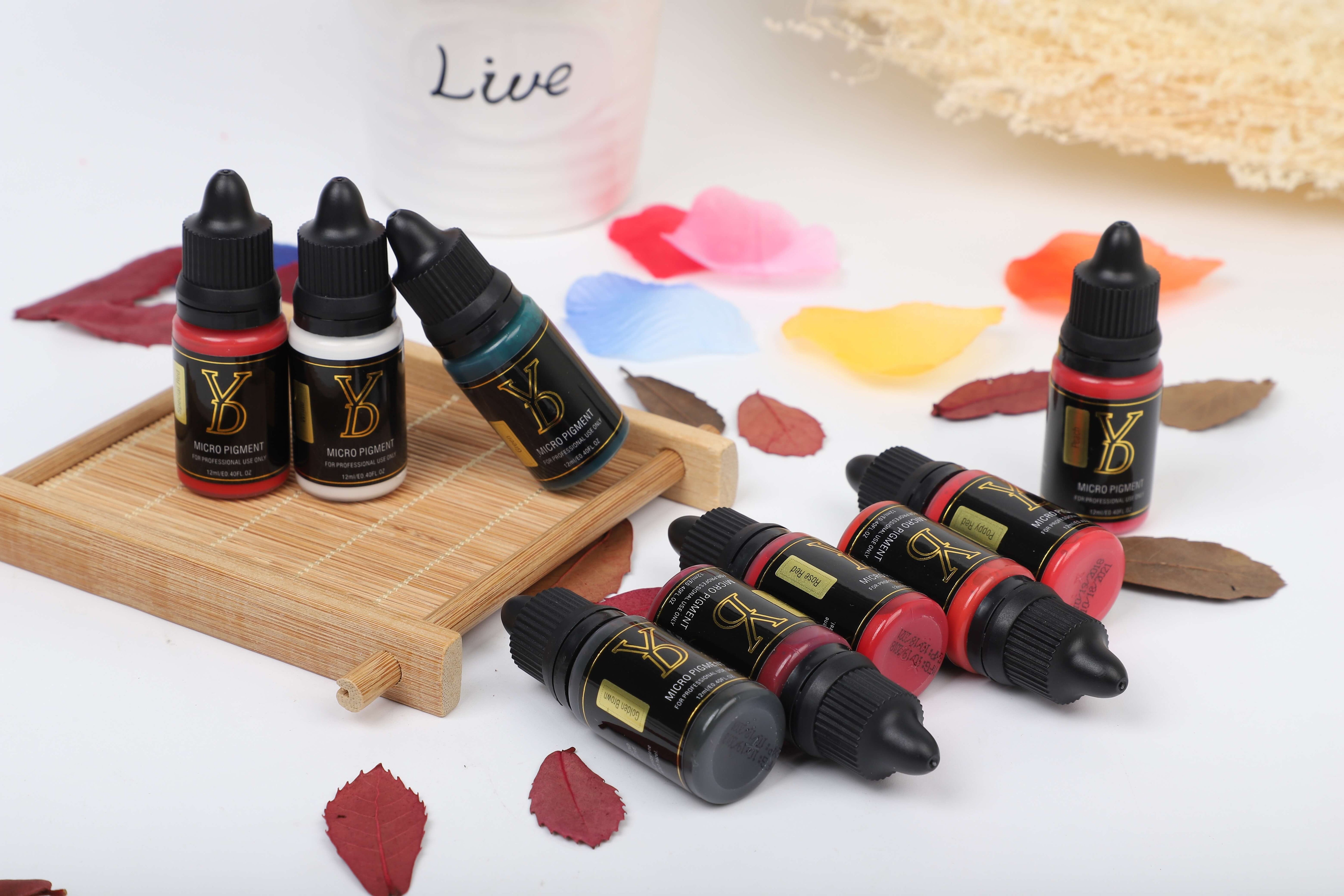
YDPMU Pigment Sets — Professional-grade stable formulas for brows, lips, eyeliner, and scalp
How to Improve Pigment Retention in Hairstroke Brows: 3 Essential Tips
FAQ
What is the difference between tattoo ink and PMU pigment?
PMU pigments are specifically formulated for cosmetic facial applications and differ from traditional tattoo ink in several key ways. PMU pigments use finer, more refined particles for smoother skin penetration, are formulated to resist unwanted color shifts (blue, green, red) over time, fade more predictably and evenly, and are free from heavy metals and harmful additives. Traditional tattoo ink is designed for body skin, which has different absorption characteristics than the delicate facial skin used in PMU procedures.
How do I choose the right PMU pigment for my skin tone?
Pigment selection should be based on the client’s skin undertone. Cool undertones suit ash browns and blue-based reds. Warm undertones suit golden browns and orange-based reds. Neutral undertones work well with balanced tones that have slight warmth. Olive undertones suit muted, earthy tones with a green base. Choosing a pigment that conflicts with the client’s undertone can result in unnatural healed color or accelerated color shifting.
What makes a PMU pigment high quality?
High-quality PMU pigments are characterized by ultra-fine, uniform particle size for smooth and even skin penetration, advanced color stabilization that resists oxidation and UV degradation, high pigment load for rich, vibrant color, medical-grade carrier solution for smooth application, and certified safety standards including freedom from heavy metals, allergens, and banned colorants. Reputable brands provide safety data sheets and regulatory compliance documentation.
How should I store PMU pigments?
Store PMU pigments in a cool, dark place away from direct sunlight and high humidity. Always seal the cap tightly immediately after use to prevent air exposure and oxidation. Keep different colors stored separately to avoid cross-contamination. Check expiration dates regularly and discard expired pigments — using expired products risks bacterial contamination, unpredictable color results, and potential skin reactions in clients.
Can I use the same pigment for all PMU procedures?
No. Different PMU procedures require different pigment formulations. Microblading requires paste or fine liquid pigments with strong adhesion for precise hair strokes. Powder brows require high-fluidity liquid pigments for even gradient shading. Lip blush requires organic or semi-creamy formulas that heal true-to-color on lip tissue. Eyeliner requires carbon-based pure black formulas that resist blue or grey color shifts. SMP requires powder-based, migration-resistant formulas specifically designed for scalp skin.