
Introduction
PMU brow pigments are specifically formulated to fade naturally without developing blue, green, or red color shifts — unlike traditional tattoo ink. Microblading requires paste or fine liquid pigments with strong adhesion for precise hair strokes. Powder and ombré brows require high-fluidity liquid pigments for soft gradient shading. Pigment shade selection should be based on the client’s skin undertone: cool undertones suit ash browns, warm undertones suit golden browns, and neutral undertones suit balanced shades.
Permanent makeup has transformed the beauty industry, offering long-lasting, natural-looking brows. The key to flawless results lies in selecting the right PMU brow pigments. Understanding the differences between pigment types, formulas, and how they interact with different skin tones is essential for consistent, professional outcomes.
| Technique | Pigment Type | Key Property | Result |
|---|---|---|---|
| Microblading | Paste or fine liquid | Strong adhesion, precise flow | Crisp, defined hair strokes |
| Powder brows | High-fluidity liquid | Even distribution, soft gradient | Soft shaded, makeup-ready finish |
| Ombré brows | High-fluidity liquid | Buildable layers, gradient control | Natural gradient from light to dark |
| Nano hair strokes | Fine particle liquid | Ultra-fine penetration | Hyper-realistic individual strokes |
| Combination brows | Liquid + paste blend | Versatile — line and shade | Hair strokes with soft shading base |
1. PMU Pigments vs. Traditional Tattoo Ink
PMU pigments are specially formulated for semi-permanent cosmetic procedures. Unlike traditional tattoo pigments, they are designed to fade naturally over time without developing unnatural blue, green, or red undertones. This is achieved through finer particle size, controlled iron oxide content, and formulas optimized for the thinner, more reactive skin of the face.
| Feature | PMU Pigments | Traditional Tattoo Ink |
|---|---|---|
| Longevity | 1–3 years (fades naturally) | 5+ years (may turn bluish or green) |
| Color stability | Stays true to tone over time | May oxidize and shift color |
| Particle size | Fine, uniform particles | Larger, less refined particles |
| Intended area | Delicate facial skin | Body skin — different absorption |
| Safety standard | Formulated for cosmetic use | Not always suitable for PMU |
The Ultimate Guide to Permanent Makeup Pigments: Quality, Safety & Performance
2. Microblading Pigments: Precision and Natural Hair Strokes
Microblading pigments are optimized for fine, hair-like strokes. They require strong adhesion to hold stroke definition during the manual blade technique, and fine enough consistency to flow cleanly without spreading or blurring under the skin.
- Paste pigments provide the strongest adhesion and are the traditional choice for microblading — they hold stroke edges cleanly and resist spreading.
- Fine liquid pigments with high particle refinement are increasingly used for nano hair-stroke techniques, offering precise penetration with minimal trauma.
- Avoid water-based pigments for microblading — they penetrate too quickly and may blur before the stroke is complete.
How to Improve Pigment Retention in Hairstroke Brows: 3 Essential Tips
YDPMU NANO Organic Liquid Pigments — Fine particle formulas for hair-stroke and nano brow techniques
3. Powder and Ombré Brow Pigments: Soft Shading and Gradient Effects
Powder and ombré brow techniques require high-fluidity liquid pigments that distribute evenly across the treated area. The machine-shading technique relies on the pigment’s ability to build soft, layered gradients without pooling or over-saturating.
- High-fluidity liquid pigments spread evenly under machine shading, creating the soft, misty gradient characteristic of powder and ombré brows.
- Inorganic or hybrid pigments with higher density perform better on oily skin, where organic pigments may fade faster.
- Buildable layering is key — start lighter and build saturation gradually to avoid over-depositing pigment in a single pass.
YDPMU Powder Hybrid Liquid Pigments — Inorganic-based stability for powder and ombré brow techniques
Ultimate Guide to PMU Pigments: Technique Matching, Color Retention & Storage Tips
4. Choosing the Right Brow Pigment Shade by Skin Tone
Pigment shade selection is one of the most important decisions in brow PMU. The wrong shade can result in unnatural healed color or accelerated color shifting. Base your selection on the client’s skin undertone rather than their hair color alone.
| Skin Undertone | Recommended Pigment Family | What to Avoid |
|---|---|---|
| Cool | Ash browns, cool taupe | Warm golden or orange-based tones |
| Warm | Golden browns, warm chocolate | Ashy or cool-toned pigments |
| Neutral | Balanced medium browns | Extreme cool or warm shades |
| Olive | Muted earthy browns, cool-neutral | Pure warm or pure cool extremes |
| Deep / dark | Deep chocolate, cool black-brown | Light or warm shades that disappear |
Always account for how the pigment will heal — most PMU pigments lighten 20–40% after healing. Choose a shade slightly deeper than the desired healed result to compensate for this natural lightening.
Why Do Permanent Makeup Brows Turn Blue or Grey Over Time?
Why Does Eyebrow Tattoo Color Look Different Before and After the Procedure?
Conclusion
Choosing the right PMU brow pigments ensures flawless, natural-looking results that hold their color and fade gracefully over time. Match your pigment type to your technique, select shades based on skin undertone, and always use professional-grade formulas with certified safe ingredients.
Always perform a patch test and consult pigment compatibility information before application — especially for clients with sensitive skin or known pigment sensitivities.
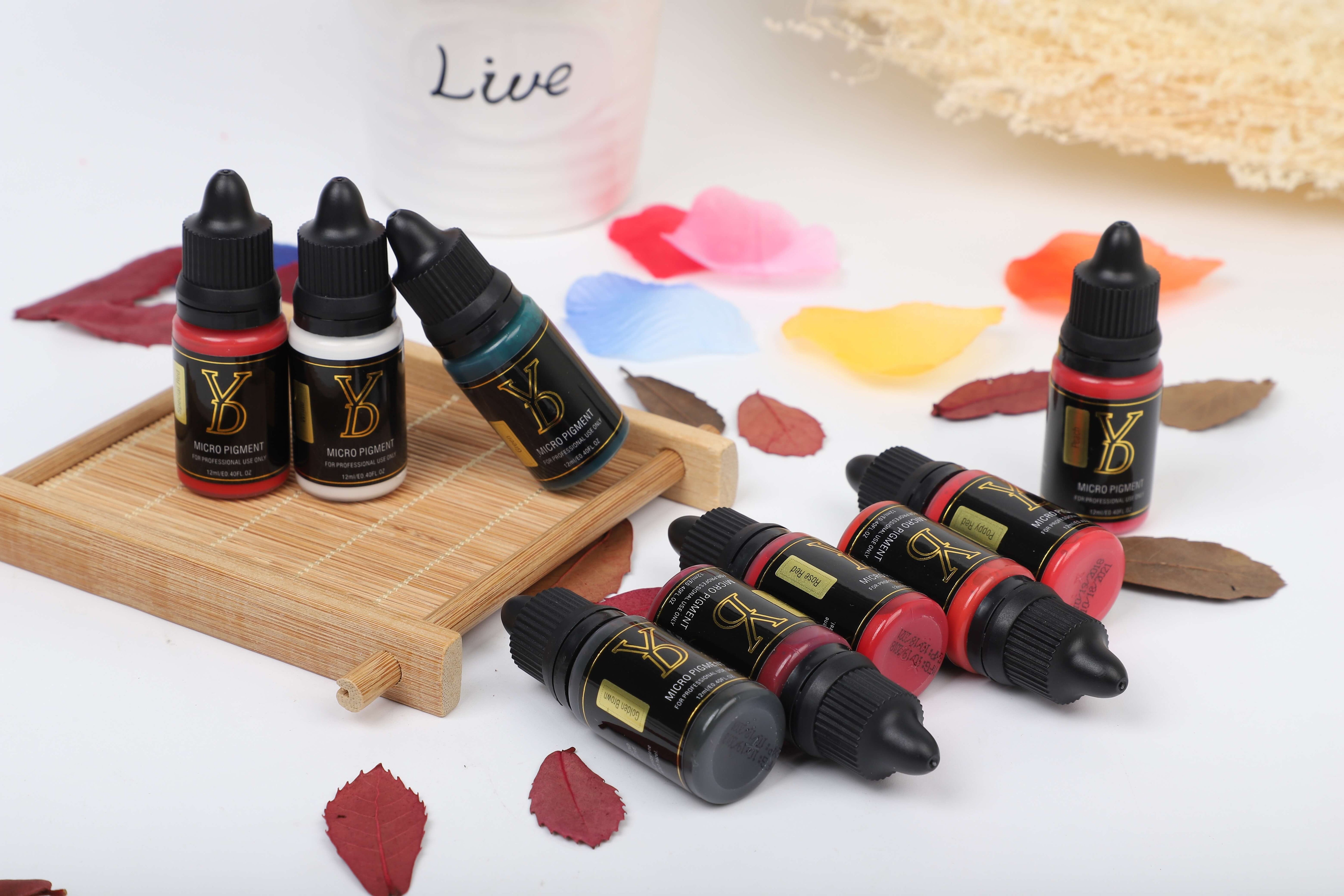
YDPMU Pigment Sets — Professional-grade stable formulas for all brow techniques and skin tones
Organic vs. Inorganic Permanent Makeup Pigments: Choosing the Best for Long-Lasting Results
FAQ
What is the best pigment for microblading brows?
Paste pigments are the traditional best choice for microblading due to their strong adhesion and ability to hold precise stroke edges without spreading. Fine liquid pigments with high particle refinement are increasingly used for nano hair-stroke techniques. Both should be specifically formulated for brow PMU — avoid water-based pigments, which penetrate too quickly and may blur before the stroke is complete.
What pigment should I use for powder brows?
High-fluidity liquid pigments are best for powder and ombré brows. Their fluid consistency allows the PMU machine to distribute pigment evenly across the treated area, creating the soft, misty gradient effect characteristic of powder brow techniques. Inorganic or hybrid pigments with higher density perform better on oily skin where organic pigments may fade faster.
How do I choose the right brow pigment shade for my client?
Base shade selection on the client’s skin undertone rather than hair color alone. Cool undertones suit ash browns and cool taupe. Warm undertones suit golden browns and warm chocolate. Neutral undertones suit balanced medium browns. Always choose a shade slightly deeper than the desired healed result — most PMU pigments lighten 20–40% after healing as new skin forms over the pigment layer.
Why do PMU brow pigments turn blue or grey after healing?
Color shifts to blue or grey occur when pigment is implanted too deeply (the Tyndall effect causes light to scatter through deeper skin layers, making dark pigment appear blue or grey), when unstable pigment formulas with large particles oxidize over time, or when traditional tattoo ink is used instead of PMU-specific pigment. Using professionally formulated PMU pigments with fine, stable particles and correct implantation depth prevents unwanted color changes.
Why does PMU pigment fade faster on oily skin?
Oily skin produces excess sebum that breaks down pigment particles faster than normal or dry skin. The higher oil content also makes it harder for pigment to anchor in the skin during the procedure. For oily skin clients, use higher-density inorganic or hybrid pigments that resist sebum breakdown, reduce the number of passes to avoid over-traumatizing the skin, and advise clients that more frequent touch-ups may be needed to maintain color saturation.