
Updated August 20, 2026
Permanent makeup is not one single technique. It is a category of cosmetic tattoo procedures used to enhance eyebrows, lips, the lash line and, in specialized practices, areas affected by hair loss, scarring or changes in natural pigmentation.
The right procedure is not determined by a trend or a face-shape formula. It depends on the client’s existing features, skin condition, previous permanent makeup, desired finish, daily makeup habits and willingness to maintain the result as it gradually changes.
This guide explains the main types of permanent makeup, how their visual effects differ and what helps an artist create a result that looks balanced rather than artificial.
What Is Permanent Makeup?
Permanent makeup, also called cosmetic tattooing or micropigmentation, introduces pigment into the skin to create a cosmetic or restorative effect. Common treatment areas include the eyebrows, eyelids and lips.
Although the term “semi-permanent makeup” is widely used in the beauty industry, these procedures should still be approached as tattoos. The visible result may soften and fade, but complete disappearance cannot be guaranteed. Removal or correction can also be difficult, especially when pigment color, saturation, placement or technique was poorly selected.
The U.S. Food and Drug Administration’s permanent makeup fact sheet provides additional information about tattoo inks, reported reactions, infection risks and removal considerations.
Permanent Makeup Types at a Glance
| Procedure | Typical Visual Effect | Planning Priorities | Important Considerations |
|---|---|---|---|
| Hairstroke brows | Individual marks that visually resemble brow hairs | Natural growth direction, spacing, skin response and existing hair | Strokes may heal less crisply on some oily, porous, mature or previously tattooed skin |
| Powder or ombré brows | Soft shaded or makeup-inspired brow definition | Gradient, density, border softness and overall shape | Can range from very soft to defined; it should not automatically mean a dark block brow |
| Combination brows | Selected hairstrokes combined with machine shading | Where strokes add value and where shading provides structure | More detail is not always more natural; excessive layering can create visual density |
| Permanent eyeliner | Lash-line definition, classic liner or a soft shaded effect | Eye anatomy, eyelid movement, skin condition and style longevity | Fashion-driven shapes and long tails require careful long-term consideration |
| Lip blush | Soft color enhancement and more visually balanced lip definition | Natural lip anatomy, undertone, baseline pigmentation and healed color target | It cannot create physical volume or safely extend far beyond the natural lip tissue |
| Specialized micropigmentation | Hair-density illusion, areola restoration or selected camouflage effects | Specialized training, tissue condition, color matching and realistic expectations | These services require procedure-specific education and may involve medical coordination |
1. Permanent Makeup for Eyebrows
Eyebrow permanent makeup can replace part of a daily brow routine, restore the visual structure of sparse areas or create a more consistent brow shape. However, the word “brow PMU” can describe several very different techniques.
Hairstroke Brows and Microblading
Hairstroke brows use individual marks to create the visual impression of brow hairs. Microblading creates these marks with a manual tool, while machine hairstrokes are produced with a PMU machine and cartridge.
A natural hairstroke pattern should follow the client’s existing growth direction and preserve enough space between marks. Filling every visible gap with strokes can make the healed result look crowded, particularly if the marks expand, soften or overlap over time.
Skin characteristics matter. An artist should assess oil production, pore visibility, elasticity, texture, sensitivity, existing scar tissue and previous pigment before deciding whether a hairstroke approach is appropriate. It is therefore more accurate to describe skin suitability as an individual assessment—not as a universal rule that one skin category can or cannot receive a particular technique.
Powder and Ombré Brows
Powder brows use machine shading to build a soft field of color. The finish can be light and diffused or more defined, depending on the mapping, saturation pattern, pigment choice and application technique.
Ombré generally describes a deliberate gradient, often with a softer front and increasing definition through the body and tail. However, the gradient should still respond to the client’s natural hair, facial structure and desired makeup style.
Powder brows are often considered when individual strokes may not remain visually distinct, but they are not automatically the correct choice for every client with oily skin. The artist still needs to evaluate texture, previous work, tissue condition and the client’s expectations.
Combination Brows
Combination brows bring hairstrokes and shading into one design. A common approach uses selected strokes in areas where they can blend with natural hair and soft shading where additional structure or density is needed.
The purpose is not to fit two techniques into every brow. The purpose is to use each visual element only where it improves the overall design. If the skin, previous pigment or natural hair pattern does not support clean strokes, a well-planned powder result may look more natural than a complicated combination brow.
For a detailed technique comparison, read Microblading vs Powder Brows. Artists can also review the PMU Eyebrow Mapping Guide for a more complete discussion of balance, natural asymmetry and technique-specific mapping.

2. Permanent Eyeliner and Lash-Line Enhancement
Permanent eyeliner can range from extremely subtle lash-line definition to visible classic liner or a softer shaded effect. These styles should not be treated as interchangeable because they carry different design and long-term appearance considerations.
Lash-Line Enhancement
Lash-line enhancement places definition close to the lash base. Its purpose is usually to make the lashes appear visually denser without creating an obvious makeup line. It is often chosen by clients who want a subtle, low-maintenance result.
Classic Permanent Eyeliner
Classic eyeliner creates a more visible line along the upper or lower lash area. Thickness, edge definition and the outer corner must be planned around the client’s eye anatomy, eyelid movement and long-term style preference.
Shaded or Soft Eyeliner
Shaded eyeliner creates a diffused edge rather than one uniformly sharp line. The result may resemble softly blended cosmetic eyeliner, but it requires controlled saturation and careful planning so that the shape remains readable after healing.
Permanent eyeliner should not simply reproduce a temporary makeup trend. Eyelid position and facial features can change over time, while implanted pigment may remain visible. Long extensions, dramatic wings and dense lower liner therefore require particularly careful consultation.
3. Lip Blush and Lip Color Correction
Lip blush is designed to enhance visible lip color and definition while respecting the natural lip tissue. Depending on the client’s starting point, it may create a sheer tint, a softly defined finish or a more polished lipstick-inspired appearance.
Natural Lip Blush
Natural lip blush usually aims to support the client’s existing lip color rather than cover it with an opaque layer. The artist evaluates baseline lip tone, undertone, vascular influence, melanin distribution, texture and the desired healed direction before selecting a pigment strategy.
Fresh lip color normally looks stronger than the eventual healed appearance. During healing, the lips may also appear uneven, dry, light or temporarily patchy. Final evaluation should wait until the area has completed the artist’s recommended healing and review period.
Dark Lip Neutralization
Dark lip neutralization is not simply the use of a bright orange pigment on every client. It is a staged color-correction process for selected cool, dark or uneven lip tones.
The artist needs to assess the dominant undertone, depth of natural pigmentation, distribution pattern, tissue condition and realistic healed target. Some clients may require a neutralization stage before a target color is considered, while others may not be suitable candidates for the same plan.
Lip blush cannot safely create physical volume, replace filler or completely redesign the anatomy of the lips. Significant implantation beyond the natural lip tissue can heal differently from the lip itself and may produce an unnatural outline.
Learn more in the Professional Lip Color Correction Guide and Lip Blush Longevity and Care Guide.

4. Specialized Types of Micropigmentation
Permanent makeup professionals may also work in specialized areas beyond conventional brows, lips and eyeliner. These services require their own training, equipment choices, color knowledge and client-assessment standards.
Scalp Micropigmentation
Scalp micropigmentation creates small impressions intended to resemble the visual pattern of closely cut follicles or reduce the contrast between visible scalp and existing hair. It does not regrow hair.
Successful SMP depends on impression size, spacing, hairline design, scalp condition, color selection and the relationship between the treatment and surrounding hair. A hairline that looks balanced from several angles is generally more important than forcing mathematical symmetry.
Areola and Restorative Micropigmentation
Areola tattooing may be used in restorative or post-surgical settings to recreate color, form or three-dimensional visual detail. Artists providing this service need specialized education and should work within local regulations and appropriate healthcare guidance.
Skin Camouflage
Selected camouflage procedures may reduce visual contrast between an area and the surrounding skin. They should not be presented as guaranteed scar removal or a universal solution for every pigment difference.
Scar maturity, vascularity, texture, stability, skin tone, sun exposure and the cause of the color difference all affect suitability. Unstable, raised, inflamed or medically unexplained areas require appropriate evaluation before cosmetic tattooing is considered.
What Makes Permanent Makeup Look Natural?
A natural result is not created by selecting the lightest pigment or applying the least visible technique. It comes from coordinating design, color, saturation and placement with the individual client.
1. Design That Respects Existing Features
The artist should study natural hair, bone structure, eye and lip position, facial movement and existing asymmetry. Mapping is a planning framework, not a command to make both sides mechanically identical.
2. Technique Selected for the Skin and Goal
A technique may look beautiful in a social media photograph yet be unsuitable for another client’s skin, previous work or aesthetic goal. The artist should choose the application method after assessment rather than promising one signature technique to everyone.
3. Pigment Selection Based on More Than Surface Color
Pigment selection involves the treatment area, baseline color, skin characteristics, formulation behavior, technique and desired healed direction. Simplified rules such as “warm skin always needs warm pigment” or “cool skin always needs ash pigment” do not account for the complete interaction.
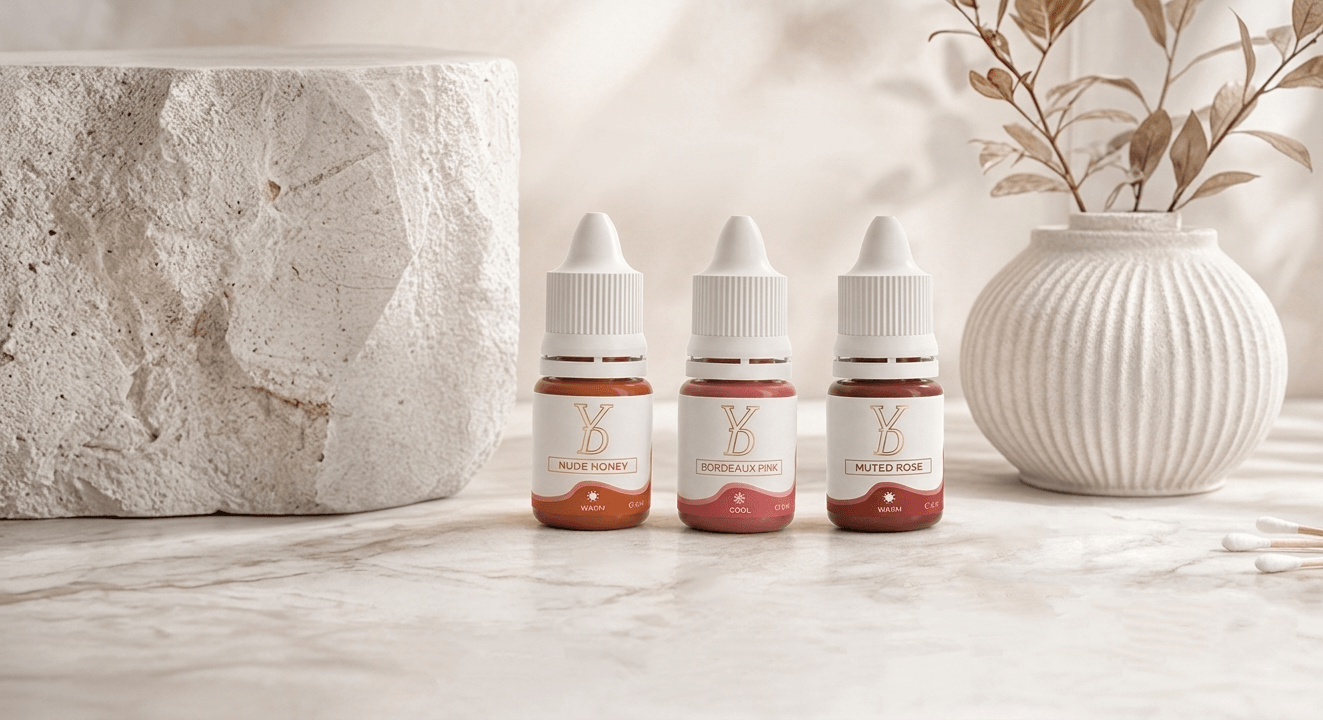
Artists can compare professional options in the YDPMU NANO Organic Liquid Pigment Collection and YDPMU POWDER Hybrid Liquid Pigment Collection. Formula, shade and technique suitability should still be evaluated for each procedure and market.
4. Controlled Saturation
Natural-looking PMU is usually built through controlled coverage rather than unnecessary density. More pigment is not automatically better retention, and a darker fresh result does not prove that the healed result will be more successful.
Repeated passes, excessive pressure or overworking may increase tissue trauma without creating a more predictable healed result. Learn more in How PMU Pigments Settle in the Skin.
5. Realistic Client Expectations
“Natural” does not mean invisible, perfectly symmetrical or unchanged forever. It usually means that the design supports the client’s features and remains appropriate without looking unnecessarily heavy.

How to Choose the Right Permanent Makeup Procedure
A professional consultation should answer more than “Which style do you like?” The artist and client should discuss the following factors:
- Desired finish: barely visible enhancement, softly polished definition or a more makeup-inspired result.
- Current features: natural brow hair, lip tone, lash density, asymmetry and existing pigmentation.
- Skin and tissue condition: oil production, texture, sensitivity, elasticity, scarring and active irritation.
- Previous permanent makeup: remaining color, saturation, shape and whether correction or removal is needed first.
- Lifestyle and skincare: sun exposure, exfoliating products, retinoids, frequent procedures and other factors that may affect the area.
- Medical history: relevant conditions, medications, allergies, previous reactions and healing concerns.
- Maintenance expectations: willingness to allow healing, attend a review and consider future refreshment or correction.
What to Look for in a PMU Artist
A portfolio should include healed work—not only fresh procedure photographs. Fresh pigment is usually darker and sharper, so it cannot show the complete healed outcome.
Before booking, consider whether the artist:
- has appropriate training for the exact procedure requested;
- follows local licensing and hygiene requirements;
- uses single-use sterile components where required;
- performs a complete consultation and suitability assessment;
- explains risks, healing and possible limitations without guaranteeing a result;
- shows healed examples across relevant skin types and starting conditions;
- discusses correction or removal when existing work should not simply be covered;
- provides clear written preparation and aftercare guidance.
Healing, Fading and Touch-Ups
Fresh permanent makeup does not represent the final healed result. Brows may initially look darker and more defined, lips may appear brighter or temporarily uneven, and eyeliner may look stronger while the surrounding tissue is recovering.
The visible result changes as the surface heals and the implanted pigment is viewed through recovered skin. Healing speed and appearance vary by procedure, client, technique, tissue response and aftercare.
Permanent makeup also changes over time. Sun exposure, skincare, skin turnover, immune response, pigment properties, placement pattern and lifestyle can all influence fading. For this reason, responsible guidance should not promise one fixed retention period for every client.
A touch-up should be based on the healed result and tissue condition, not only on a calendar. Adding pigment too early or refreshing work that remains sufficiently saturated can create unnecessary density.
For a broader explanation, read PMU Healing Stages: What Is Normal and What Is Not.
Permanent Makeup Safety Considerations
Permanent makeup breaks the skin barrier and carries potential risks, including infection, allergic or inflammatory reactions, scarring, unwanted color change and dissatisfaction with the design.
The American Academy of Dermatology notes that possible complications can include bacterial or fungal infection and reactions to tattoo ink. Clients should choose a properly trained provider and disclose relevant health information before treatment. See the American Academy of Dermatology’s permanent makeup guidance.
Treatment may need to be postponed or declined when the area has active infection, inflammation, open lesions, an unstable skin condition or another contraindication identified during consultation. Pregnancy, medications, immune conditions, healing disorders, recent procedures and a history of certain reactions may also require postponement or medical guidance.
Regulations and permitted services vary by location. Artists and businesses are responsible for following the requirements of the market in which they operate.
Frequently Asked Questions
What are the main types of permanent makeup?
The most common types are eyebrow PMU, permanent eyeliner and lip blush. Eyebrow procedures include hairstrokes, microblading, powder brows and combination brows. Specialized practitioners may also offer scalp micropigmentation, areola tattooing and selected camouflage procedures.
Which type of permanent makeup looks the most natural?
No single technique is the most natural for every client. A soft powder brow may look more natural than hairstrokes on skin that does not support crisp marks, while a lash-line enhancement may look more subtle than visible eyeliner. Natural appearance depends on individualized design, color, saturation and healed behavior.
Is microblading better than powder brows?
Neither technique is universally better. Microblading creates individual manual hairstrokes, while powder brows use machine shading. The appropriate option depends on the desired appearance, skin characteristics, natural hair, previous pigment and the artist’s assessment.
Can permanent makeup be completely invisible?
A very subtle result may blend closely with natural features, but treatment still creates a visible change. The goal should be an appropriate enhancement rather than a promise that the procedure will always be undetectable.
Does permanent makeup last forever?
Visible PMU commonly softens and changes, but complete disappearance cannot be guaranteed. Some pigment may remain for a long time, which is why shape, color and placement should be planned conservatively.
How often should permanent makeup be touched up?
There is no universal schedule. A trained artist should evaluate the healed color, shape, saturation and tissue condition before recommending additional work. A refresh may not be necessary while the existing result remains balanced and sufficiently visible.
Can old permanent makeup simply be covered with a new color?
Not always. Existing work may be too dark, saturated, cool, misplaced or uneven to accept a successful cover-up. Correction, lightening or removal may be more appropriate before a new design is attempted.
Can permanent makeup be removed or corrected?
Some results can be modified through color correction, controlled lightening or professional removal, but correction is not always simple or complete. The appropriate method depends on the pigment, depth pattern, saturation, treatment area, skin condition and desired outcome.
Is permanent makeup safe?
Permanent makeup has recognized risks because it involves implanting pigment through the skin barrier. Risk can be reduced through appropriate client screening, trained application, hygiene procedures, suitable products and correct aftercare, but no responsible provider should promise a completely risk-free procedure.
Final Thoughts
The best permanent makeup procedure is not the most popular technique or the design that looks strongest immediately after treatment. It is the option that fits the client’s features, skin, existing work, aesthetic goal and long-term expectations.
Brows, lips and eyeliner can all look refined and natural when the artist uses thoughtful mapping, appropriate color selection, controlled saturation and realistic treatment planning. The most valuable consultation is therefore not about choosing a trend—it is about deciding whether, where and how permanent makeup can enhance the individual client responsibly.
Educational notice: This article provides general permanent makeup education and does not replace medical advice, local regulatory requirements or an in-person suitability assessment.
References and further reading: