
Quick answer: Microblading creates individual hair-like marks with a manual tool, while powder brows build soft, pixelated shading with a PMU machine. Neither technique is automatically more natural or universally better. The more suitable option depends on the client’s existing brow hair, desired finish, skin and tissue condition, previous permanent makeup, and how each technique is expected to heal.
Last reviewed: August 10, 2026
Microblading vs Powder Brows at a Glance
| Decision point | Microblading | Powder brows |
|---|---|---|
| How the design is built | Individual hair-like marks made with a manual microblade | Layers of fine machine shading or pixels |
| Typical visual direction | Hair-stroke texture and visible spaces between strokes | Soft tint, gradient or makeup-style definition |
| Works best when | The skin can support clean spacing and the design can blend with existing hair | The client wants even density, a soft filled effect or more controlled coverage |
| Main limitation | Strokes can soften, spread or merge if placement, spacing or tissue selection is unsuitable | Shading can look heavy if density, edges or gradient control are poorly planned |
| Best way to judge the result | Evaluate fully healed work—not only fresh photos | |

What Is Microblading?
Microblading is a manual brow tattoo technique. A trained artist uses a hand tool fitted with a row of fine needles to place pigment in planned, hair-like marks. The visual goal is not simply to draw many lines. It is to create a believable pattern that follows the direction, spacing and density of the client’s natural brow growth.
Microblading can be effective for filling selected gaps, rebuilding a sparse area or adding texture where a shaded brow would feel too solid. The strongest results usually depend on restraint: enough negative space between marks, a pattern that changes direction naturally and a healed color that sits comfortably beside the client’s real brow hair.
Fresh microblading often looks darker and sharper than it will after surface healing. Some apparent crispness will soften. The artist should therefore assess healed portfolios rather than judging the technique by immediate after photos alone.
When microblading may be considered
- The client prefers visible hair-like texture rather than an evenly filled brow.
- There is enough natural brow hair for the added marks to blend into a believable pattern.
- The skin and tissue can support separated marks without excessive spreading or loss of definition.
- There is no dense, dark or poorly positioned previous pigment blocking the planned stroke pattern.
- The client understands that crisp fresh marks will normally look softer once healed.
Artists working with hairstroke techniques can review the separate guide to improving pigment retention in hairstroke brows. Retention should never be pursued by repeatedly working the same tissue or sacrificing safe technique.
What Are Powder Brows?
Powder brows are created with a PMU machine and cartridge needle. Instead of forming individual simulated hairs, the artist builds a field of fine dots or pixels. Those pixels can be layered to create anything from a barely visible tint to a more polished makeup effect.
The name “powder brows” does not mean every result should look dense or sharply outlined. A controlled design may use lighter fronts, softer upper edges and carefully placed density through the body and tail. The final effect depends on pixel spacing, hand speed, machine control, pigment selection and the artist’s ability to stop before the work becomes saturated.
When powder brows may be considered
- The client prefers soft background density or a defined makeup finish.
- The brow has larger gaps that would be difficult to rebuild convincingly with isolated strokes alone.
- The tissue assessment suggests that fine separated marks may not heal with reliable definition.
- Previous pigment remains visible and needs to be incorporated into a realistic redesign rather than covered with more strokes.
- The artist wants greater control over gradient, density and edge softness across the full brow.
Clients with oily skin are often directed toward machine shading, but oiliness alone should not make the decision. Pore appearance, skin condition, previous work, aftercare and artist technique also matter. See the detailed explanation of how oily skin can influence PMU fading.
Which Looks More Natural?
Both can look natural, but they express “natural” differently.
- Microblading naturalness comes from simulated hair direction, variation and negative space.
- Powder brow naturalness comes from soft edges, restrained density and a gradient that does not overpower the face.
A hair-stroke technique is not automatically natural if the marks are too thick, too evenly spaced or disconnected from the client’s actual growth pattern. Likewise, powder brows are not automatically artificial. A light, pixelated veil can heal more softly than a dense field of blurred strokes.

How Skin and Tissue Affect the Choice
Skin type is a useful starting point, not a one-step prescription. The artist should assess the treatment area in person and consider several connected factors.
Oil and visible pore structure
When the brow area is consistently oily or has prominent pores, very fine marks may heal softer and lose separation sooner. Machine shading may offer a more coherent visual result, but it still requires conservative density and appropriate aftercare.
Dry, thin or mature-looking tissue
“Dry” does not automatically mean ideal for microblading. Flaking, irritation, sun damage, reduced elasticity and fragile-looking tissue can change how either technique should be approached. The artist may need to adjust the design, reduce intensity, choose a different method or postpone treatment.
Active irritation or compromised skin
Neither technique should be selected solely to work around active irritation, unexplained lesions, infection, broken skin or an uncontrolled condition in the brow area. The procedure should be paused and handled according to local professional rules; medical questions should be referred to a qualified healthcare professional.
Existing Brow Hair and Design Goals
The quantity and direction of natural brow hair can matter as much as skin type. Microblading marks usually look most convincing when they can join an existing pattern. If a large area has little or no hair, adding too many simulated strokes may create a repetitive pattern rather than a realistic brow.
Powder shading can provide a more unified base when density is uneven across a wide area. However, the artist must still build a shape that suits the client rather than relying on one fashionable outline. The guide to choosing a brow shape for the face explains how facial structure, natural growth and expression should influence mapping.
What If the Client Already Has Brow PMU?
Visible previous pigment changes the decision. New hair strokes placed over a dense background may not remain visually distinct. Adding more shading over an already saturated brow can make the result heavier without correcting the underlying shape or color.
Before proceeding, the artist should document:
- how much previous pigment remains;
- whether the old shape can be incorporated into the new design;
- whether the color is balanced, overly cool, warm or uneven;
- whether the tissue shows signs of repeated previous work; and
- whether correction, lightening, removal or additional healing is needed before new pigment is considered.
A technique name cannot solve unsuitable previous work. The artist must first decide whether adding pigment is responsible and whether the desired design is realistically achievable.
Microblading vs Powder Brows During Healing
Both procedures can look darker, warmer or more defined immediately after treatment. During surface recovery, the area may appear uneven or temporarily lighter. The fully healed appearance should be assessed only after the skin has completed its normal recovery process.
The main visual difference is what the artist is waiting to evaluate:
- With microblading, review whether individual marks remain separated, whether gaps are intentional and whether the pattern blends with real hair.
- With powder brows, review whether the gradient is balanced, whether the fronts and edges healed softly and whether the density is even without looking blocky.
Healing does not follow an identical calendar for every client. Avoid judging final color during active flaking or scheduling automatic additional pigment before a proper healed review. For a broader framework, read PMU healing stages: what is normal and what is not.
Does One Technique Last Longer?
Powder shading is often described as longer lasting because it creates a continuous field of color rather than relying on the visibility of many separate marks. That does not establish a guaranteed lifespan. A technically visible brow may also stop looking aesthetically balanced before all pigment has faded.
Maintenance varies with skin characteristics, sun exposure, skincare, pigment load, color choice, aftercare, technique and the amount of previous work. Instead of promising a fixed number of months or years, assess how the healed design changes and whether intervention is actually needed.
What Are Combination Brows?
Combination brows use both hair-like marks and shading within one design. They may be useful when the client wants texture in selected areas but also needs background density or a more defined body and tail.
Combination does not mean automatically adding two full techniques on top of each other. The artist should decide where strokes contribute useful texture, where shading creates structure and where untouched space keeps the result light. On unsuitable tissue or dense previous pigment, adding both methods may increase saturation without improving the design.

A Professional Selection Framework

- Define the desired healed finish. Ask whether “natural” means visible hair texture, a soft tint or a polished makeup effect.
- Assess existing brow hair. Note density, direction, gaps and whether simulated marks can blend realistically.
- Assess skin and tissue. Consider oil, pores, texture, sensitivity, integrity and signs of previous trauma without diagnosing medical conditions.
- Check previous PMU. Determine whether remaining shape, color and saturation allow new work.
- Set healing expectations. Show fully healed examples on comparable skin—not only fresh results.
- Discuss maintenance. Explain that fading and review timing are individual rather than guaranteed.
- Choose technique and pigment together. The method, shade, formula, density and design must work as one plan.
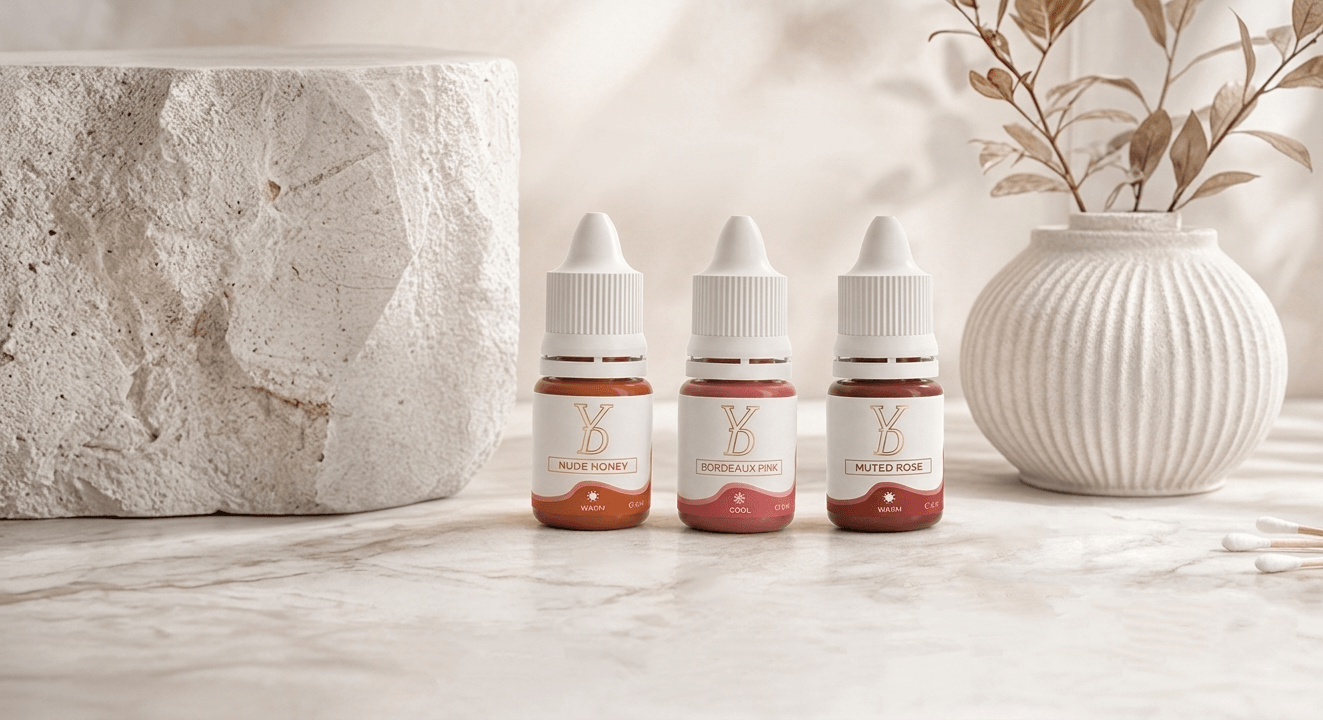
For product research, browse the YDPMU professional brow pigment collection. Final product selection must follow the label, intended use, destination-market requirements and the artist’s own assessment.
Client Safety and Consultation
Microblading and powder brows are forms of permanent makeup involving pigment placement into the skin. Product quality is only one part of safe practice. Training, hygienic procedure, single-use components where required, local licensing rules, informed consent and appropriate aftercare all matter.
The U.S. FDA permanent makeup fact sheet discusses risks including infection, allergic reactions and removal difficulties. In the European Union, artists and suppliers should also review the applicable ECHA restriction information for substances in tattoo inks and permanent makeup and the rules of the destination market.
Clients should disclose relevant medical history, medications, allergies, previous reactions and prior brow procedures during consultation. Artists should not advise a client to stop prescribed medication. When suitability is unclear, pause and refer the question to an appropriately qualified healthcare professional.
Clients preparing for a first appointment can also review the microblading pre-treatment consultation guide, while following the instructions of their own artist and healthcare professional.
Final Decision: Microblading, Powder or Combination?
Choose microblading when separated hair-like texture is achievable, appropriate for the tissue and able to blend with the client’s natural brow growth. Choose powder brows when controlled shading better matches the desired finish, existing density and healed behavior. Consider combination brows only when both texture and shading have a clear purpose within the design.
The best choice is not the technique with the strongest marketing claim. It is the most conservative plan that fits the client’s skin, existing brows, previous work and healed-result expectations.
Frequently Asked Questions
Is microblading more natural than powder brows?
Not automatically. Microblading creates hair-like texture, while powder brows create a soft shaded finish. Either can look natural when the design, density and technique suit the client and are judged after healing.
Are powder brows better for oily skin?
Powder shading is often considered when very fine strokes may soften on oily or visibly porous skin. Oiliness is only one factor; tissue condition, previous PMU, design goals and artist technique must also be assessed.
Can mature clients get microblading?
Age alone does not decide suitability. The artist should assess tissue integrity, elasticity, texture, sun damage, medications and healing history. Machine shading or another plan may be more appropriate when separated manual marks are unlikely to heal cleanly.
Do powder brows always look like heavy makeup?
No. Powder brows can range from a very light tint to a defined makeup finish. Pixel spacing, density, edge control and gradient design determine how soft or polished the healed result appears.
Can powder brows cover old microblading?
Sometimes, but coverage is not automatic. The old shape, saturation, color and tissue condition must be assessed first. Dense or poorly positioned previous pigment may require correction, lightening, removal or more time before new work.
Which lasts longer: microblading or powder brows?
Powder shading may remain visually coherent longer in some clients, but neither technique has a guaranteed lifespan. Skin, sun exposure, skincare, technique, pigment selection, aftercare and previous work all affect how the result changes.